The Weight of Words: Understanding God’s Command on Cursing
“Bring forth him that hath cursed without the camp; and let all that heard him lay their hands upon his head, and let all the congregation stone him.” — Leviticus 24:14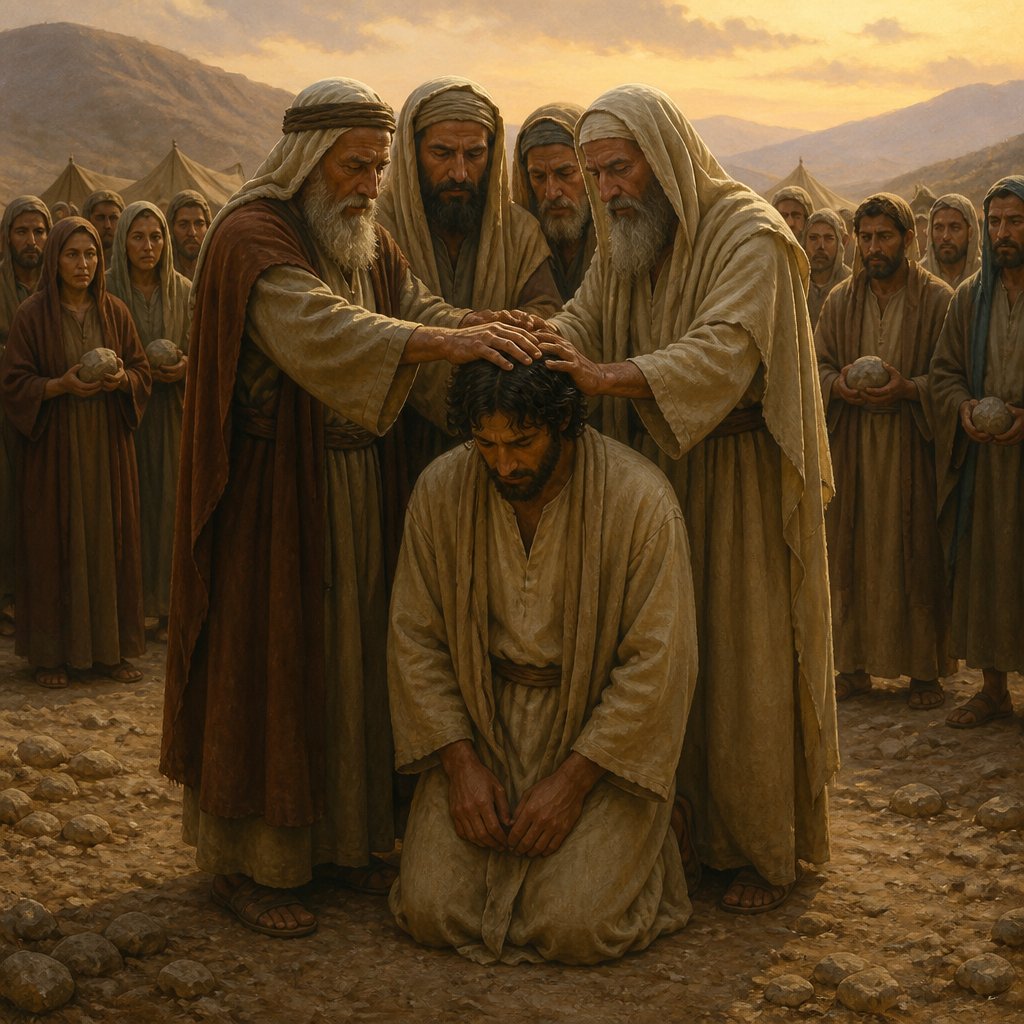
As we delve into the profound depths of Leviticus 24:14, where it states, “Bring forth him that hath cursed without the camp; and let all that heard him lay their hands upon his head, and let all the congregation stone him,” we are confronted not only with the harsh realities of ancient law but also with the weight of our own words and the spiritual implications that arise from them.
The context of this passage is crucial. It occurs within the framework of the Mosaic Law, which was given to guide the ancient Israelites in their covenant relationship with God. The Israelites were set apart, called to be a holy nation, and as such, their behaviors and practices were to reflect their dedication to God’s standards. Profanity, and specifically cursing against the Lord, was viewed as a serious transgression. It was an act that could not only harm the individual but also had the potential to corrupt the community's integrity and relationship with God. In ancient Israel, the act of cursing was not merely about using foul language; it was a direct challenge to God’s authority, power, and goodness.
When we reflect on the gravity of this verse, we can see how deeply intertwined words are with our faith. The command to bring out the one who cursed and for the congregation to participate in the act of stone him brings into play the community's responsibility in upholding holiness. In a nation that was to exemplify God’s righteousness, sin, especially one so brazen as blasphemy, had to be dealt with decisively. This serves as a somber reminder that our words carry power. Proverbs 18:21 reminds us, "Death and life are in the power of the tongue: and they that love it shall eat the fruit thereof.” We are called to be careful stewards of the words we speak, mindful that they can either build up or tear down, bless or curse.
It is important to recognize the symbolism behind laying hands on the head of the one who cursed. This act signifies identification with the sinner while also transferring the guilt upon the accused. In others hearing the curse, we might ponder their role. How do we respond when we hear words that defy or belittle God? Therein lies a crucial role for every believer. Voice our disapproval and stand up for the holiness of God. As a congregation, we must strive to maintain a community that does not tolerate unholy speech and does not shy away from calling out sin but does so with love and grace.
Furthermore, the harsh requirement for stoning is jarring to modern sensibilities. However, it gives us insight into the Old Testament’s strict justice system. In this case, it merely reflects the seriousness of sin and its repercussions. Nevertheless, as Christians living under the new covenant established through Christ, we are called to respond differently. Romans 3:23 states, "For all have sinned, and come short of the glory of God;" reminding us that we are all guilty at some point. Each of us has transgressed God's law, and yet we also embrace the redemptive grace offered through Jesus Christ. We are not to enact the consequence of the Old Testament but to spread the message of forgiveness and reconciliation.
Therefore, as we reflect on the implications of Leviticus 24:14, let us approach it with reverence and humility. We must take stock of the words we speak and their potential impact. Let us strive to be a community that honors God with our language, edifying, uplifting, and speaking truth lovingly.
In conclusion, let Leviticus 24:14 serve as a sober reminder of the accountability we bear in our speech and the community we nurture. May we commit to speaking life and truth, always reflecting the character of our Creator, who, while just, is also rich in mercy. Amen.
Get our apps


Artwork for Leviticus 24:14

Leviticus 24:14 - "Bring forth him that hath cursed without the camp; and let all that heard him lay their hands upon his head, and let all the congregation stone him."
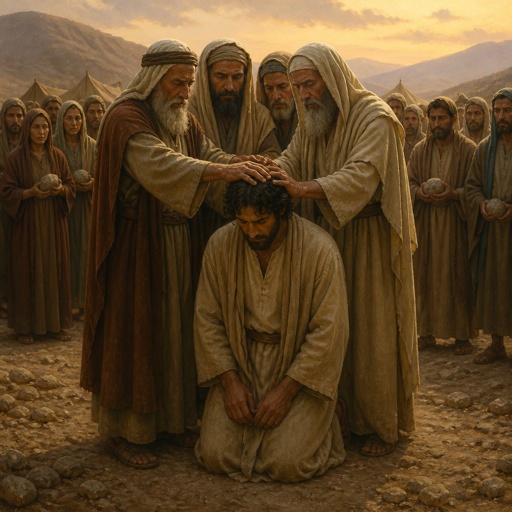
"Bring forth him that hath cursed without the camp; and let all that heard him lay their hands upon his head, and let all the congregation stone him." - Leviticus 24:14

Leviticus 14:24 - "And the priest shall take the lamb of the trespass offering, and the log of oil, and the priest shall wave them for a wave offering before the LORD:"

Leviticus 24:20-23

Leviticus 6:24 - "¶ And the LORD spake unto Moses, saying,"

Leviticus 24:1 - "And the LORD spake unto Moses, saying,"

Leviticus 24:13 - "And the LORD spake unto Moses, saying,"

Leviticus 14:51

"And the priest shall take the lamb of the trespass offering, and the log of oil, and the priest shall wave them for a wave offering before the LORD:" - Leviticus 14:24

Leviticus 24:12 - "And they put him in ward, that the mind of the LORD might be shewed them."

Leviticus 14:55 - "And for the leprosy of a garment, and of a house,"

Leviticus 14:56 - "And for a rising, and for a scab, and for a bright spot:"

Leviticus 24:17 - "¶ And he that killeth any man shall surely be put to death."

Leviticus 24:18 - "And he that killeth a beast shall make it good; beast for beast."

Leviticus 14:1 - "And the LORD spake unto Moses, saying,"

Leviticus 11:14 - "And the vulture, and the kite after his kind;"

Leviticus 5:14 - "¶ And the LORD spake unto Moses, saying,"

Leviticus 25:24 - "And in all the land of your possession ye shall grant a redemption for the land."

Leviticus 21:24 - "And Moses told it unto Aaron, and to his sons, and unto all the children of Israel."

Leviticus 14:54 - "This is the law for all manner of plague of leprosy, and scall,"

Leviticus 19:24 - "But in the fourth year all the fruit thereof shall be holy to praise the LORD withal."

Leviticus 24:4 - "He shall order the lamps upon the pure candlestick before the LORD continually."

Leviticus 11:24 - "And for these ye shall be unclean: whosoever toucheth the carcase of them shall be unclean until the even."

Leviticus 26:14 - "¶ But if ye will not hearken unto me, and will not do all these commandments;"

Leviticus 14:33 - "¶ And the LORD spake unto Moses and unto Aaron, saying,"

Genesis 24-14

"¶ And the LORD spake unto Moses, saying," - Leviticus 6:24

Leviticus 14:57 - "To teach when it is unclean, and when it is clean: this is the law of leprosy."

"And for the leprosy of a garment, and of a house," - Leviticus 14:55

"And the LORD spake unto Moses, saying," - Leviticus 24:13