The Dilemmas of Wealth and Poverty: A Call to Compassionate Community
“And if a sojourner or stranger wax rich by thee, and thy brother that dwelleth by him wax poor, and sell himself unto the stranger or sojourner by thee, or to the stock of the stranger’s family:” — Leviticus 25:47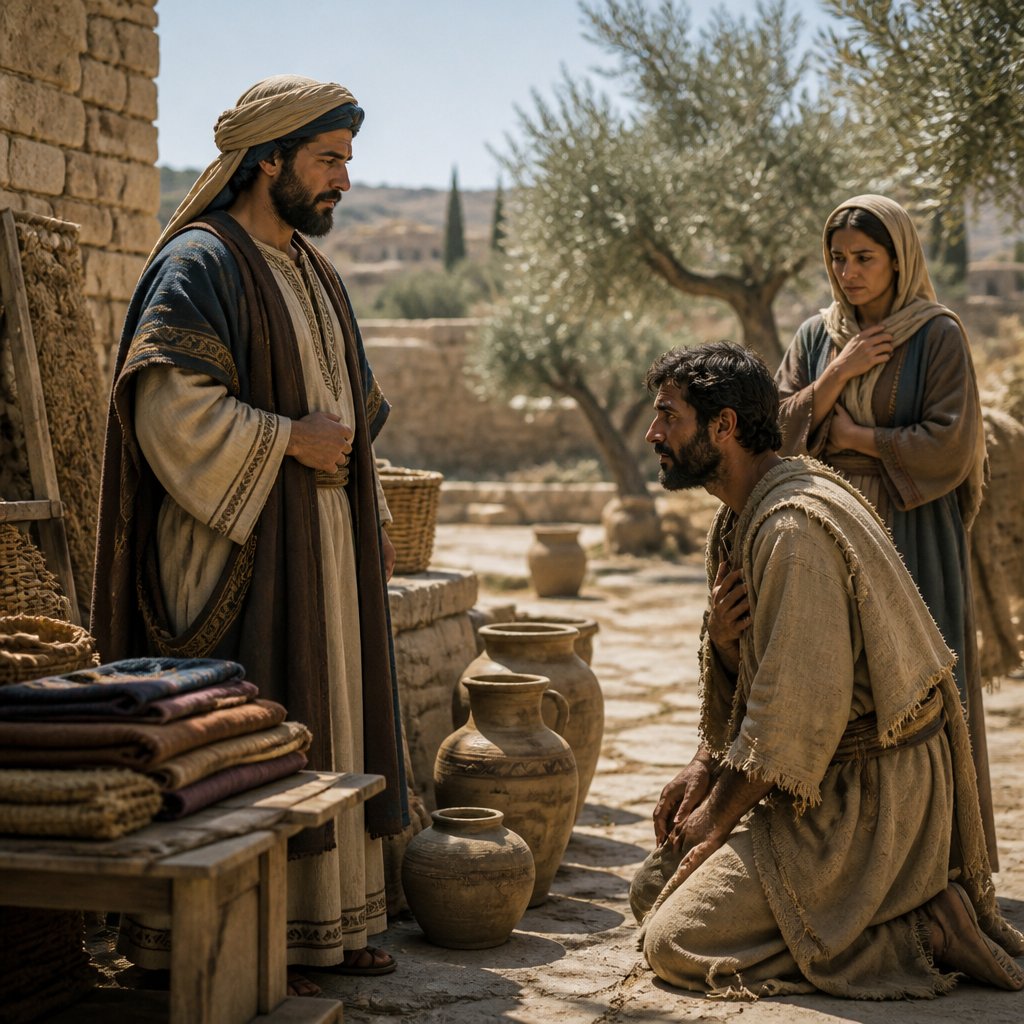
Leviticus 25:47 speaks to a profound social dynamic that can occur within communities: "And if a sojourner or stranger wax rich by thee, and thy brother that dwelleth by him wax poor, and sell himself unto the stranger or sojourner by thee, or to the stock of the stranger's family." In this verse, we see the harsh reality of economic disparity and the consequences that follow when wealth is amassed by some while others suffer in poverty.
The historical context of Leviticus provides pivotal insight into the life of the Israelites. They lived in a sufficiently structured society, rooted in the ideas of communal living and stewardship over the land. The idea that a sojourner or stranger could outshine a native-born Israelite raises ethical questions about how wealth is accumulated and distributed among those within one community. The stranger, here, represents a person who is not a native but finds favor and prosperity, leading to the diminishment of a fellow Israelite who dwells close by.
The statement "wax rich" highlights the potential for wealth accumulation, yet juxtaposed with the plight of the brother who "wax poor" presents a sobering truth about the fragility of economic systems. In an ideal community, prosperity should uplift all its members, yet we are often confronted with scenarios where personal gain leads to the suffering of others. It invites us to reflect on our responsibilities to one another as members of a larger community.
As we delve deeper, we must ask ourselves: How do we respond when we observe a disparity in wellbeing among our peers? The scripture nudges us to evaluate our position in relation to others’ prosperity and misery. In this tale, a man’s survival depends on his decision to sell himself to the stranger, showcasing the extreme measures the impoverished may take in desperate circumstances. This is not merely a narrative about wealth but a commentary on the relationships within community life.
To understand this passage more profoundly, we can parallel it with the teachings of Jesus Christ, who emphasized love, compassion, and the moral responsibility towards the less fortunate. Throughout His ministry, Jesus called out injustices and urged his followers to advocate for the marginalized. Matthew 25:40 reminds us: "And the King shall answer and say unto them, Verily I say unto you, Inasmuch as ye have done it unto one of the least of these my brethren, ye have done it unto me." Those who are wealthy must carefully examine the roots of that wealth and ensure they are not only lifting themselves up but also strategizing ways to pull others along with them.
In light of this, it becomes imperative for us as believers to ask ourselves how we are contributing to a society where the rich meet the poor in an effort to bridge the gap. Are we creating systems of support? Do we champion fairness, treat individuals with respect, and see the humanity in those who struggle? Or do we turn a blind eye, focusing solely on the advantages we hold?
As we meditate on Leviticus 25:47, let it ignite within us a heart of compassion and an advocacy for justice. Let us not become complacent as the prosperity of one leads to the devastation of another. Instead, may we strive to foster an environment of equity, collaboration, and assistance. In doing so, we embody the essence of Christ’s love—a love that is patient, generous, and committed to lifting the burdens of our brothers and sisters who dwell in our midst.
Ultimately, the challenge presented in this verse is two-fold: the call to acknowledge the struggles of others and the mandate to act. Wealth can be a tool for uplifting the community if utilized wisely, fostering a bond of love and service that transcends economic boundaries. Today, let us pledge to be advocates for one another, transforming our society into a canvas of shared blessings.
Get our apps


Artwork for Leviticus 25:47
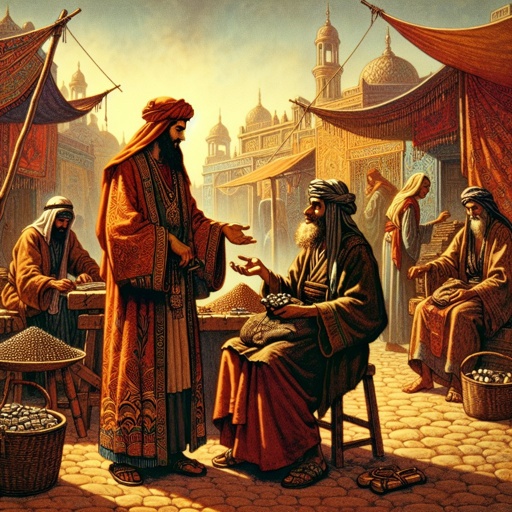
Leviticus 25:47 - "¶ And if a sojourner or stranger wax rich by thee, and thy brother that dwelleth by him wax poor, and sell himself unto the stranger or sojourner by thee, or to the stock of the stranger's family:"
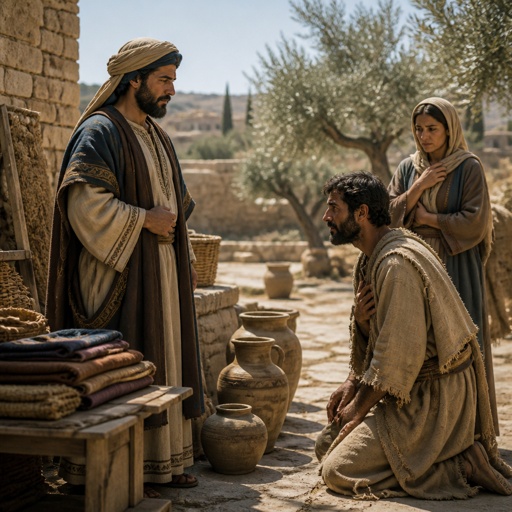
"¶ And if a sojourner or stranger wax rich by thee, and thy brother that dwelleth by him wax poor, and sell himself unto the stranger or sojourner by thee, or to the stock of the stranger's family:" - Leviticus 25:47

Leviticus 13:47 - "¶ The garment also that the plague of leprosy is in, whether it be a woollen garment, or a linen garment;"

Leviticus 11:47 - "To make a difference between the unclean and the clean, and between the beast that may be eaten and the beast that may not be eaten."

Leviticus 14:47 - "And he that lieth in the house shall wash his clothes; and he that eateth in the house shall wash his clothes."

Genesis 47:25 - "And they said, Thou hast saved our lives: let us find grace in the sight of my lord, and we will be Pharaoh's servants."

"¶ The garment also that the plague of leprosy is in, whether it be a woollen garment, or a linen garment;" - Leviticus 13:47

Leviticus 25:26 - "And if the man have none to redeem it, and himself be able to redeem it;"

Leviticus 25:34 - "But the field of the suburbs of their cities may not be sold; for it is their perpetual possession."

Leviticus 25:1 - "And the LORD spake unto Moses in mount Sinai, saying,"

Leviticus 16:25 - "And the fat of the sin offering shall he burn upon the altar."
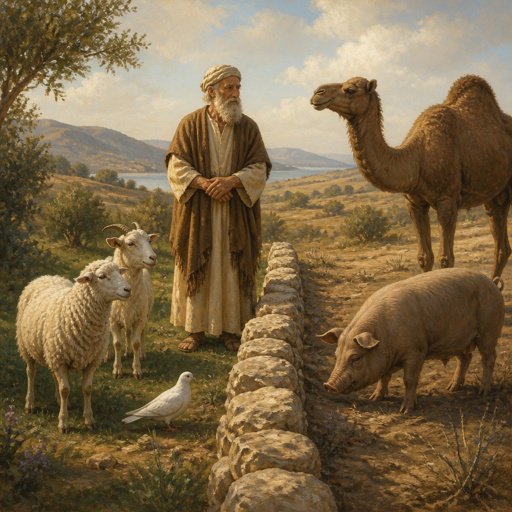
"To make a difference between the unclean and the clean, and between the beast that may be eaten and the beast that may not be eaten." - Leviticus 11:47

Leviticus 25:24 - "And in all the land of your possession ye shall grant a redemption for the land."

Leviticus 25:13 - "In the year of this jubile ye shall return every man unto his possession."

Leviticus 25:23 - "¶ The land shall not be sold for ever: for the land is mine; for ye are strangers and sojourners with me."

Leviticus 25:7 - "And for thy cattle, and for the beast that are in thy land, shall all the increase thereof be meat."

Leviticus 25:43 - "Thou shalt not rule over him with rigour; but shalt fear thy God."

Leviticus 25:32 - "Notwithstanding the cities of the Levites, and the houses of the cities of their possession, may the Levites redeem at any time."

Leviticus 27:25 - "And all thy estimations shall be according to the shekel of the sanctuary: twenty gerahs shall be the shekel."

Leviticus 25:25 - "¶ If thy brother be waxen poor, and hath sold away some of his possession, and if any of his kin come to redeem it, then shall he redeem that which his brother sold."

Leviticus 25:12 - "For it is the jubile; it shall be holy unto you: ye shall eat the increase thereof out of the field."

Leviticus 25:40 - "But as an hired servant, and as a sojourner, he shall be with thee, and shall serve thee unto the year of jubile:"

Cycle of sabbath rest year. Leviticus 25:1-7
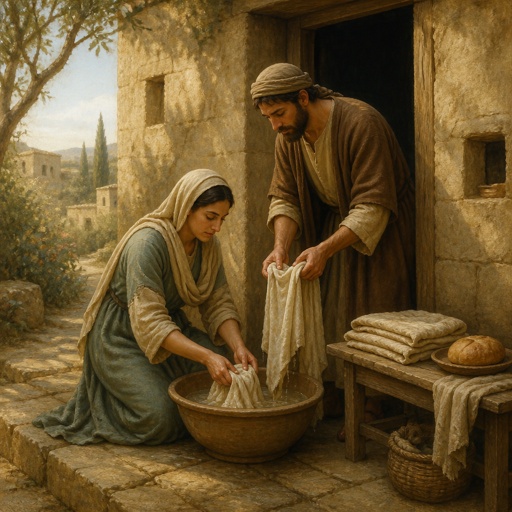
"And he that lieth in the house shall wash his clothes; and he that eateth in the house shall wash his clothes." - Leviticus 14:47

Leviticus 25:42 - "For they are my servants, which I brought forth out of the land of Egypt: they shall not be sold as bondmen."
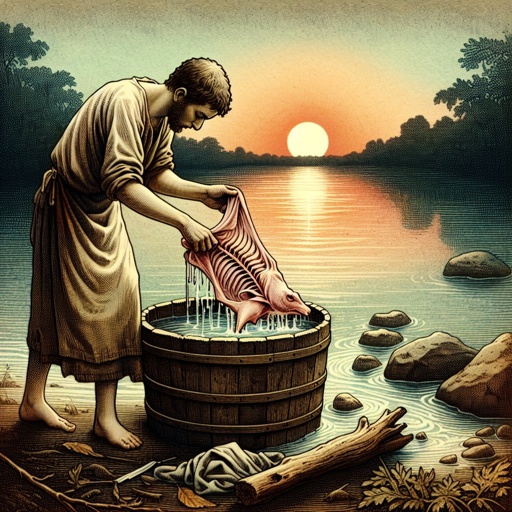
Leviticus 11:25 - "And whosoever beareth ought of the carcase of them shall wash his clothes, and be unclean until the even."

Leviticus 25:48 - "After that he is sold he may be redeemed again; one of his brethren may redeem him:"

Leviticus 25:36 - "Take thou no usury of him, or increase: but fear thy God; that thy brother may live with thee."

Leviticus 25:19 - "And the land shall yield her fruit, and ye shall eat your fill, and dwell therein in safety."

Leviticus 25:21 - "Then I will command my blessing upon you in the sixth year, and it shall bring forth fruit for three years."