Resting in God's Provision: The Sabbath of the Land
"And the sabbath of the land shall be meat for you; for thee, and for thy servant, and for thy maid, and for thy hired servant, and for thy stranger that sojourneth with thee," - Leviticus 25:6
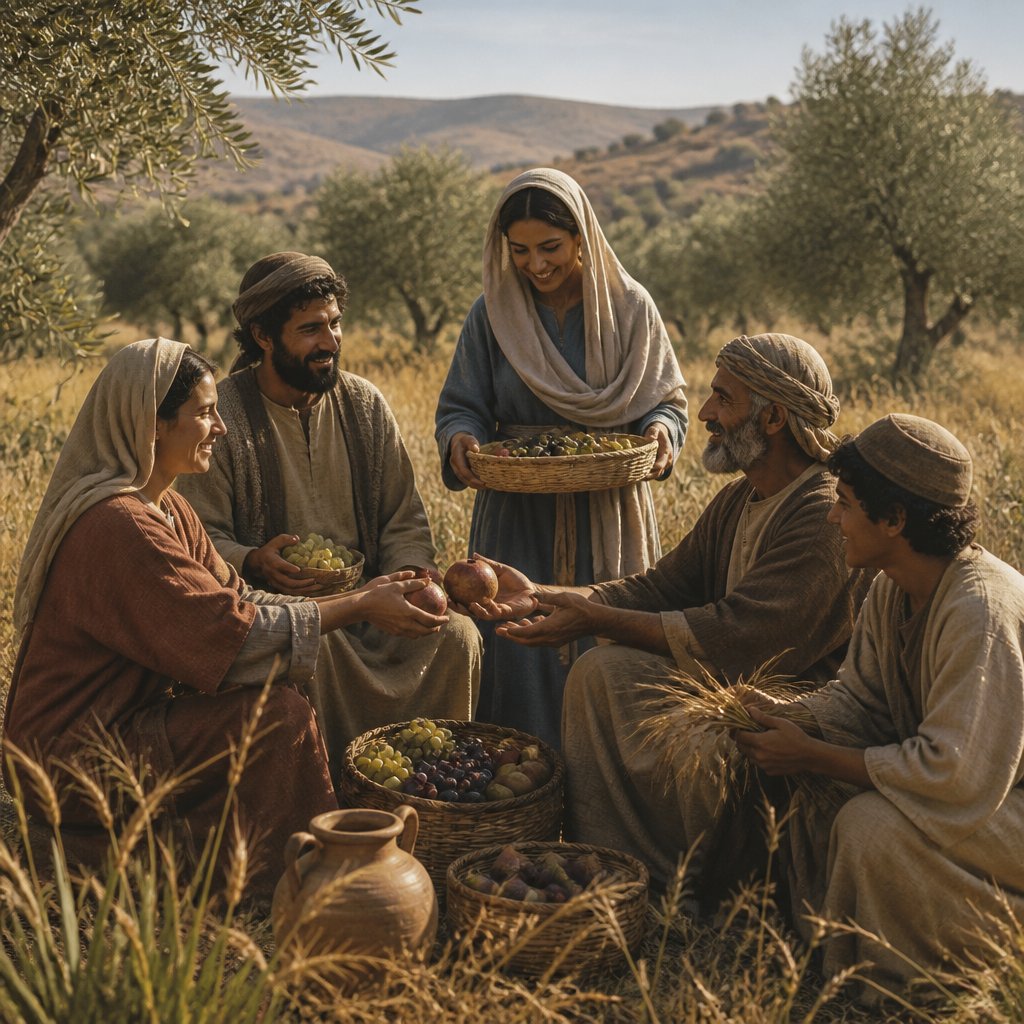
The book of Leviticus is often overlooked, nestled among the laws and rituals of the Old Testament; however, it contains profound insights into God's character and His provision for His people. In Leviticus 25:6, we read: "And the sabbath of the land shall be meat for you; for thee, and for thy servant, and for thy maid, and for thy hired servant, and for thy stranger that sojourneth with thee" (KJV). At first glance, this verse speaks about agricultural practices and the way the Israelites were to manage their God-given lands, but a deeper meditation reveals the layers of meaning that resonate with our lives today.
In this passage, we encounter the concept of the sabbath of the land—a year of rest every seventh year, when the land was not to be tilled or harvested. Instead, it was to be left fallow, allowing it to recuperate and restore its fertility. What might seem like a loss of income or a risk to sustenance is, in fact, a command from God designed to protect and nourish both the land and its inhabitants. This directive encapsulates God's intention toward holistic wellbeing, not just for the land, but for every living being who draws sustenance from it.
The physical rest for the land is immensely symbolic. In today's world, where we often prioritize productivity over rest, this commandment serves as a divine reminder that provision comes from God and that we are not merely human doings, but human beings. Our worth is not defined by our output but by our identity as children of God. Embracing the sabbath of the land invites us to reflect on how God invites us into a rhythm of work and rest—a pattern that honors His creation.
Consider the phrase "the sabbath of the land shall be meat for you"—an extraordinary proclamation of God's generous provision. Meat, in biblical terms, symbolizes sustenance, abundance, and nourishment. Here, God promises that the very rest of the land would yield nourishment not only for the landowner but also for servants, maidens, hired help, and even strangers or foreigners living among them. This inclusivity reveals God's heart for justice and compassion. The sabbath extends beyond personal benefit; it addresses the communal aspect of life. In applying this to our lives, we see God challenging us to embrace the needs of others as we navigate our own rhythms of work and rest. Are we ensuring that those around us, especially the marginalized, also experience God's provision through us?
Through this lens, the sabbath becomes more than just a day of rest; it evolves into a sacred practice of hospitality and generosity. Are we offering what we have—our time, our resources, our love—to those in need? God’s directive in Leviticus prompts us to assess not just our productivity but also our generosity. It calls us to cultivate a land—not only in the physical sense but in the emotional and spiritual sense—that is abundant for all.
As we consider our own lives, how often do we fully embrace the notion of rest, both for ourselves and for the world around us? Are we allowing our 'land' to lay fallow, to recover, and to bring forth new life? Do we trust that God will provide even when we cease from our striving? The sabbath of the land serves as an encouragement that in resting and being generous, we find their fulfillment, not just in the yield of crops, but in the relationships we foster and the community we build.
As we meditate on Leviticus 25:6, let us remember the importance of keeping a sabbath—not just for ourselves, but as an act of faith that our God is indeed our provider. He calls us to rest, invites us to share with others, and shows us through agriculture that true sustenance comes from the rhythms He established. Let’s challenge ourselves to cultivate lives that reflect His generous provision to all, ensuring that when we rest, we do so in the knowledge that He is working for our good, and through us, for the good of others.
Want to reflect more on Leviticus 25:6?
Continue your spiritual journey with Bible Chat — an AI-powered tool for exploring God's Word through conversation. Ask questions, discover connections, and deepen your understanding.
Get Our Apps


Leviticus 25:6 Artwork
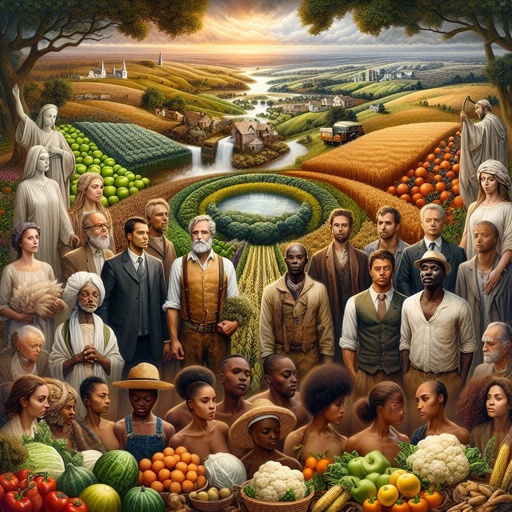
Leviticus 25:6 - "And the sabbath of the land shall be meat for you; for thee, and for thy servant, and for thy maid, and for thy hired servant, and for thy stranger that sojourneth with thee,"
"And the sabbath of the land shall be meat for you; for thee, and for thy servant, and for thy maid, and for thy hired servant, and for thy stranger that sojourneth with thee," - Leviticus 25:6

Leviticus 6:25 - "Speak unto Aaron and to his sons, saying, This is the law of the sin offering: In the place where the burnt offering is killed shall the sin offering be killed before the LORD: it is most holy."

Leviticus 25:26 - "And if the man have none to redeem it, and himself be able to redeem it;"

Leviticus 25:34 - "But the field of the suburbs of their cities may not be sold; for it is their perpetual possession."

Leviticus 25:1 - "And the LORD spake unto Moses in mount Sinai, saying,"

Leviticus 16:25 - "And the fat of the sin offering shall he burn upon the altar."

Leviticus 25:24 - "And in all the land of your possession ye shall grant a redemption for the land."

Leviticus 25:13 - "In the year of this jubile ye shall return every man unto his possession."

Leviticus 25:23 - "¶ The land shall not be sold for ever: for the land is mine; for ye are strangers and sojourners with me."
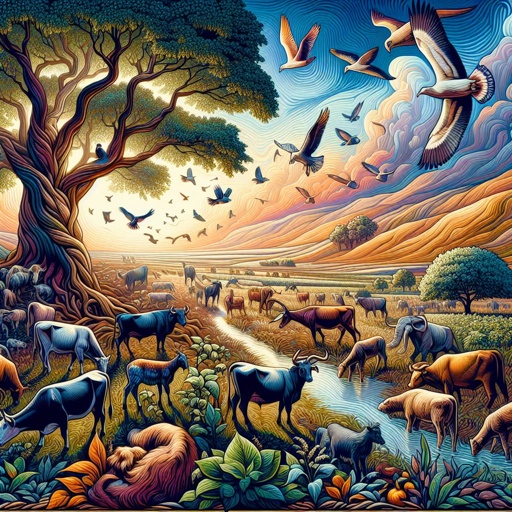
Leviticus 25:7 - "And for thy cattle, and for the beast that are in thy land, shall all the increase thereof be meat."
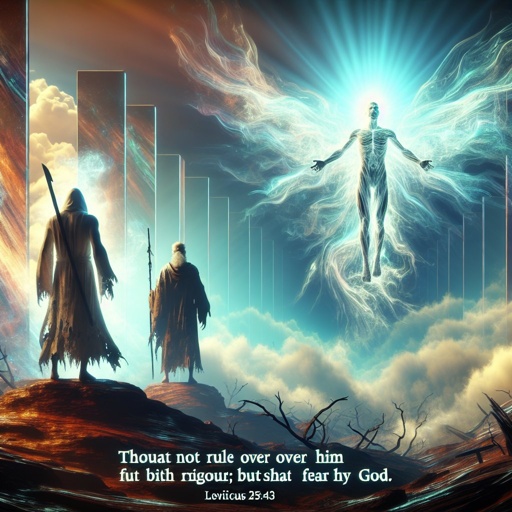
Leviticus 25:43 - "Thou shalt not rule over him with rigour; but shalt fear thy God."

Leviticus 25:32 - "Notwithstanding the cities of the Levites, and the houses of the cities of their possession, may the Levites redeem at any time."

Leviticus 27:25 - "And all thy estimations shall be according to the shekel of the sanctuary: twenty gerahs shall be the shekel."

Leviticus 25:25 - "¶ If thy brother be waxen poor, and hath sold away some of his possession, and if any of his kin come to redeem it, then shall he redeem that which his brother sold."

Cycle of sabbath rest year. Leviticus 25:1-7

Leviticus 25:12 - "For it is the jubile; it shall be holy unto you: ye shall eat the increase thereof out of the field."

Leviticus 25:40 - "But as an hired servant, and as a sojourner, he shall be with thee, and shall serve thee unto the year of jubile:"

Leviticus 26: 4-6
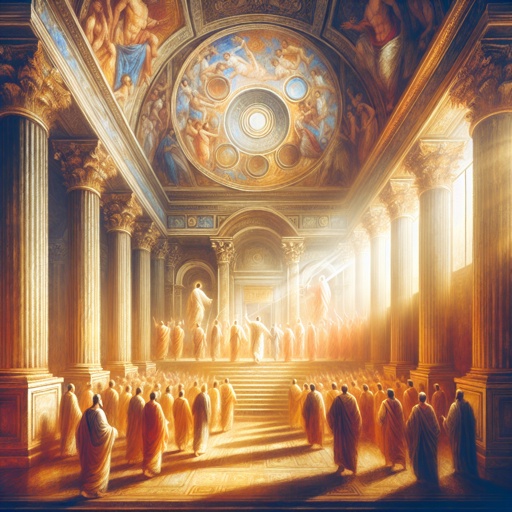
Leviticus 26: 4-6

Leviticus 25:42 - "For they are my servants, which I brought forth out of the land of Egypt: they shall not be sold as bondmen."
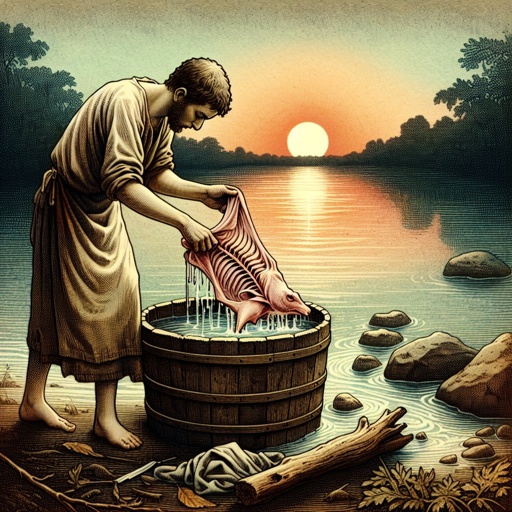
Leviticus 11:25 - "And whosoever beareth ought of the carcase of them shall wash his clothes, and be unclean until the even."

Leviticus 26: 4-6

Leviticus 25:48 - "After that he is sold he may be redeemed again; one of his brethren may redeem him:"

Leviticus 25:36 - "Take thou no usury of him, or increase: but fear thy God; that thy brother may live with thee."

Leviticus 25:19 - "And the land shall yield her fruit, and ye shall eat your fill, and dwell therein in safety."

Leviticus 6:24 - "¶ And the LORD spake unto Moses, saying,"

Leviticus 6:8 - "¶ And the LORD spake unto Moses, saying,"

Leviticus 25:21 - "Then I will command my blessing upon you in the sixth year, and it shall bring forth fruit for three years."

Leviticus 25:37 - "Thou shalt not give him thy money upon usury, nor lend him thy victuals for increase."