The Principle of Redemption: Understanding Tithes and God’s Provisions
“And if a man will at all redeem ought of his tithes, he shall add thereto the fifth part thereof.” — Leviticus 27:31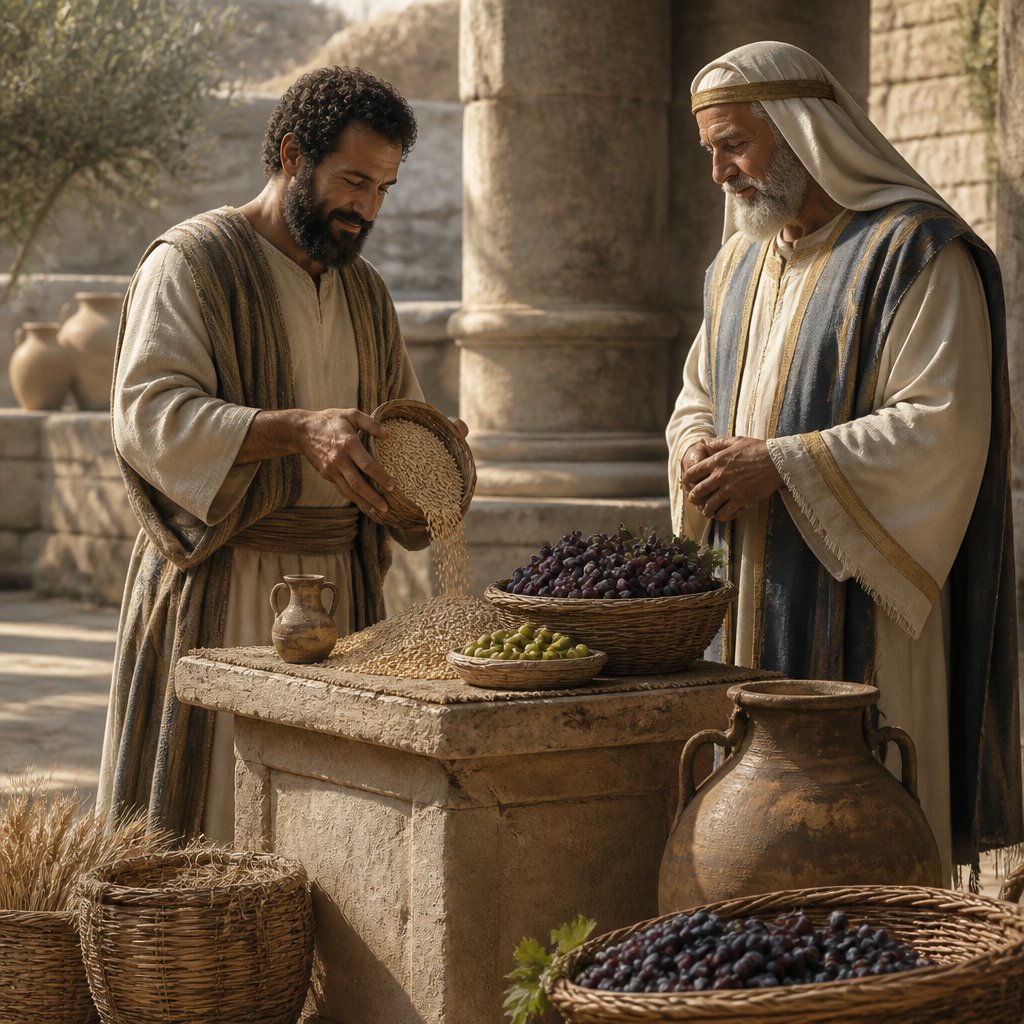
Leviticus 27:31 states, "And if a man will at all redeem ought of his tithes, he shall add thereto the fifth part thereof." This verse provides profound insights into the nature of God’s expectations for His people and the principles of redemption, stewardship, and grace.
As we delve into the context of Leviticus, we encounter a community that stood at the precipice of a new identity. These were the Israelites, recently liberated from Egyptian bondage, now poised to occupy the Promised Land. Central to their journey was a covenant relationship with God, one that required obedience to His laws, which included the system of tithing. Tithes were not mere contributions; they represented an acknowledgment of God’s ownership of all creation and a way for the people to participate in His work of sustaining the community and serving the needs of the priests and the Levites.
The laws concerning tithes included provisions for the redemption of those tithes. This is where our verse comes into play. To ‘redeem’ something implies purchasing it back, reclaiming it from loss or forfeiture. The Israelites were allowed to redeem their tithes if they found themselves unable to fulfill the obligations physically or financially. However, there was a stipulation: they had to add a fifth part to the value of the tithe they sought to redeem, illustrating a financial penalty for not including God’s provisions in their priorities.
This principle serves as a mirror to our relationship with God today. Just as the Israelites were called to recognize God as the ultimate owner, we are reminded that everything we possess belongs to Him. Our income, talents, and resources are ultimately a gift from God, to be stewarded and utilized for His glory. When we withhold or neglect our tithes and offerings, we must recognize the consequences and potentially seek to 'redeem' what we owe.
Additionally, the requirement to add a fifth part reveals a significant truth about spiritual accountability. In our spiritual journey, there are times when we might find ourselves distracted, disengaged, or simply led away from our commitment to God’s Kingdom. Yet, there is grace. Just as the Law provided a way back for Israel, God graciously invites us to return to Him. However, returning often involves confronting the reality of our actions and understanding that a price is paid, metaphorically speaking, in terms of our devotion and commitment.
This raises an important question for our own reflection: what does it mean to redeem our tithes today? Redemption can represent a restoration of financial responsibilities or a renewal of commitment to God. In times of financial difficulty, instead of abandoning the principle of giving, we should assess our situation through prayer, seeking God’s guidance on how to maintain our giving amidst challenges.
Moreover, redemption in this context also touches upon the idea of grace. God does not desire His people to live in guilt or condemnation. When we recognize our failures—whether in attending to our tithes or in neglecting other areas of our spiritual lives—God invites us back into His grace. The fifth part added serves to remind us of the extra effort required to rekindle our relationship with Him and others. It denotes the commitment to do more than what we feel comfortable doing, reflecting the heart of a true disciple who desires to honor God even when the road is difficult.
Finally, let us be encouraged by this principle of redemption. It is not merely about our financial responsibilities; it's about our hearts. Christ paid the ultimate price on the cross, redeeming our lives when we could not redeem ourselves. In Him, we find our true worth and the understanding that our contributions—be they financial, emotional, or spiritual—must always be motivated by our recognition of His grace and love.
In conclusion, Leviticus 27:31, when understood through the lens of redemption and stewardship, calls us to reflect on how we manage our resources and our relationship with God. Are we willing to redeem our commitment to Him and ensure that our tithes reflect our gratitude for His provisions? Let us approach our financial responsibilities with the heart of a steward, seeking to glorify God in every aspect of our lives.
Get our apps


Artwork for Leviticus 27:31

Leviticus 27:31 - "And if a man will at all redeem ought of his tithes, he shall add thereto the fifth part thereof."
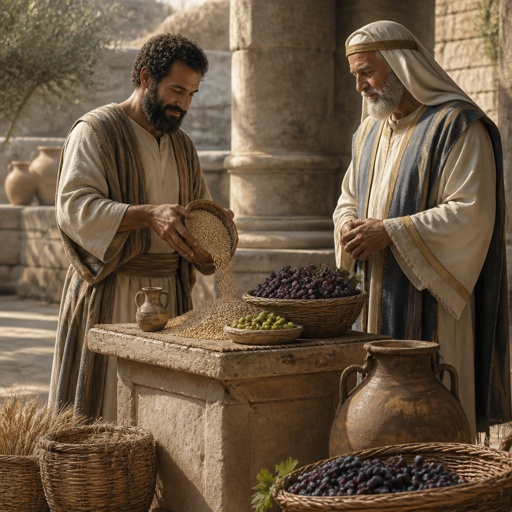
"And if a man will at all redeem ought of his tithes, he shall add thereto the fifth part thereof." - Leviticus 27:31

Leviticus 27

Leviticus 27

Leviticus 27

Leviticus 27:1 - "And the LORD spake unto Moses, saying,"

Leviticus 27:4 - "And if it be a female, then thy estimation shall be thirty shekels."

Leviticus 7:31 - "And the priest shall burn the fat upon the altar: but the breast shall be Aaron's and his sons'."

Leviticus 22:31 - "Therefore shall ye keep my commandments, and do them: I am the LORD."

Leviticus 27:27 - "And if it be of an unclean beast, then he shall redeem it according to thine estimation, and shall add a fifth part of it thereto: or if it be not redeemed, then it shall be sold according to thy estimation."

Leviticus 16:31 - "It shall be a sabbath of rest unto you, and ye shall afflict your souls, by a statute for ever."

Proverbs 31:27 - "She looketh well to the ways of her household, and eateth not the bread of idleness."

Leviticus 26:27 - "And if ye will not for all this hearken unto me, but walk contrary unto me;"

Leviticus 27:34 - "These are the commandments, which the LORD commanded Moses for the children of Israel in mount Sinai."
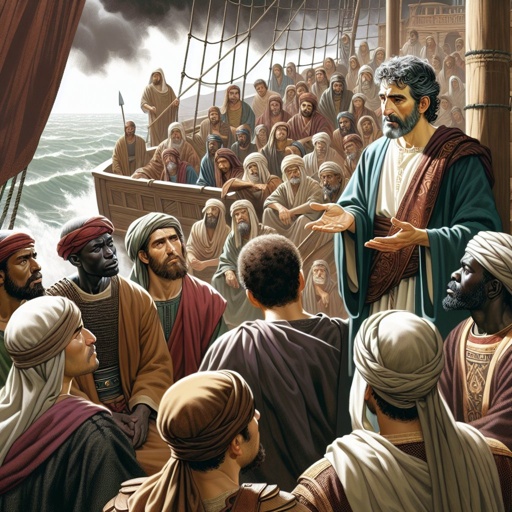
Acts 27:31 - "Paul said to the centurion and to the soldiers, Except these abide in the ship, ye cannot be saved."

Leviticus 23:31 - "Ye shall do no manner of work: it shall be a statute for ever throughout your generations in all your dwellings."

Leviticus 27:25 - "And all thy estimations shall be according to the shekel of the sanctuary: twenty gerahs shall be the shekel."

Job 31:27 - "And my heart hath been secretly enticed, or my mouth hath kissed my hand:"

1 Chronicles 27:31 - "And over the flocks was Jaziz the Hagerite. All these were the rulers of the substance which was king David's."

Leviticus 27:13 - "But if he will at all redeem it, then he shall add a fifth part thereof unto thy estimation."

Leviticus 27:30 - "And all the tithe of the land, whether of the seed of the land, or of the fruit of the tree, is the LORD'S: it is holy unto the LORD."

Leviticus 11:31 - "These are unclean to you among all that creep: whosoever doth touch them, when they be dead, shall be unclean until the even."

Leviticus 27:17 - "If he sanctify his field from the year of jubile, according to thy estimation it shall stand."

Leviticus 18:27 - "(For all these abominations have the men of the land done, which were before you, and the land is defiled;)"

"And the LORD spake unto Moses, saying," - Leviticus 27:1

Leviticus 19:31 - "¶ Regard not them that have familiar spirits, neither seek after wizards, to be defiled by them: I am the LORD your God."

Leviticus 15:31 - "Thus shall ye separate the children of Israel from their uncleanness; that they die not in their uncleanness, when they defile my tabernacle that is among them."
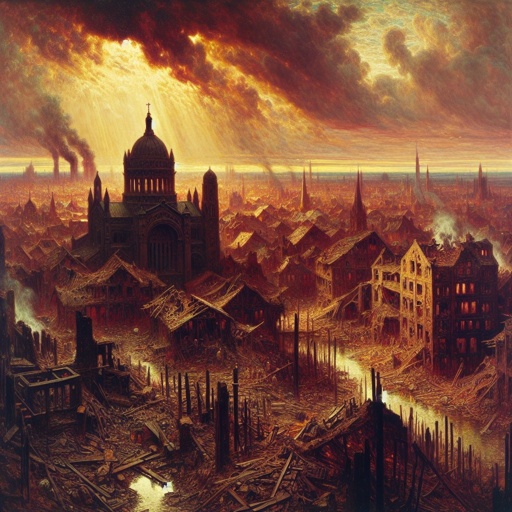
Leviticus 26:31 - "And I will make your cities waste, and bring your sanctuaries unto desolation, and I will not smell the savour of your sweet odours."

Leviticus 27:12 - "And the priest shall value it, whether it be good or bad: as thou valuest it, who art the priest, so shall it be."

Leviticus 27:20 - "And if he will not redeem the field, or if he have sold the field to another man, it shall not be redeemed any more."