The Aroma of Obedience: A Closer Look at Leviticus 2:15
“And thou shalt put oil upon it, and lay frankincense thereon: it is a meat offering.” — Leviticus 2:15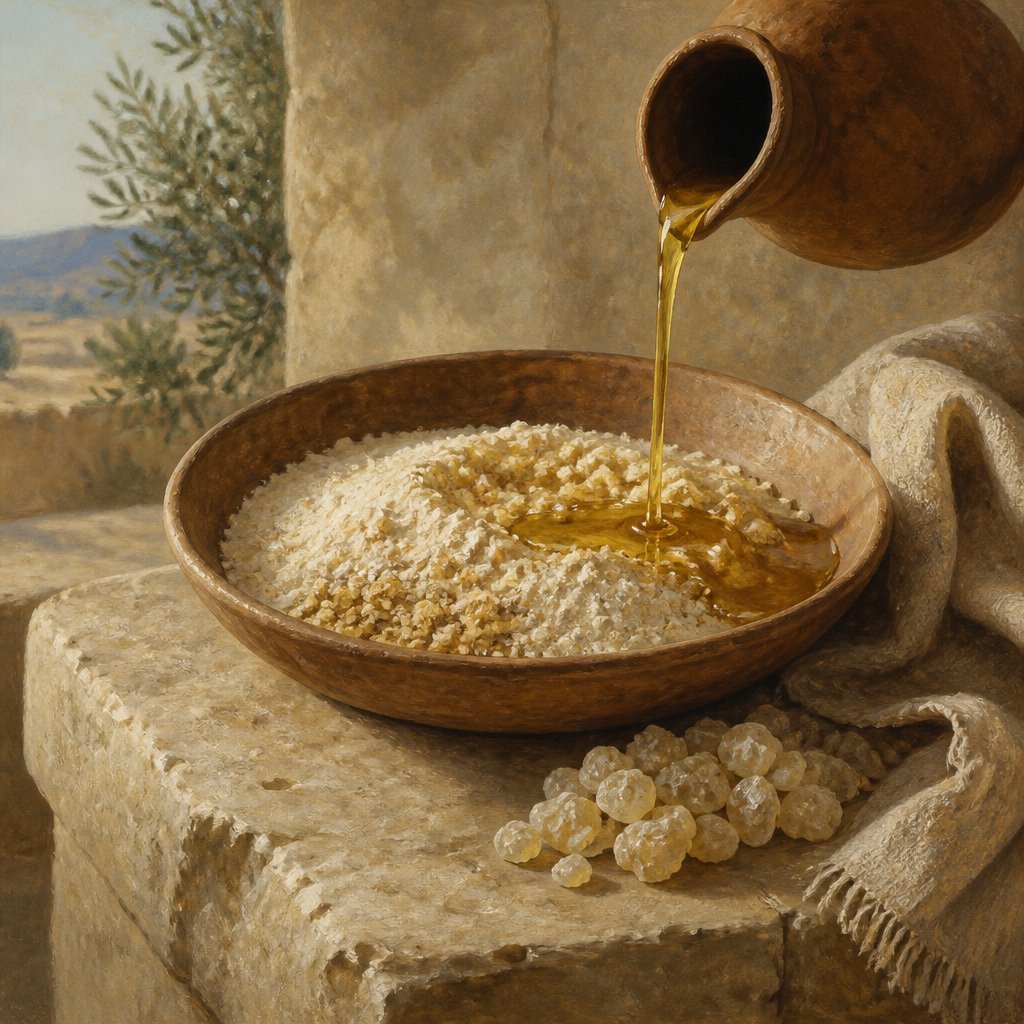
Leviticus 2:15 states, "And thou shalt put oil upon it, and lay frankincense thereon: it is a meat offering." This verse, nestled within the various laws and rituals given to the Israelites during their wilderness journey, might at first glance seem obscure or mundane. However, it offers profound insights about our relationship with God and the nature of true worship.
To fully grasp the significance of this verse, we must first understand the cultural and theological context in which it was written. In ancient Israel, offerings were central to worship and were a means for the people to express their love, dedication, and reliance on God. The meat offering, or grain offering as it is sometimes referred, symbolizes the people's acknowledgment of God’s providence and their gratitude for His blessings.
In the verse, we see two key components that were to be included in the meat offering: oil and frankincense. Oil in biblical texts often symbolizes the presence of the Holy Spirit or anointing. The act of putting oil upon the offering signifies that God’s Spirit is being invoked and that the offering is being dedicated for a holy purpose. It suggests that our offerings to God should be infused with His presence, implying that any act of worship or service must be undergirded by a genuine engagement with the Holy Spirit.
Frankincense, on the other hand, was a precious incense used during various religious ceremonies. Its sweetness represents the special fragrance of worship that pleases God. In the context of the meat offering, the laying of frankincense expresses the flavor of our shared communion with God. It foreshadows what we encounter in the New Testament, where the prayers of the saints are described as going up before God as a fragrant offering (Revelation 5:8). Thus, frankincense symbolizes the need for our offerings, both physical and spiritual, to carry a pleasing aroma before God, reflecting our hearts' true intentions.
When we contemplate Leviticus 2:15, we are invited to examine our lives and consider how we can present ourselves as living offerings to God (Romans 12:1). Are we allowing the Holy Spirit to ‘oil’ our actions, thoughts, and prayers? Do our lives carry the sweet fragrance of Christ’s love, grace, and righteousness? In our worship, both in community and privately, do we intentionally invite the presence of the Holy Spirit, ensuring that our worship is not just a routine, but a heartfelt response to God’s holiness?
For the Israelites, offerings were an essential act of obedience and submission to God’s law. Our modern-day worship should reflect that same heart of obedience. Bringing oil and frankincense into the equation points toward the depths of involvement that God desires from us. We are to bring more than just our material possessions; we are to bring our very selves—an act of total surrendered worship.
Moreover, we can draw another layer of truth from this passage: the communal aspect of worship. The grain offering was not made in isolation; it involved the community coming together in praise and thanksgiving. Worship is never a solitary act. It is a relational experience, both with God and each other. Just as the Israelites would gather to offer together, we, too, should come together as the Body of Christ, magnifying the oil and fragrance that we bring.
In conclusion, Leviticus 2:15 serves as a beautiful reminder that true worship is holistic—it engages our spirit, body, and community. It asks us to consider: How are we engaging the Holy Spirit in our offerings? Do our lives reflect the sweet aroma of obedience to God’s call? As we ponder these questions, let us strive to be vessels of His Spirit, bringing forth offerings that not only honor Him but also create a deep, fragrant communion with one another in worship.
Get our apps


Artwork for Leviticus 2:15

Leviticus 2:15 - "And thou shalt put oil upon it, and lay frankincense thereon: it is a meat offering."
"And thou shalt put oil upon it, and lay frankincense thereon: it is a meat offering." - Leviticus 2:15

Leviticus 15:2 - "Speak unto the children of Israel, and say unto them, When any man hath a running issue out of his flesh, because of his issue he is unclean."

Leviticus 23:15-22

Leviticus 11:15 - "Every raven after his kind;"

Leviticus 15:1 - "And the LORD spake unto Moses and to Aaron, saying,"

Leviticus 15:15 - "And the priest shall offer them, the one for a sin offering, and the other for a burnt offering; and the priest shall make an atonement for him before the LORD for his issue."

Leviticus 15:9 - "And what saddle soever he rideth upon that hath the issue shall be unclean."

Leviticus 22:15 - "And they shall not profane the holy things of the children of Israel, which they offer unto the LORD;"

Leviticus 15:17 - "And every garment, and every skin, whereon is the seed of copulation, shall be washed with water, and be unclean until the even."

Leviticus 14:15 - "And the priest shall take some of the log of oil, and pour it into the palm of his own left hand:"

Leviticus 13:15 - "And the priest shall see the raw flesh, and pronounce him to be unclean: for the raw flesh is unclean: it is a leprosy."

"Every raven after his kind;" - Leviticus 11:15

Leviticus 21:15 - "Neither shall he profane his seed among his people: for I the LORD do sanctify him."

Leviticus 15:21 - "And whosoever toucheth her bed shall wash his clothes, and bathe himself in water, and be unclean until the even."

Leviticus 15:33 - "And of her that is sick of her flowers, and of him that hath an issue, of the man, and of the woman, and of him that lieth with her that is unclean."

Leviticus 15:12 - "And the vessel of earth, that he toucheth which hath the issue, shall be broken: and every vessel of wood shall be rinsed in water."

Leviticus 15:4 - "Every bed, whereon he lieth that hath the issue, is unclean: and every thing, whereon he sitteth, shall be unclean."

Leviticus 3:15 - "And the two kidneys, and the fat that is upon them, which is by the flanks, and the caul above the liver, with the kidneys, it shall he take away."

Leviticus 24:15 - "And thou shalt speak unto the children of Israel, saying, Whosoever curseth his God shall bear his sin."

Leviticus 15:23 - "And if it be on her bed, or on any thing whereon she sitteth, when he toucheth it, he shall be unclean until the even."

Leviticus 9:15 - "¶ And he brought the people's offering, and took the goat, which was the sin offering for the people, and slew it, and offered it for sin, as the first."

Leviticus 15:28 - "But if she be cleansed of her issue, then she shall number to herself seven days, and after that she shall be clean."

Leviticus 15:5 - "And whosoever toucheth his bed shall wash his clothes, and bathe himself in water, and be unclean until the even."

"And the LORD spake unto Moses and to Aaron, saying," - Leviticus 15:1

Leviticus 27:15 - "And if he that sanctified it will redeem his house, then he shall add the fifth part of the money of thy estimation unto it, and it shall be his."

Leviticus 15:18 - "The woman also with whom man shall lie with seed of copulation, they shall both bathe themselves in water, and be unclean until the even."

Leviticus 18:15 - "Thou shalt not uncover the nakedness of thy daughter in law: she is thy son's wife; thou shalt not uncover her nakedness."

Leviticus 4:15 - "And the elders of the congregation shall lay their hands upon the head of the bullock before the LORD: and the bullock shall be killed before the LORD."

Leviticus 15:20 - "And every thing that she lieth upon in her separation shall be unclean: every thing also that she sitteth upon shall be unclean."