The Anatomy of Sacrifice: Understanding Our Offerings to God
“And the two kidneys, and the fat that is upon them, which is by the flanks, and the caul above the liver, with the kidneys, it shall he take away.” — Leviticus 3:10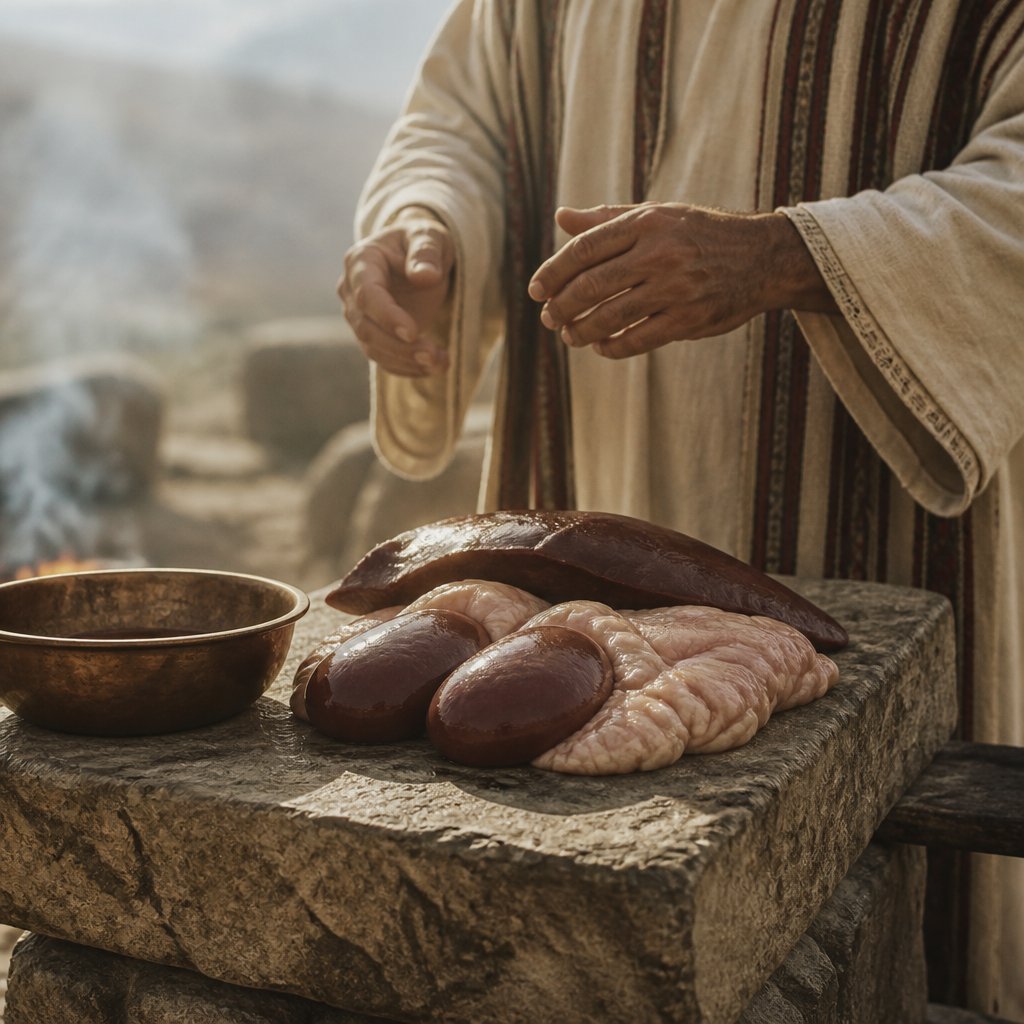
Leviticus 3:10 reads, "And the two kidneys, and the fat that is upon them, which is by the flanks, and the caul above the liver, with the kidneys, it shall he take away." At first glance, this particular verse may seem out of place within the contemporary context of our faith. The intricacies of Old Testament sacrifices might appear foreign or even irrelevant to modern believers. However, upon closer examination, the themes of this passage reveal profound spiritual truths about our relationship with God, our understanding of holiness, and the nature of our offerings.
In the Levitical system, offerings were a vital part of worship, meant to express one's devotion and dedication to God. The specific instructions given to the Israelites outlined which parts of the animal were to be offered and which were to be set aside. The kidneys, fat, and portions of the liver were not merely left behind due to arbitrary choices but rather pointed to deeper spiritual realities.
The kidneys, for instance, in biblical times were often considered to be the seat of emotions and thoughts, analogous to our modern understanding of the heart as the center of our emotional and spiritual lives. By instructing that the kidneys be removed from the sacrificial animal, God was signaling that He desires not only the outward appearance of sacrifice but the inner purity of the heart. God wants us to bring our whole selves—our thoughts, emotions, and intentions—to Him. How often do we present a false front, offering lip service to God while our hearts are elsewhere? True worship stems from a heart aligned with His will.
Furthermore, the fat in biblical times often symbolized abundance and richness. It was considered the best part of the sacrifice. By commanding that the fat be set aside, God was teaching the Israelites about the nature of true sacrifice. It is more than just a physical offering; it’s about prioritizing God in every area of our lives. The call to set aside fat reflects the need to examine what we consider our 'best,' our most valuable resources in time, talent, and treasure. Are we giving God our excess, or are we making offerings rooted in genuine sacrifice?
Moreover, the significance of these offerings rests in their symbolism of cleanliness and holiness. The caul above the liver signifies the internal purity required for coming into the presence of God. The regulations on what could be offered and what had to be removed reveal an understanding that God is holy, and we are to approach Him with respect, reverence, and purity. It raises an important question: Are we entering into God’s presence with the same sense of awe and commitment?
Throughout the Bible, there is a constant thread of God desiring a relationship with His people—a relationship characterized by honesty, reverence, and heartfelt devotion. In the New Testament, we see these themes echoed as Paul writes in Romans 12:1 (KJV), "I beseech you therefore, brethren, by the mercies of God, that ye present your bodies a living sacrifice, holy, acceptable unto God, which is your reasonable service." Here, we see continuity in God's desire: He seeks our total surrender.
In conclusion, Leviticus 3:10 teaches us that our offerings to God, while perhaps not involving the physical act of sacrifice today, still require a careful examination of our hearts and lives. As we seek to worship Him, let us ensure we are not offering merely the remnants of our lives—the leftovers of our days—but rather presenting our bodies and lives as living sacrifices. Let us discern what we hold dear and be willing to set aside everything that does not honor Him. A true offering is a reflection of a heart committed to seeking Him above all else.
Get our apps


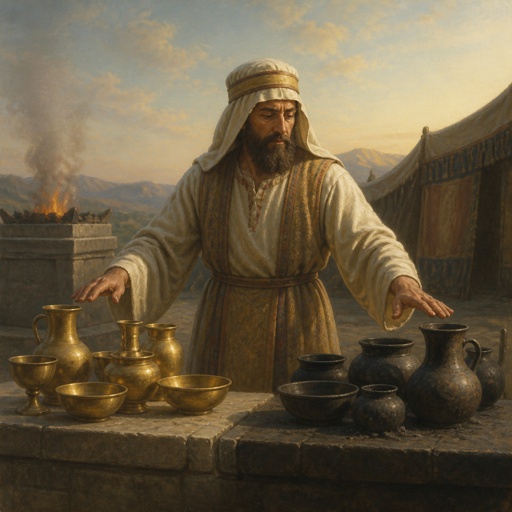
Artwork for Leviticus 3:10

Leviticus 3:10 - "And the two kidneys, and the fat that is upon them, which is by the flanks, and the caul above the liver, with the kidneys, it shall he take away."
"And the two kidneys, and the fat that is upon them, which is by the flanks, and the caul above the liver, with the kidneys, it shall he take away." - Leviticus 3:10

Leviticus 10:3 - "Then Moses said unto Aaron, This is it that the LORD spake, saying, I will be sanctified in them that come nigh me, and before all the people I will be glorified. And Aaron held his peace."

Leviticus 10:10 - "And that ye may put difference between holy and unholy, and between unclean and clean;"

leviticus 16:7-10

Leviticus 10:20 - "And when Moses heard that, he was content."
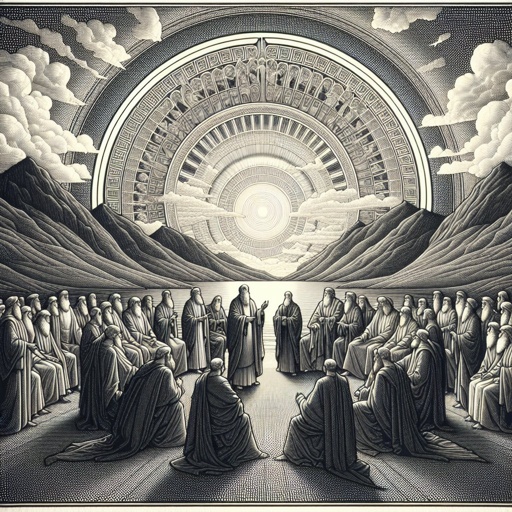
Leviticus 10:8 - "¶ And the LORD spake unto Aaron, saying,"

Leviticus 12:3 - "And in the eighth day the flesh of his foreskin shall be circumcised."

Leviticus 10:2 - "And there went out fire from the LORD, and devoured them, and they died before the LORD."

Leviticus 26:10 - "And ye shall eat old store, and bring forth the old because of the new."

Leviticus 8:10 - "And Moses took the anointing oil, and anointed the tabernacle and all that was therein, and sanctified them."

Leviticus 10:5 - "So they went near, and carried them in their coats out of the camp; as Moses had said."

Leviticus 3:12 - "¶ And if his offering be a goat, then he shall offer it before the LORD."

Leviticus 8:3 - "And gather thou all the congregation together unto the door of the tabernacle of the congregation."

Leviticus 26:3 - "¶ If ye walk in my statutes, and keep my commandments, and do them;"

"¶ And the LORD spake unto Aaron, saying," - Leviticus 10:8
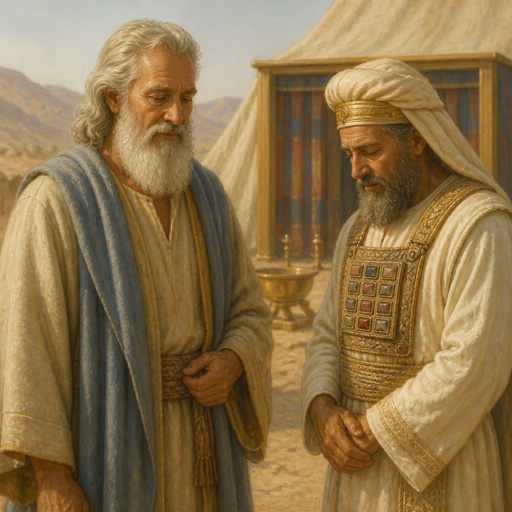
"And when Moses heard that, he was content." - Leviticus 10:20

Leviticus 3:7 - "If he offer a lamb for his offering, then shall he offer it before the LORD."

Leviticus 7:3 - "And he shall offer of it all the fat thereof; the rump, and the fat that covereth the inwards,"

Leviticus 3:3 - "And he shall offer of the sacrifice of the peace offering an offering made by fire unto the LORD; the fat that covereth the inwards, and all the fat that is upon the inwards,"
"And that ye may put difference between holy and unholy, and between unclean and clean;" - Leviticus 10:10

Leviticus 3:11 - "And the priest shall burn it upon the altar: it is the food of the offering made by fire unto the LORD."

Leviticus 22:10 - "There shall no stranger eat of the holy thing: a sojourner of the priest, or an hired servant, shall not eat of the holy thing."

Leviticus 7:10 - "And every meat offering, mingled with oil, and dry, shall all the sons of Aaron have, one as much as another."

Leviticus 1:10 - "¶ And if his offering be of the flocks, namely, of the sheep, or of the goats, for a burnt sacrifice; he shall bring it a male without blemish."

Leviticus 11:3 - "Whatsoever parteth the hoof, and is clovenfooted, and cheweth the cud, among the beasts, that shall ye eat."

Leviticus 9:10 - "But the fat, and the kidneys, and the caul above the liver of the sin offering, he burnt upon the altar; as the LORD commanded Moses."

Leviticus 10:11 - "And that ye may teach the children of Israel all the statutes which the LORD hath spoken unto them by the hand of Moses."

Leviticus 17:3 - "What man soever there be of the house of Israel, that killeth an ox, or lamb, or goat, in the camp, or that killeth it out of the camp,"

Leviticus 16:3 - "Thus shall Aaron come into the holy place: with a young bullock for a sin offering, and a ram for a burnt offering."