The Holiness of Atonement: Understanding Leviticus 6:25
"Speak unto Aaron and to his sons, saying, This is the law of the sin offering: In the place where the burnt offering is killed shall the sin offering be killed before the LORD: it is most holy." - Leviticus 6:25
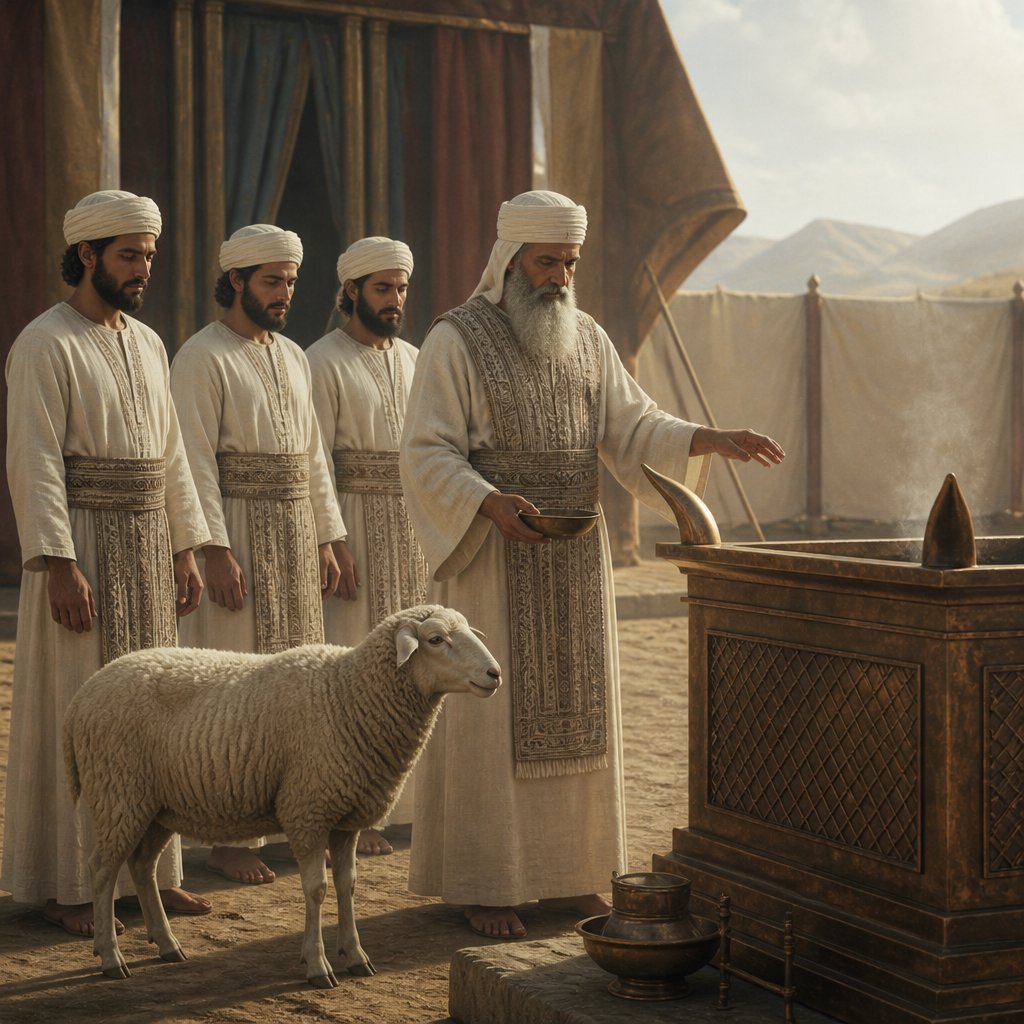
In the heart of the Old Testament, nestled amid the rituals and regulations given to the Levitical priests, lies a profound truth about God’s holiness and our need for atonement. Leviticus 6:25 declares, "Speak unto Aaron and to his sons, saying, This is the law of the sin offering: In the place where the burnt offering is killed shall the sin offering be killed before the LORD: it is most holy." This verse serves as a reminder of the seriousness of sin and highlights the sacredness of the remedy provided by God.
To grasp the significance of this verse, we must first appreciate the context of Aaron and his sons as priests. Designed to mediate between God and the people of Israel, their roles were rooted in holiness. The sin offering had specific instructions, emphasizing that it must be executed in the same location as the burnt offering. This speaks to the interconnectedness of various sacrifices, all aimed at restoring a right relationship with God.
When we examine the sin offering, we see that it was not just another ritual to fulfill legalistic obligations; it was a potent symbol of both the gravity of sin and God's deep desire for reconciliation. The simplicity of the command to Aaron reminds us that sacrifice was not merely about the act but was deeply relational. God sought to engage His people in a meaningful way, teaching them about the weight of sin and the cost of redemption.
The repetition of the phrase "it is most holy" underscores the importance of this offering. In a world filled with distractions and trivial pursuits, we must remember that God’s holiness requires us to take sin seriously. It is most holy because it points to the very character of God—perfect, pure, and completely separate from sin. Consider how this reflects on our daily lives. How often do we treat our sins lightly? How easy it is to minimize wrongdoing in a culture that often embraces moral ambiguity! Yet, God invites us to recognize that no matter how small the infraction may seem, it impacts our relationship with Him and distorts the intention of our lives.
The placement of the sin offering next to the burnt offering is significant. The burnt offering represented total dedication to God, a surrendering of oneself. In parallel, the sin offering provided a pathway back to God when one had failed to uphold that commitment. This juxtaposition serves as a reminder that in our pursuit of holiness, we inevitably face moments of failure. However, through the sin offering, God illustrates that repentance and restoration are always possible.
As we consider our own lives and the areas where we need to confess and repent, we can reflect on the type of sacrifices we bring before God. Are we bringing our distractions, our complacency, or even our bitterness? In a sense, every sacrifice made under the Old Covenant points forward to the ultimate sacrifice—the sacrifice of Jesus Christ on the cross. Unlike the offerings of Heifer, lambs, and doves, His offering was once and for all, a complete and total redemption for humankind.
As we meditate on Leviticus 6:25, let us be reminded that our approach to God involves acknowledging our sin, confessing with sincerity, and embracing His cleansing power. He longs for us to come before Him, to draw near with a contrite heart. In doing so, we acknowledge His holiness while also entering into the profound grace that is offered through Christ.
Let us end by reflecting upon the reality that the execution of the sin offering was not merely an endpoint; it leads into a beautiful narrative of restoration. In every sacrifice, there is a promise of new beginnings, a call to holiness, and an expectation of heartfelt worship. These aspects weave together the tapestry of faith, reminding us that God desires to commune with us, even amid our imperfections. The sanctuary of His presence awaits, inviting us to lay down our burdens and find atonement before the LORD.
Want to reflect more on Leviticus 6:25?
Continue your spiritual journey with Bible Chat — an AI-powered tool for exploring God's Word through conversation. Ask questions, discover connections, and deepen your understanding.
Get Our Apps


Leviticus 6:25 Artwork

Leviticus 6:25 - "Speak unto Aaron and to his sons, saying, This is the law of the sin offering: In the place where the burnt offering is killed shall the sin offering be killed before the LORD: it is most holy."
"Speak unto Aaron and to his sons, saying, This is the law of the sin offering: In the place where the burnt offering is killed shall the sin offering be killed before the LORD: it is most holy." - Leviticus 6:25
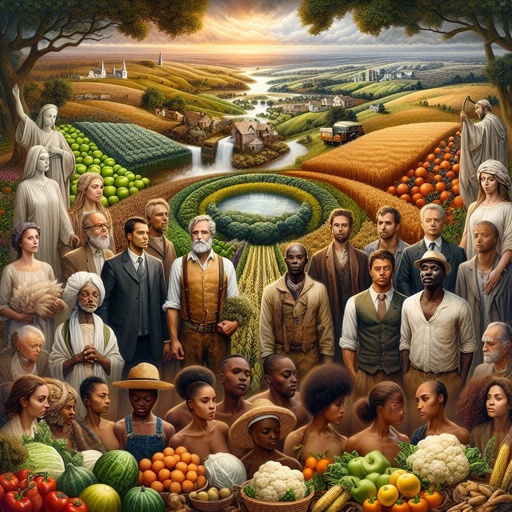
Leviticus 25:6 - "And the sabbath of the land shall be meat for you; for thee, and for thy servant, and for thy maid, and for thy hired servant, and for thy stranger that sojourneth with thee,"

Leviticus 25:26 - "And if the man have none to redeem it, and himself be able to redeem it;"

Leviticus 25:34 - "But the field of the suburbs of their cities may not be sold; for it is their perpetual possession."

Leviticus 25:1 - "And the LORD spake unto Moses in mount Sinai, saying,"

Leviticus 16:25 - "And the fat of the sin offering shall he burn upon the altar."

Leviticus 25:24 - "And in all the land of your possession ye shall grant a redemption for the land."

Leviticus 25:13 - "In the year of this jubile ye shall return every man unto his possession."

Leviticus 25:23 - "¶ The land shall not be sold for ever: for the land is mine; for ye are strangers and sojourners with me."

Leviticus 25:7 - "And for thy cattle, and for the beast that are in thy land, shall all the increase thereof be meat."
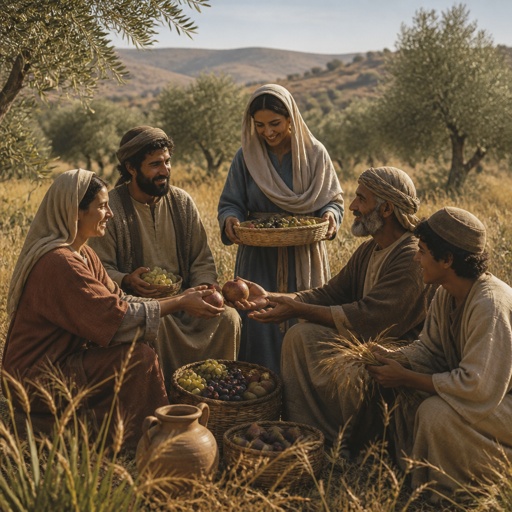
"And the sabbath of the land shall be meat for you; for thee, and for thy servant, and for thy maid, and for thy hired servant, and for thy stranger that sojourneth with thee," - Leviticus 25:6
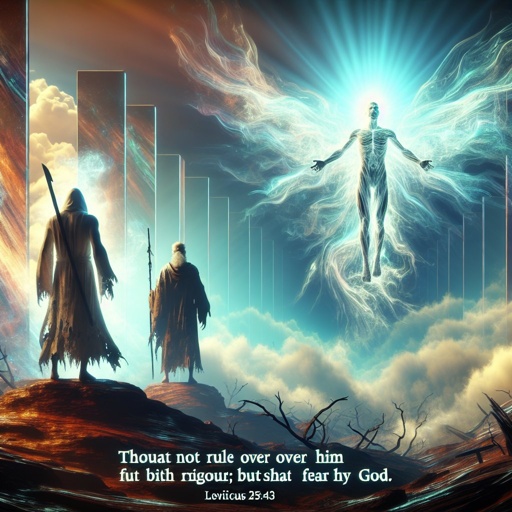
Leviticus 25:43 - "Thou shalt not rule over him with rigour; but shalt fear thy God."

Leviticus 25:32 - "Notwithstanding the cities of the Levites, and the houses of the cities of their possession, may the Levites redeem at any time."

Leviticus 27:25 - "And all thy estimations shall be according to the shekel of the sanctuary: twenty gerahs shall be the shekel."

Leviticus 25:25 - "¶ If thy brother be waxen poor, and hath sold away some of his possession, and if any of his kin come to redeem it, then shall he redeem that which his brother sold."

Cycle of sabbath rest year. Leviticus 25:1-7

Leviticus 25:12 - "For it is the jubile; it shall be holy unto you: ye shall eat the increase thereof out of the field."

Leviticus 25:40 - "But as an hired servant, and as a sojourner, he shall be with thee, and shall serve thee unto the year of jubile:"

Leviticus 26: 4-6
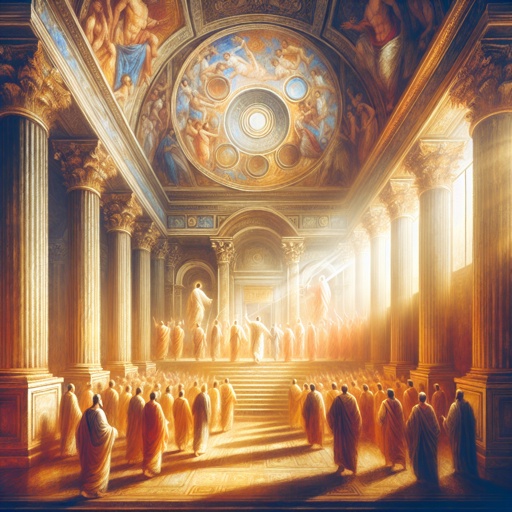
Leviticus 26: 4-6

Leviticus 25:42 - "For they are my servants, which I brought forth out of the land of Egypt: they shall not be sold as bondmen."
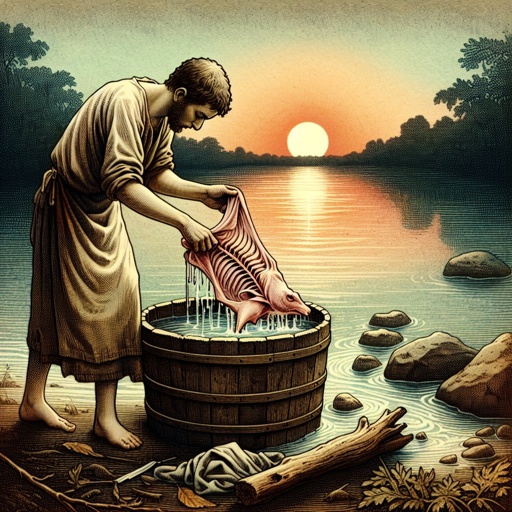
Leviticus 11:25 - "And whosoever beareth ought of the carcase of them shall wash his clothes, and be unclean until the even."

Leviticus 26: 4-6

Leviticus 25:48 - "After that he is sold he may be redeemed again; one of his brethren may redeem him:"

Leviticus 25:36 - "Take thou no usury of him, or increase: but fear thy God; that thy brother may live with thee."

Leviticus 25:19 - "And the land shall yield her fruit, and ye shall eat your fill, and dwell therein in safety."

Leviticus 6:24 - "¶ And the LORD spake unto Moses, saying,"

Leviticus 6:8 - "¶ And the LORD spake unto Moses, saying,"

Leviticus 25:21 - "Then I will command my blessing upon you in the sixth year, and it shall bring forth fruit for three years."