The Eternal Flame: A Call to Continuous Devotion
“The fire shall ever be burning upon the altar; it shall never go out.” — Leviticus 6:13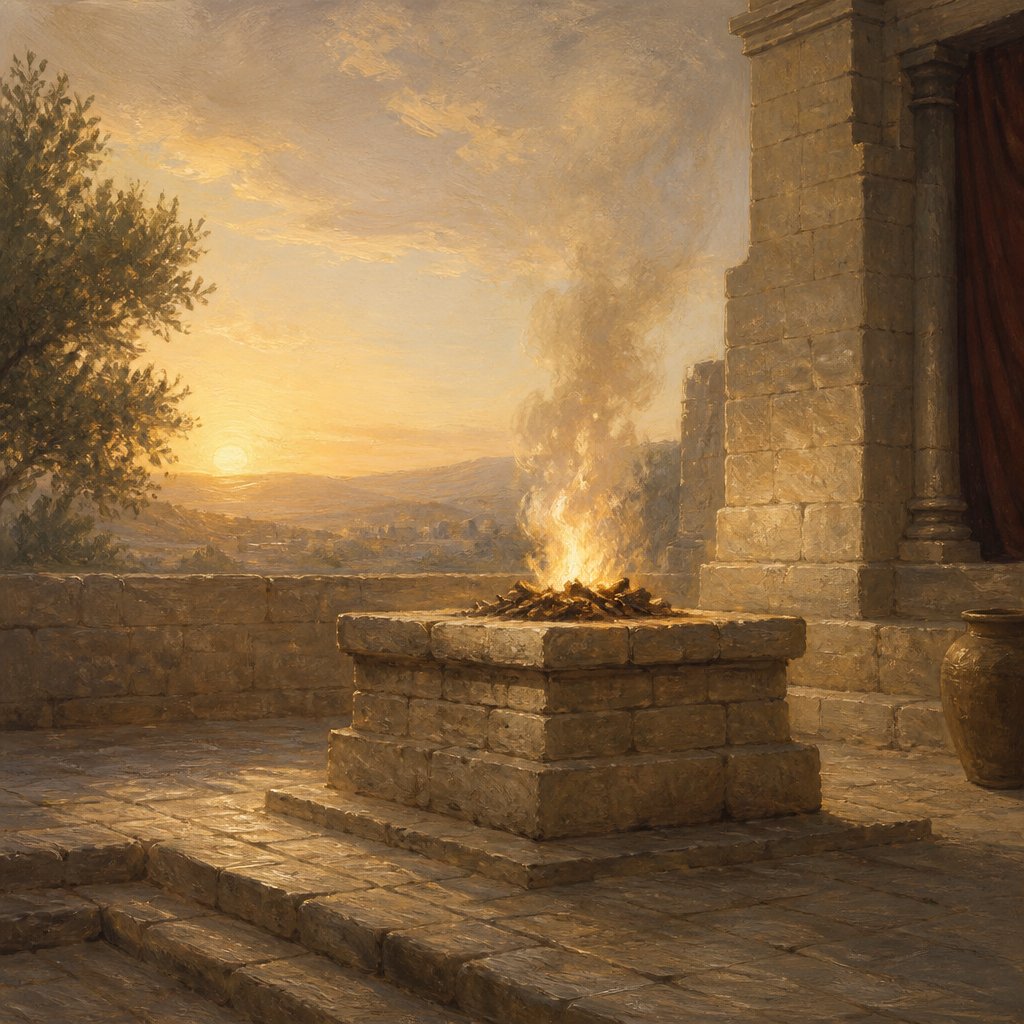
The book of Leviticus often feels like a scroll of ancient rituals and laws, far removed from the lives we lead today. Yet, within its boundaries are divine instructions that beckon believers to a deeper relationship with God. Leviticus 6:13 declares, "The fire shall ever be burning upon the altar; it shall never go out." This verse encapsulates a profound truth about continual worship and devotion, calling us to examine not only the physical fire of the altar but also the condition of our hearts.
In the ancient Israelite context, the altar was the focal point of worship, where sacrifices were made to God. The fire burning on the altar symbolized the presence of God, His acceptance of the offerings, and the life that He imparts. It was a divine mandate that the fire must never go out, representing a continuous spiritual act of devotion. This incessant fire paints a vivid picture of how our relationship with God should be: never ceasing, always alive, and continually offered.
To fully grasp the weight of this instruction, we must ask ourselves: What does it mean for the fire in our lives to never go out? In our fast-paced world, where distractions abound and spiritual apathy creeps in, we must actively nurture the flame of our devotion. Just as the priests were tasked with ensuring the fire on the altar remained ablaze, we are called to ignite and sustain our passion for God.
This verse is a compelling reminder that God's presence needs to be at the center of our lives, just as the altar was central to the Israelites' worship. The fire that does not go out requires our participation; it demands our commitment to prayer, worship, reading the Scriptures, and living a life that reflects the character of Christ. As Paul wrote in Romans 12:1, we are to present our bodies as living sacrifices, holy and acceptable to God. Our personal altars may vary—some may find their fire in service, others in study, while some may discover it through acts of love and kindness. Whatever the case, let us not allow the flames of our devotion to extinguish.
The command that the fire "shall never go out" extends beyond mere religious activity. It is a call to cultivate a heart that continually seeks God and His Kingdom. Consider the story of the ten virgins in Matthew 25:1-13. The five wise virgins kept their lamps trimmed and burning, while the foolish ones let their flames flicker and die out. When the bridegroom arrived, only those whose lamps were full could enter the wedding feast. This parable emphasizes the necessity of maintaining our spiritual fervor in anticipation of Christ's return. Just as the fire on the altar signifies readiness and commitment, our personal flame must also be kept alive in our daily lives.
Furthermore, this verse compels us to examine our sacrifices. The Israelites were called to bring their best to God, ensuring that what was offered was worthy. In our lives, this translates to giving God our best—our time, talents, and treasures. When we prioritize Him and His will in every aspect of our lives, the fire continues to burn brightly. Let us not become complacent in our spiritual practices or allow the demands of life to douse the flames of our devotion.
As we reflect on Leviticus 6:13, let us commit to being caretakers of our personal altars. Let our prayer lives be fervent, our study of the Word be fruitful, and our worship be genuine. As we do so, we evoke the presence of God in our lives, ensuring that the fire on our altars will always shine brightly, illuminating our paths and drawing others toward the transformative love of Christ. Together, let us keep the fire burning, for it is in that flame that we encounter the living God.
Get our apps


Artwork for Leviticus 6:13

Leviticus 6:13 - "The fire shall ever be burning upon the altar; it shall never go out."
"The fire shall ever be burning upon the altar; it shall never go out." - Leviticus 6:13

Leviticus 13:6 - "And the priest shall look on him again the seventh day: and, behold, if the plague be somewhat dark, and the plague spread not in the skin, the priest shall pronounce him clean: it is but a scab: and he shall wash his clothes, and be clean."

Leviticus 24:13 - "And the LORD spake unto Moses, saying,"

Leviticus 26: 4-6
Leviticus 26: 4-6

Leviticus 26: 4-6

Leviticus 21:13 - "And he shall take a wife in her virginity."

Leviticus 13:1 - "And the LORD spake unto Moses and Aaron, saying,"

Leviticus 6:24 - "¶ And the LORD spake unto Moses, saying,"

Leviticus 6:8 - "¶ And the LORD spake unto Moses, saying,"

Leviticus 13:35 - "But if the scall spread much in the skin after his cleansing;"

Leviticus 13:29 - "¶ If a man or woman have a plague upon the head or the beard;"

Leviticus 6:19 - "¶ And the LORD spake unto Moses, saying,"

Leviticus 6:1 - "And the LORD spake unto Moses, saying,"

Leviticus 13:18 - "¶ The flesh also, in which, even in the skin thereof, was a boil, and is healed,"

Leviticus 13:14 - "But when raw flesh appeareth in him, he shall be unclean."

Leviticus 13:47 - "¶ The garment also that the plague of leprosy is in, whether it be a woollen garment, or a linen garment;"

Leviticus 13:9 - "¶ When the plague of leprosy is in a man, then he shall be brought unto the priest;"

Leviticus 1:6 - "And he shall flay the burnt offering, and cut it into his pieces."

Leviticus 13:22 - "And if it spread much abroad in the skin, then the priest shall pronounce him unclean: it is a plague."

Leviticus 25:13 - "In the year of this jubile ye shall return every man unto his possession."

Leviticus 8:6 - "And Moses brought Aaron and his sons, and washed them with water."

Leviticus 13:19 - "And in the place of the boil there be a white rising, or a bright spot, white, and somewhat reddish, and it be shewed to the priest;"

Leviticus 2:6 - "Thou shalt part it in pieces, and pour oil thereon: it is a meat offering."

Leviticus 13:48 - "Whether it be in the warp, or woof; of linen, or of woollen; whether in a skin, or in any thing made of skin;"

Leviticus 13:50 - "And the priest shall look upon the plague, and shut up it that hath the plague seven days:"

Leviticus 6:23 - "For every meat offering for the priest shall be wholly burnt: it shall not be eaten."

Leviticus 6:29 - "All the males among the priests shall eat thereof: it is most holy."

Leviticus 27:13 - "But if he will at all redeem it, then he shall add a fifth part thereof unto thy estimation."