The Weight of Our Words: A Call to Integrity
“If a soul sin, and commit a trespass against the LORD, and lie unto his neighbour in that which was delivered him to keep, or in fellowship, or in a thing taken away by violence, or hath deceived his neighbour;” — Leviticus 6:2
Leviticus 6:2 declares, "If a soul sin, and commit a trespass against the LORD, and lie unto his neighbour in that which was delivered him to keep, or in fellowship, or in a thing taken away by violence, or hath deceived his neighbour;" This verse, while embedded in ancient law, still echoes truths that resonate deeply in our contemporary lives. It serves as a poignant reminder of the impact of our actions and the necessary integrity we are called to uphold in our relationships with one another and with God.
The context of Leviticus is crucial to understanding its significance. As the third book of the Torah, Leviticus offers instructions to the Israelites on how to live set-apart lives, reflecting God's holiness. Within its pages, the laws concerning offerings, moral conduct, and community living emphasize not just ritualistic compliance, but also the relational ethics that honor God. Thus, when we arrive at chapter 6, we find God explicitly addressing the consequences of wrongdoing, emphasizing that sin, particularly against our neighbor and against God, is a serious matter.
At the heart of our verse lies the notion of responsibility. It opens with the phrase, "If a soul sin," indicating that wrongdoing is a possibility, even for those who seek to walk in the light of God. It conveys the truth that we are fallible beings, capable of trespasses against God and our fellow man. This is essential for our understanding: the acknowledgment of our propensity to sin is the first step toward restoration.
Sin is defined here not simply as a breaking of rules, but as a violation of trust and integrity. "Lie unto his neighbour" reveals the destructive power of deceit. Honourable relationships hinge on truthfulness. When we lie or deceive, we not only harm our neighbor but also sever our relationship with the Lord, who desires honesty in our dealings. How often do we choose the easier path of a lie over the harder, sometimes painful, path of truth? Yet, God implores us to reflect on the consequences of our choices – for lying incurs a debt that weighs heavily on our conscience and souls.
Further, the verse mentions "in fellowship" and “things taken away by violence,” highlighting different facets of relational integrity. In fellowship, we are called to build each other up in love and truth. Our interactions should foster community and nurture the bonds of trust. However, when someone breaks that fellowship by deception or violence—whether physical or emotional—the fracture it creates goes far beyond the individual; it ripples through the entire community. Without integrity, relationships become battles of self-preservation rather than instruments of grace and love.
Moreover, the warning against "deception" reminds us that sin often masquerades as something benign or justified. The enemy delights in misrepresentation and leads us into behaviors that may seem advantageous in the short term but lead to long-term consequences. Deceit can assume many forms, from outright lies to half-truths, whispering that it is acceptable to compromise our values for self-gain. Yet, every time we choose dishonesty, we stand in opposition to the character of God, the ultimate embodiment of truth.
The beauty of this scripture, however, is not found solely in its admonition but also in the grace and reconciliation it offers. Recognizing our sins is simply the beginning. God has provided a means through Christ for us to address our transgressions. The ultimate goal of God’s commands is relational restoration—not condemnation. We can confess our sin, repent, and embrace the grace that allows for healing and renewing our faith and relationships.
As we meditate on Leviticus 6:2, let us strive not only to recognize our failings but also to commit to truthfulness and integrity in all our interactions. Let our lives be marked by a sincere desire to uphold the bonds of fellowship with one another, understanding that in doing so, we glorify the God who calls us to holiness. May we be a people who let our words and actions reflect the character of Christ, being trustworthy, loving our neighbors as ourselves, and conducting ourselves in a manner that honors the Lord.
Get our apps


Artwork for Leviticus 6:2

Leviticus 6:2 - "If a soul sin, and commit a trespass against the LORD, and lie unto his neighbour in that which was delivered him to keep, or in fellowship, or in a thing taken away by violence, or hath deceived his neighbour;"
Leviticus 6:2 - "If a soul sin, and commit a trespass against the LORD, and lie unto his neighbour in that which was delivered him to keep, or in fellowship, or in a thing taken away by violence, or hath deceived his neighbour;"

Leviticus 6:2-5 - "If anyone sins and is unfaithful to the Lord by deceiving a neighbor about something entrusted to them or left in their care or about something stolen, or if they cheat their neighbor, or if they find lost property and lie about it, or if they swear falsely about any such sin that people may commit— when they sin in any of these ways and realize their guilt, they must return what they have stolen or taken by extortion, or what was entrusted to them, or the lost property they found, or whatever it was they swore falsely about. They must make restitution in full, add a fifth of the value to it and give it all to the owner on the day they present their guilt offering."

"If a soul sin, and commit a trespass against the LORD, and lie unto his neighbour in that which was delivered him to keep, or in fellowship, or in a thing taken away by violence, or hath deceived his neighbour;" - Leviticus 6:2
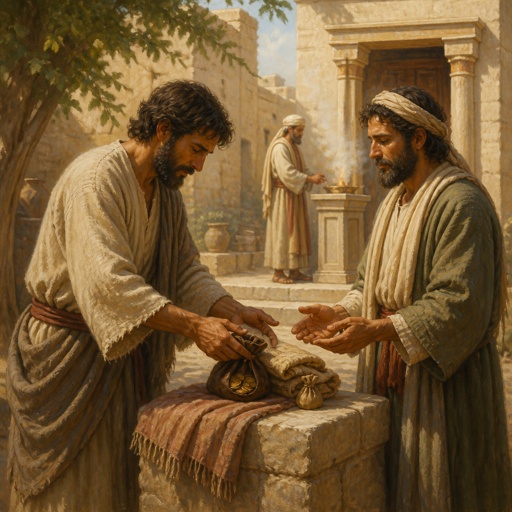
"If anyone sins and is unfaithful to the Lord by deceiving a neighbor about something entrusted to them or left in their care or about something stolen, or if they cheat their neighbor, or if they find lost property and lie about it, or if they swear falsely about any such sin that people may commit— when they sin in any of these ways and realize their guilt, they must return what they have stolen or taken by extortion, or what was entrusted to them, or the lost property they found, or whatever it was they swore falsely about. They must make restitution in full, add a fifth of the value to it and give it all to the owner on the day they present their guilt offering." - Leviticus 6:2-5

Leviticus 2:6 - "Thou shalt part it in pieces, and pour oil thereon: it is a meat offering."

"Thou shalt part it in pieces, and pour oil thereon: it is a meat offering." - Leviticus 2:6

Leviticus 26: 4-6

Leviticus 26: 4-6

Leviticus 26: 4-6

Leviticus 6:24 - "¶ And the LORD spake unto Moses, saying,"

Leviticus 6:8 - "¶ And the LORD spake unto Moses, saying,"

Leviticus 6:19 - "¶ And the LORD spake unto Moses, saying,"

Leviticus 6:1 - "And the LORD spake unto Moses, saying,"

Leviticus 1:6 - "And he shall flay the burnt offering, and cut it into his pieces."

Leviticus 8:6 - "And Moses brought Aaron and his sons, and washed them with water."

Leviticus 6:23 - "For every meat offering for the priest shall be wholly burnt: it shall not be eaten."

Leviticus 6:29 - "All the males among the priests shall eat thereof: it is most holy."

Leviticus 6:13 - "The fire shall ever be burning upon the altar; it shall never go out."

Leviticus 6:6 - "And he shall bring his trespass offering unto the LORD, a ram without blemish out of the flock, with thy estimation, for a trespass offering, unto the priest:"

Leviticus 11:6 - "And the hare, because he cheweth the cud, but divideth not the hoof; he is unclean unto you."

Leviticus 6:14 - "¶ And this is the law of the meat offering: the sons of Aaron shall offer it before the LORD, before the altar."

"¶ And the LORD spake unto Moses, saying," - Leviticus 6:24

"And the LORD spake unto Moses, saying," - Leviticus 6:1

"¶ And the LORD spake unto Moses, saying," - Leviticus 6:8

"¶ And the LORD spake unto Moses, saying," - Leviticus 6:19

Leviticus 6:26 - "The priest that offereth it for sin shall eat it: in the holy place shall it be eaten, in the court of the tabernacle of the congregation."

Leviticus 18:6 - "¶ None of you shall approach to any that is near of kin to him, to uncover their nakedness: I am the LORD."

Leviticus 24:6 - "And thou shalt set them in two rows, six on a row, upon the pure table before the LORD."

Leviticus 7:6 - "Every male among the priests shall eat thereof: it shall be eaten in the holy place: it is most holy."