The Holiness of Sacrifice: A Deeper Look at Trespass Offerings
“Likewise this is the law of the trespass offering: it is most holy.” — Leviticus 7:1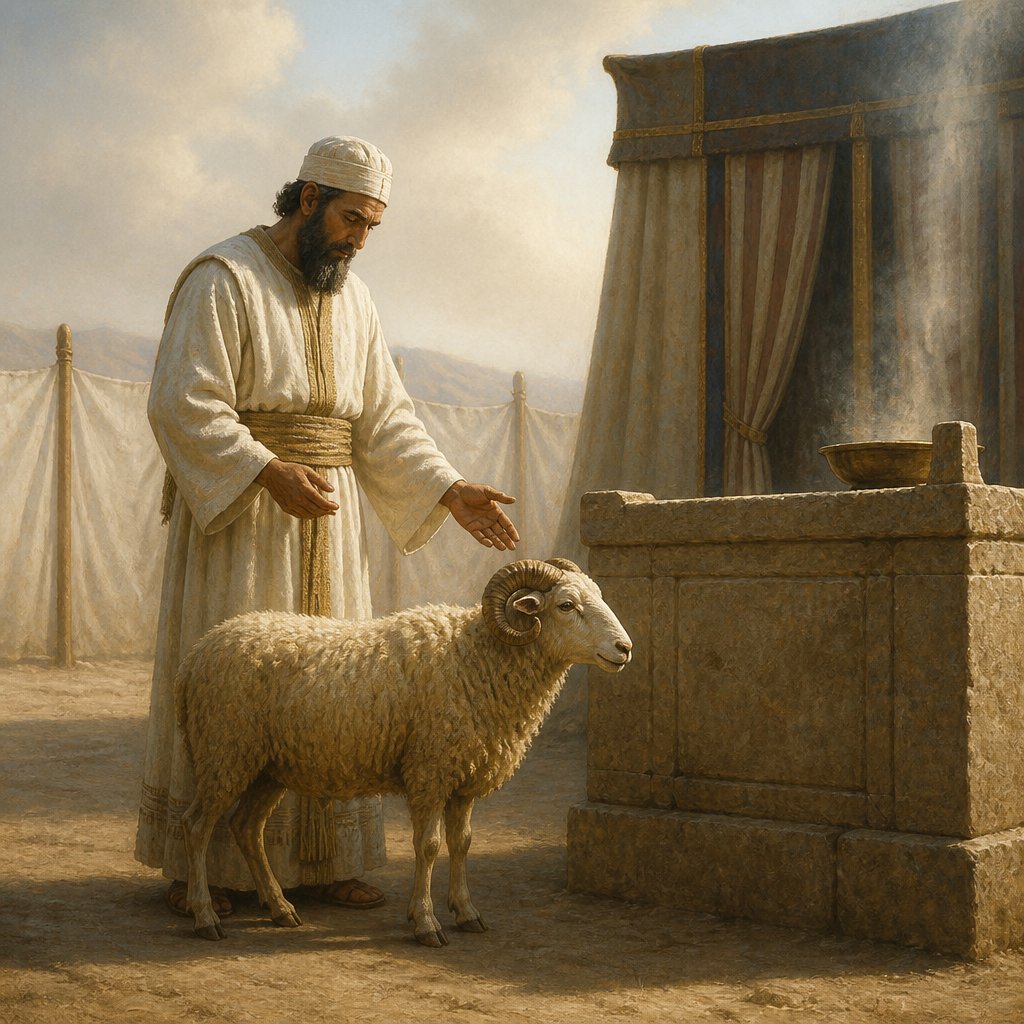
As we delve into Leviticus 7:1, we encounter a profound declaration regarding the trespass offering: "Likewise this is the law of the trespass offering: it is most holy." These words resonate deeply with the themes of holiness, atonement, and the intricate relationship between God and His people. To fully appreciate the significance of this verse, we must consider the context and implications of the trespass offering as outlined in the Levitical laws.
Firstly, it is essential to understand that the Book of Leviticus serves as a guide for the Israelites on how to approach God and live in holiness. The laws contained within this book are not arbitrary; they are divine instructions designed to teach God’s people about righteousness, purity, and relationship. As we approach this particular verse, we find that the trespass offering, designated as "most holy," was intended to address specific sins—those acts that not only disobeyed God but also harmed others.
In a world that often downplays the seriousness of sin, the specificity of the trespass offering reminds us that our actions have consequences. This offering was set apart for situations where an individual had wronged a neighbor or transgressed in the sanctuary of God. The nature of sin is such that it not only damages our relationship with God but also our relationship with one another. As James 4:17 poignantly states, "Therefore to him that knoweth to do good, and doeth it not, to him it is sin." The trespass offering illuminated the need for restoration, reconciliation, and, ultimately, repentance.
The phrase "it is most holy" points to something sacred and separate from the ordinary. Holiness in the biblical context refers to something that is set apart for God. The trespass offering, therefore, was not just a ritual to perform; it was meant to bring a broken individual back into a right relational standing both with God and their community. Each time an Israelite engaged in this act of atonement, it was a tangible reminder of their need for grace and the seriousness of their sin.
As modern believers, we may find ourselves reflecting on our own need for atonement. While we may not offer physical sacrifices in the same way as the Israelites, the principles of the trespass offering continue to resonate today. When we offend a brother or sister, we are called to make restitution—whether through an apology, a change in behavior, or a willingness to seek forgiveness. Just as the Old Testament sacrifices pointed toward something greater, our responses to sin should point towards Christ, the ultimate sacrifice.
In the New Testament, we find that Jesus fulfilled the sacrificial system. Hebrews 10:10 reminds us that "we are sanctified through the offering of the body of Jesus Christ once for all." The holiness of the trespass offering reflects the holiness required in our hearts to approach a holy God, something that can only truly be accomplished through Christ. His death and resurrection ensure that we can bring our trespasses—our sins and failures—before Him and receive the grace that restores us.
In a practical sense, what does it mean for us to engage with the truth that this law of the trespass offering is "most holy"? It compels us to take our sins seriously and to acknowledge that they impact not just our relationship with God but also our relationships with others. It encourages active repentance and reconciliation, highlighting that humility is necessary to restore what has been broken.
In conclusion, let Leviticus 7:1 be a reminder of the holiness of God and the seriousness of sin. May we approach God not with casual indifference, but with a heart that seeks to honor Him and make amends where we have faltered. As we recognize the magnitude of what Christ has done for us, let us embrace the call to holiness in our own lives, honoring the sacrifice that has set us free.
Get our apps


Artwork for Leviticus 7:1

Leviticus 7:1 - "Likewise this is the law of the trespass offering: it is most holy."
"Likewise this is the law of the trespass offering: it is most holy." - Leviticus 7:1

Cycle of sabbath rest year. Leviticus 25:1-7

Leviticus 1:7 - "And the sons of Aaron the priest shall put fire upon the altar, and lay the wood in order upon the fire:"

Leviticus 17:7

leviticus 16:7-10

Leviticus 7:22 - "¶ And the LORD spake unto Moses, saying,"

Leviticus 7:28 - "¶ And the LORD spake unto Moses, saying,"

Leviticus 7:7 - "As the sin offering is, so is the trespass offering: there is one law for them: the priest that maketh atonement therewith shall have it."

Leviticus 19:7 - "And if it be eaten at all on the third day, it is abominable; it shall not be accepted."

Leviticus 7:17 - "But the remainder of the flesh of the sacrifice on the third day shall be burnt with fire."
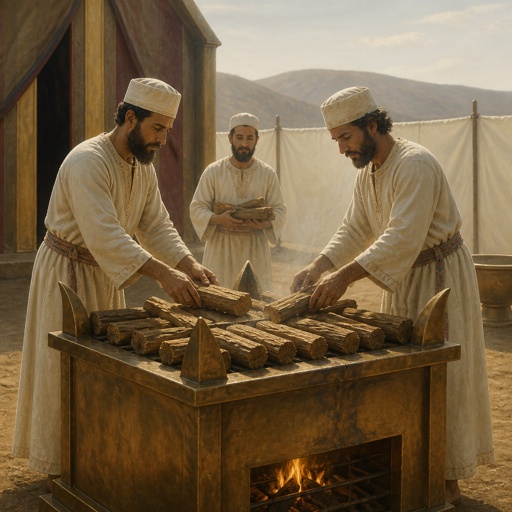
"And the sons of Aaron the priest shall put fire upon the altar, and lay the wood in order upon the fire:" - Leviticus 1:7

Leviticus 3:7 - "If he offer a lamb for his offering, then shall he offer it before the LORD."

Leviticus 7:3 - "And he shall offer of it all the fat thereof; the rump, and the fat that covereth the inwards,"

Leviticus 26:7 - "And ye shall chase your enemies, and they shall fall before you by the sword."

Leviticus 7:11 - "And this is the law of the sacrifice of peace offerings, which he shall offer unto the LORD."
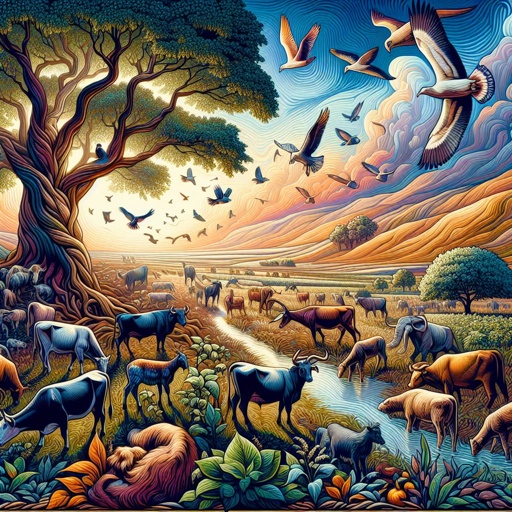
Leviticus 25:7 - "And for thy cattle, and for the beast that are in thy land, shall all the increase thereof be meat."

Leviticus 20:7 - "¶ Sanctify yourselves therefore, and be ye holy: for I am the LORD your God."

Leviticus 2:7 - "¶ And if thy oblation be a meat offering baken in the fryingpan, it shall be made of fine flour with oil."

Leviticus 7:31 - "And the priest shall burn the fat upon the altar: but the breast shall be Aaron's and his sons'."

Leviticus 7:9 - "And all the meat offering that is baken in the oven, and all that is dressed in the fryingpan, and in the pan, shall be the priest's that offereth it."

"¶ And the LORD spake unto Moses, saying," - Leviticus 7:22

"¶ And the LORD spake unto Moses, saying," - Leviticus 7:28

Leviticus 7:26 - "Moreover ye shall eat no manner of blood, whether it be of fowl or of beast, in any of your dwellings."

Leviticus 16:7 - "And he shall take the two goats, and present them before the LORD at the door of the tabernacle of the congregation."

Leviticus 23:7 - "In the first day ye shall have an holy convocation: ye shall do no servile work therein."

Leviticus 11:7 - "And the swine, though he divide the hoof, and be clovenfooted, yet he cheweth not the cud; he is unclean to you."

Leviticus 7:23 - "Speak unto the children of Israel, saying, Ye shall eat no manner of fat, of ox, or of sheep, or of goat."

Leviticus 7:5 - "And the priest shall burn them upon the altar for an offering made by fire unto the LORD: it is a trespass offering."

Leviticus 23:21