Cleansed and Set Apart: The Sacredness of Covenant
“And he killed it; and Moses sprinkled the blood upon the altar round about.” — Leviticus 8:19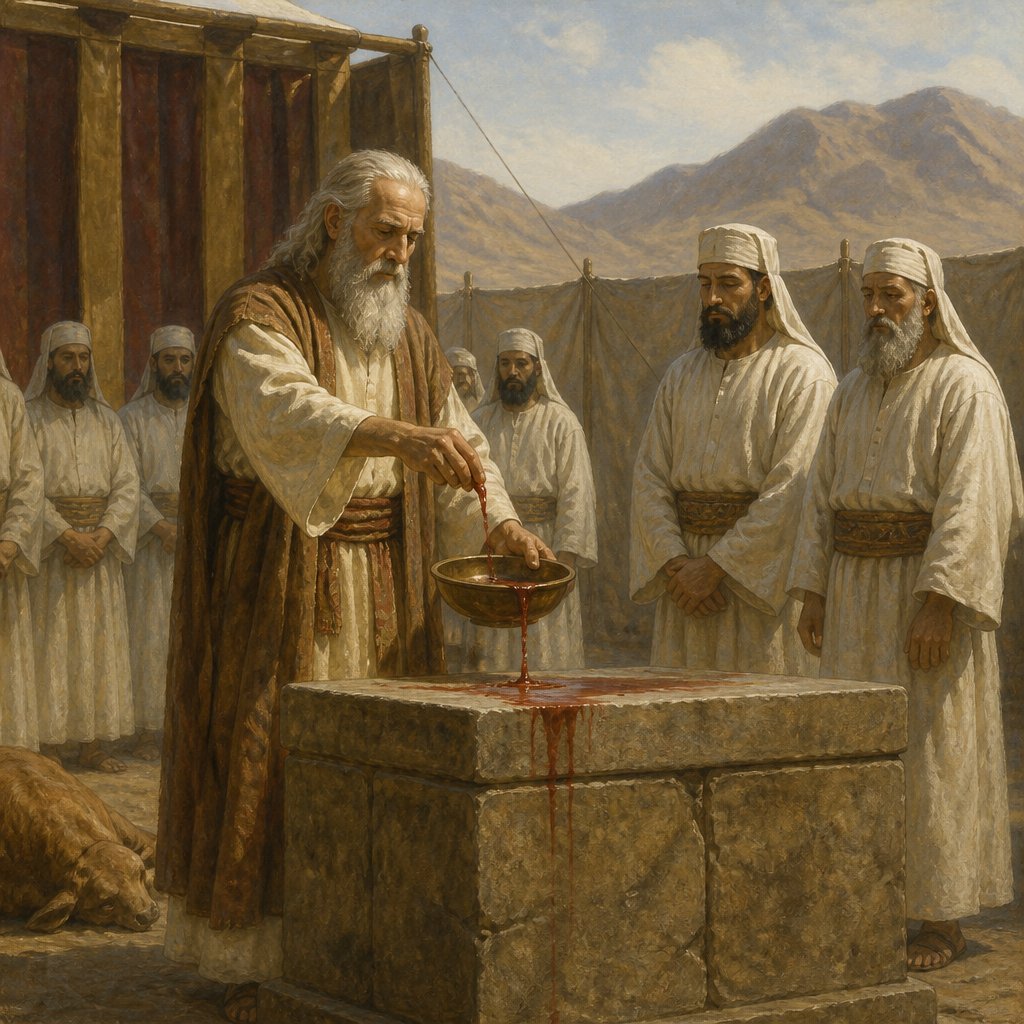
As we delve into Leviticus 8:19, we embark on a journey that immerses us in the ancient practices of the Israelites, resonating with powerful insights for our modern lives. The verse reads, "And he killed it; and Moses sprinkled the blood upon the altar round about." At first glance, this passage may appear antiquated and harsh to our contemporary sensibilities. Yet, through the lens of faith and understanding, we can extract profound spiritual truths that reveal God’s intention for us to live in covenant relationship with Him.
The context of Leviticus 8 presents a significant moment in the priestly ordination of Aaron and his sons. Here, we witness the meticulous procedures instituted by God Himself for the consecration of priests. The act of killing the sacrificial animal and sprinkling its blood signifies more than just an ritualistic practice; it encapsulates the essence of atonement and the seriousness of sin. Blood, in biblical terms, represents life. In Hebrew thought, life is in the blood (Leviticus 17:11), and bloodshed indicates a necessary payment for sin. This sacrificial system established a spiritual reality that reinforces the importance of recognizing sin’s deadly consequences.
As new covenant believers, we may ask, how does this ancient ritual hold relevance for us today? Firstly, it reminds us of our need for atonement. In the New Testament, we see this foreshadowing fulfilled in Jesus Christ, the ultimate sacrifice. When He breathed His last on the cross, the veil of the temple was torn, signifying that the sacrificial system was rendered complete and obsolete through His sacrifice. The sprinkling of blood on the altar signifies purification and the setting apart of the people toward God. The connection to our life in Christ is evident—through His shed blood, we, too, are sanctified and set apart for a holy calling.
Moreover, Moses' act of sprinkling blood around the altar speaks to the intimate nature of our relationship with God. The altar serves as the meeting place between God and man. In ancient Israel, the altar was the symbol of divine presence and acceptance. The application of blood signifies the covering of sin and the establishment of a new covenant. For us, this calls to mind our identity in Christ, where we are continually accepted in the Beloved (Ephesians 1:6). Our sins are washed clean by His blood, allowing us to stand confidently in the presence of our Holy God.
This understanding brings us to a deeper level of reverence and gratitude. As we reflect on the significance of sacrifice for atonement, we can approach God not with dread but with a heart full of thankfulness for the grace afforded to us through Jesus. The metaphor of blood sprinkled around the altar beckons us to consider the boundaries of our lives—are we living in a way that is representative of our covenant with God, embedded within the sanctuary of His promise?
In light of this sacred act, we are reminded of our own call to holiness. Just as Aaron and his sons were ordained to serve as intermediaries for the people, we are called to be light in this world (Matthew 5:14) and ministers of reconciliation (2 Corinthians 5:18). Our lives, like the sacred altar, should be vessels of worship, spreading the fragrance of Christ in all that we do.
Therefore, as we meditate on Leviticus 8:19, let us take seriously the implications of what it means to be cleansed, set apart, and called by God. Let the blood of Christ, the Lamb without blemish, be ever before us as we live our lives in devotion, surrender, and service to Him. Through His sacrifice, we are empowered to walk in holiness and to offer our lives as a living sacrifice, holy and acceptable unto God (Romans 12:1).
In this new season, let us approach our worship, our community, and our very existence with the weight of the covenant that God has chosen us to participate in—the promise of forgiveness, grace, and an unbreakable bond with our Creator.
Get our apps


Artwork for Leviticus 8:19

Leviticus 8:19 - "And he killed it; and Moses sprinkled the blood upon the altar round about."
"And he killed it; and Moses sprinkled the blood upon the altar round about." - Leviticus 8:19

Leviticus 19:8 - "Therefore every one that eateth it shall bear his iniquity, because he hath profaned the hallowed thing of the LORD: and that soul shall be cut off from among his people."

Leviticus 21:19 - "Or a man that is brokenfooted, or brokenhanded,"

Leviticus 16:8

Leviticus 6:19 - "¶ And the LORD spake unto Moses, saying,"

Leviticus 19:1 - "And the LORD spake unto Moses, saying,"

Leviticus 8:30

Leviticus 11:19 - "And the stork, the heron after her kind, and the lapwing, and the bat."

Leviticus 19:7 - "And if it be eaten at all on the third day, it is abominable; it shall not be accepted."
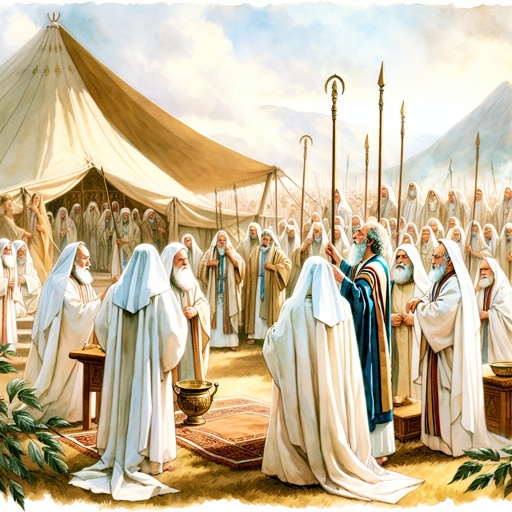
Leviticus 8:1-12

Leviticus 8:8 - "And he put the breastplate upon him: also he put in the breastplate the Urim and the Thummim."

"Or a man that is brokenfooted, or brokenhanded," - Leviticus 21:19

Leviticus 5:19 - "It is a trespass offering: he hath certainly trespassed against the LORD."

Leviticus 19:35 - "¶ Ye shall do no unrighteousness in judgment, in meteyard, in weight, or in measure."

Leviticus 6:8 - "¶ And the LORD spake unto Moses, saying,"
Leviticus 10:8 - "¶ And the LORD spake unto Aaron, saying,"

Leviticus 19:33 - "¶ And if a stranger sojourn with thee in your land, ye shall not vex him."

Leviticus 8:1 - "And the LORD spake unto Moses, saying,"

Leviticus 19:11 - "¶ Ye shall not steal, neither deal falsely, neither lie one to another."

Leviticus 19:24 - "But in the fourth year all the fruit thereof shall be holy to praise the LORD withal."

Leviticus 13:19 - "And in the place of the boil there be a white rising, or a bright spot, white, and somewhat reddish, and it be shewed to the priest;"

Leviticus 22:19 - "Ye shall offer at your own will a male without blemish, of the beeves, of the sheep, or of the goats."

Leviticus 9:19 - "And the fat of the bullock and of the ram, the rump, and that which covereth the inwards, and the kidneys, and the caul above the liver:"

Leviticus 4:19 - "And he shall take all his fat from him, and burn it upon the altar."

Leviticus 19:30 - "¶ Ye shall keep my sabbaths, and reverence my sanctuary: I am the LORD."

Leviticus 8:32 - "And that which remaineth of the flesh and of the bread shall ye burn with fire."

Leviticus 19:5 - "¶ And if ye offer a sacrifice of peace offerings unto the LORD, ye shall offer it at your own will."

"¶ And the LORD spake unto Moses, saying," - Leviticus 6:19

Leviticus 24:19 - "And if a man cause a blemish in his neighbour; as he hath done, so shall it be done to him;"