Anointed for Service: Understanding our Calling through Leviticus 8:2
"Take Aaron and his sons with him, and the garments, and the anointing oil, and a bullock for the sin offering, and two rams, and a basket of unleavened bread;" - Leviticus 8:2
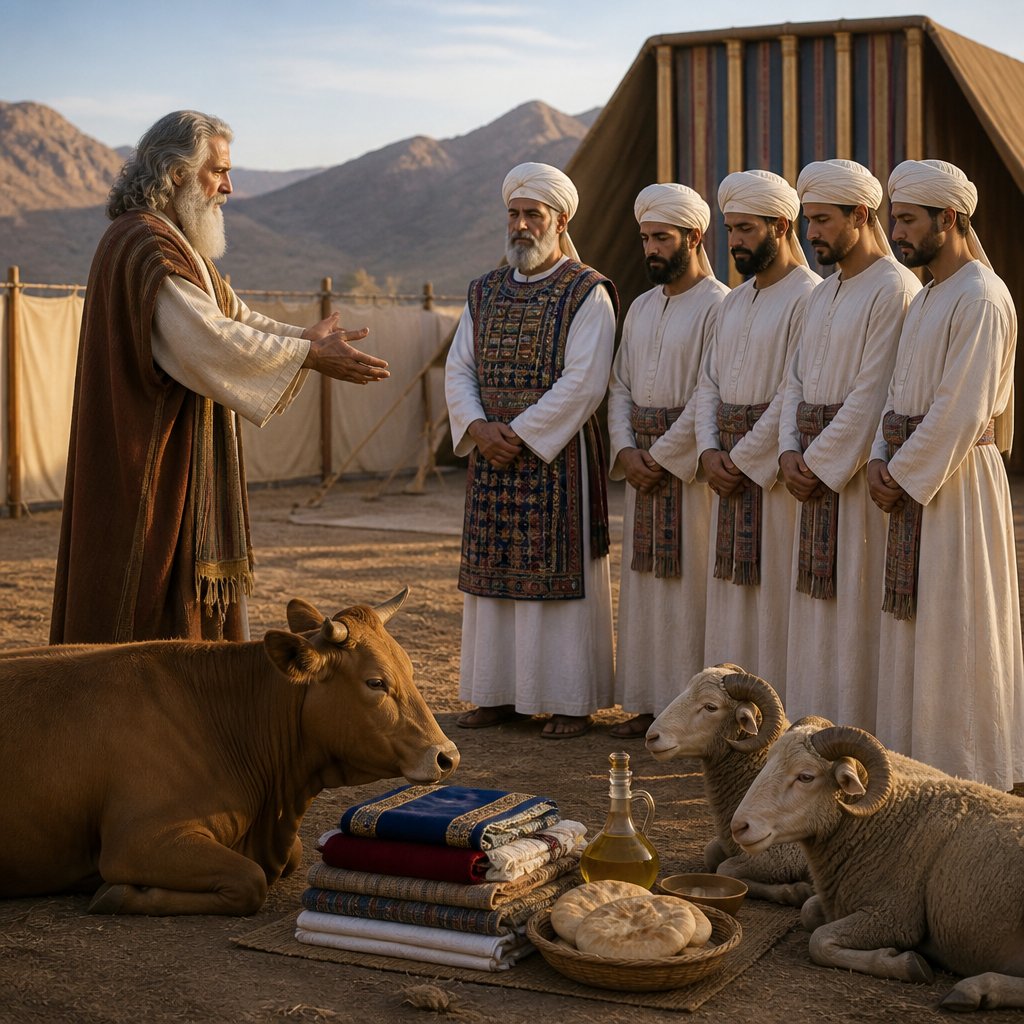
In Leviticus 8:2, we read: "Take Aaron and his sons with him, and the garments, and the anointing oil, and a bullock for the sin offering, and two rams, and a basket of unleavened bread." This verse presents a profound moment of consecration, where God is establishing a sacred order for His people through the anointing of Aaron and his sons as priests. Each item mentioned in this verse carries significant meaning, beautifully illustrating the process of being set apart for divine service.
The act of anointing represents empowerment. In ancient Israel, anointing signified being chosen by God for a particular task. As Aaron and his sons were consecrated, they were equipped with the garments that not only distinguished them from others but were also a symbol of their holy calling. Each piece of their attire held spiritual significance and reflected the glory of God. Similarly, as followers of Christ, we too are given a holy calling. The garments, in our context, can be compared to the virtues that we are to cultivate as we walk in faith. Paul reminds us in Ephesians 4:24 to put on the new man, which after God is created in righteousness and true holiness.
Moreover, the anointing oil signifies the presence and empowerment of God’s Spirit. In the New Testament, we see that believers are also anointed – not with oil, but with the Holy Spirit. In 1 John 2:20, it affirms, "But ye have an unction from the Holy One, and ye know all things." This anointing enables us to fulfill our God-given purposes. Just as the priests were equipped for their sacred duties, so too are we enabled by the Spirit to minister to others, to lead, and to serve in the full confidence of God’s calling.
The mention of the sin offering is equally crucial. The bullock for the sin offering represents the necessary atonement for sin, underscoring that to enter into God’s service, we must first acknowledge and deal with our own shortcomings. It points to the sacrificial nature of serving God. In our walk with Christ, we must recognize our need for grace and forgiveness continually. It reminds us that our offerings, our commitments, and our sacrifices are made possible only because Jesus was the ultimate sin offering on the cross.
Likewise, the two rams signify the need for both dedication and consecration. The offerings were not mere rituals; they represented whole-hearted devotion to God’s service. Jesus speaks to this need for complete dedication in Luke 9:23: "If any man will come after me, let him deny himself, and take up his cross daily, and follow me." In our lives, are we willing to lay aside our desires and ambitions in pursuit of what we have been called to do? Our service should flow out of a heart that is wholly committed to God’s purposes.
Lastly, the basket of unleavened bread signifies purity and sincerity in our walk with God. Leaven in biblical terms often symbolizes sin or corruption, and the use of unleavened bread reflects a commitment to holiness. For us as believers, it is an invitation to live lives free from the leaven of sin, staying true to the integrity of our calling. In our ministry, may our actions and our character be reflections of Christ’s love and truth.
Leviticus 8:2 serves as a potent reminder of our collective calling as priesthood of believers. Each day, we are invited to step into our roles consecrated by God, empowered by the Holy Spirit, remembering our sinfulness while offering ourselves dedicated to His service. As we reflect upon this scripture, let us be encouraged to embrace both the weight and the joy of our calling, equipped by God for His glorious purposes.
Want to reflect more on Leviticus 8:2?
Continue your spiritual journey with Bible Chat — an AI-powered tool for exploring God's Word through conversation. Ask questions, discover connections, and deepen your understanding.
Get Our Apps


Leviticus 8:2 Artwork

Leviticus 8:2 - "Take Aaron and his sons with him, and the garments, and the anointing oil, and a bullock for the sin offering, and two rams, and a basket of unleavened bread;"
"Take Aaron and his sons with him, and the garments, and the anointing oil, and a bullock for the sin offering, and two rams, and a basket of unleavened bread;" - Leviticus 8:2

Leviticus 2:8 - "And thou shalt bring the meat offering that is made of these things unto the LORD: and when it is presented unto the priest, he shall bring it unto the altar."

Leviticus 16:8

Leviticus 8:30
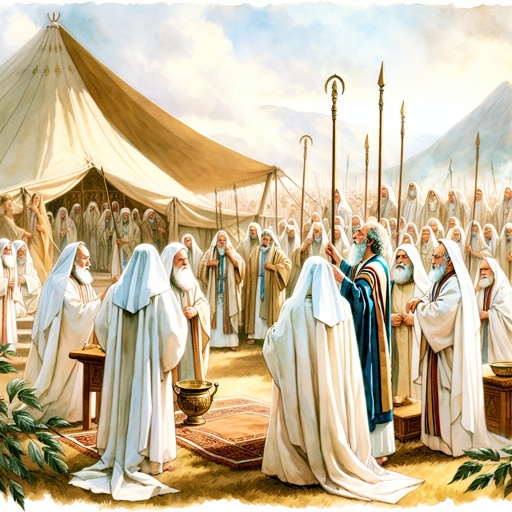
Leviticus 8:1-12

Leviticus 8:8 - "And he put the breastplate upon him: also he put in the breastplate the Urim and the Thummim."

Leviticus 6:8 - "¶ And the LORD spake unto Moses, saying,"
Leviticus 10:8 - "¶ And the LORD spake unto Aaron, saying,"

Leviticus 8:1 - "And the LORD spake unto Moses, saying,"

Leviticus 8:32 - "And that which remaineth of the flesh and of the bread shall ye burn with fire."

Leviticus 8:6 - "And Moses brought Aaron and his sons, and washed them with water."

Leviticus 8:19 - "And he killed it; and Moses sprinkled the blood upon the altar round about."

Leviticus 8:3 - "And gather thou all the congregation together unto the door of the tabernacle of the congregation."

Leviticus 8:5 - "And Moses said unto the congregation, This is the thing which the LORD commanded to be done."

Leviticus 8:20 - "And he cut the ram into pieces; and Moses burnt the head, and the pieces, and the fat."

Leviticus 18:8 - "The nakedness of thy father's wife shalt thou not uncover: it is thy father's nakedness."
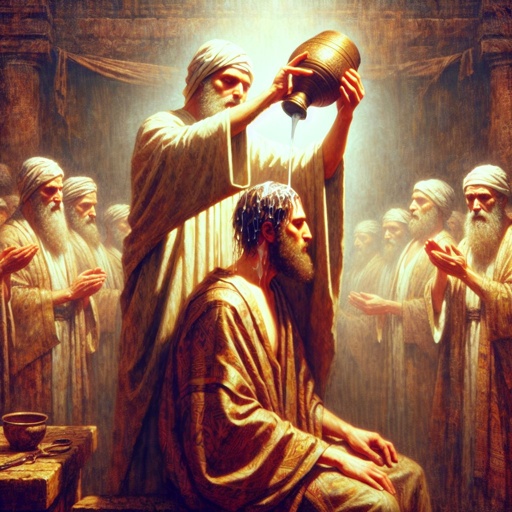
Leviticus 8:12 - "And he poured of the anointing oil upon Aaron's head, and anointed him, to sanctify him."

Leviticus 9:8 - "¶ Aaron therefore went unto the altar, and slew the calf of the sin offering, which was for himself."

Leviticus 8:10 - "And Moses took the anointing oil, and anointed the tabernacle and all that was therein, and sanctified them."

Leviticus 11:8 - "Of their flesh shall ye not eat, and their carcase shall ye not touch; they are unclean to you."

Leviticus 8:36 - "So Aaron and his sons did all things which the LORD commanded by the hand of Moses."

"¶ And the LORD spake unto Aaron, saying," - Leviticus 10:8
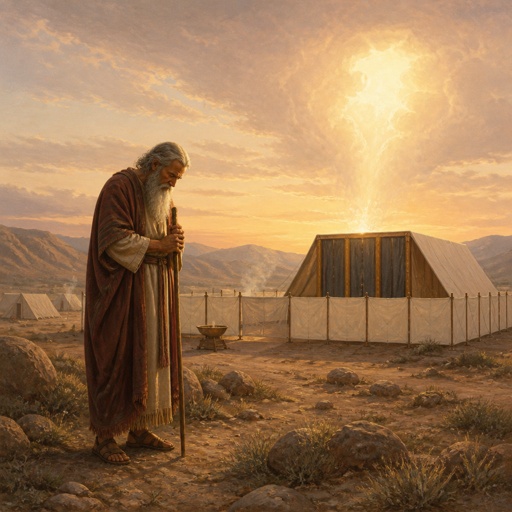
"¶ And the LORD spake unto Moses, saying," - Leviticus 6:8

"And the LORD spake unto Moses, saying," - Leviticus 8:1

Leviticus 20:8 - "And ye shall keep my statutes, and do them: I am the LORD which sanctify you."

Leviticus 8:18 - "¶ And he brought the ram for the burnt offering: and Aaron and his sons laid their hands upon the head of the ram."

Leviticus 8:34 - "As he hath done this day, so the LORD hath commanded to do, to make an atonement for you."

Leviticus 8:4 - "And Moses did as the LORD commanded him; and the assembly was gathered together unto the door of the tabernacle of the congregation."

Leviticus 13:8 - "And if the priest see that, behold, the scab spreadeth in the skin, then the priest shall pronounce him unclean: it is a leprosy."