The Sacred Offering: A Heart of Worship
“And they put the fat upon the breasts, and he burnt the fat upon the altar:” — Leviticus 9:20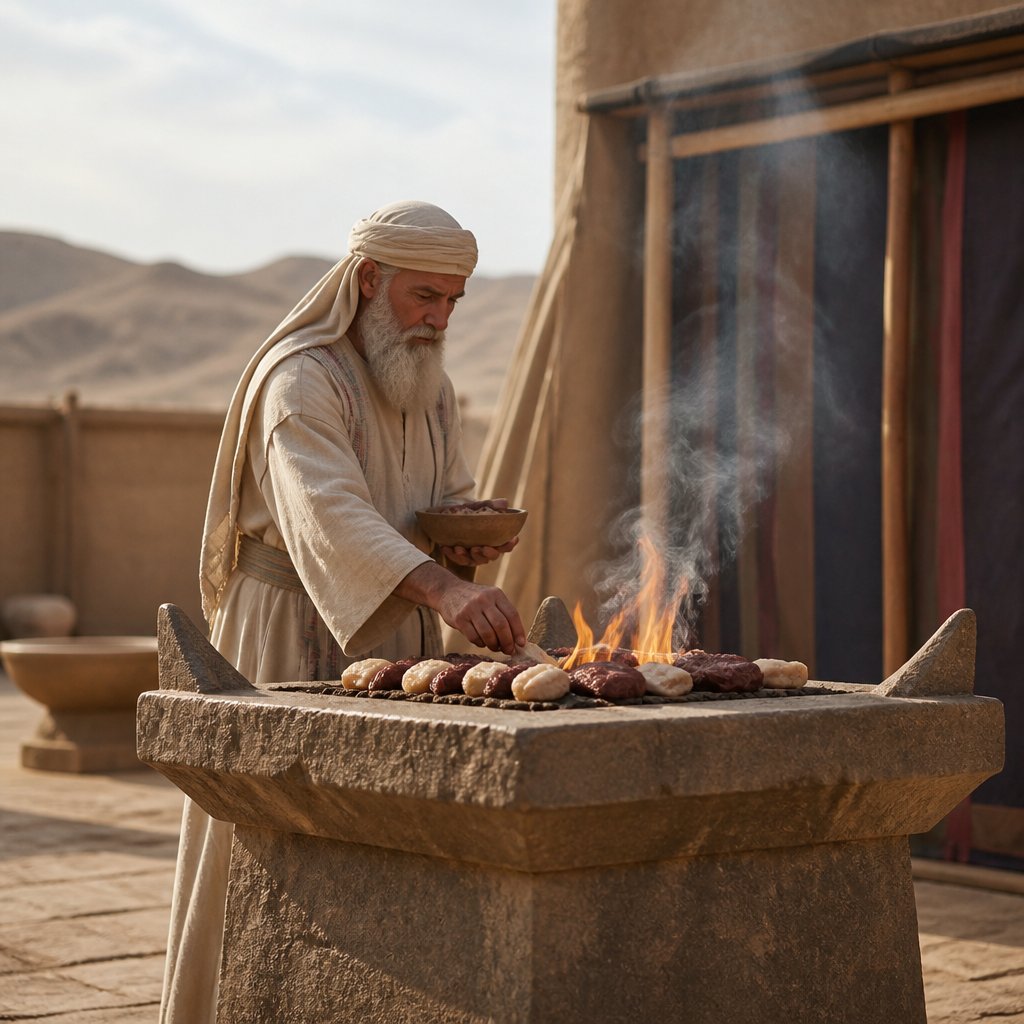
Leviticus 9:20, in the King James Version, reads: "And they put the fat upon the breasts, and he burnt the fat upon the altar." This verse, while simple in its immediate context, reveals profound truths about worship and the nature of our relationships with God.
To fully grasp the significance of this scripture, we first need to understand the cultural and theological background of sacrifices in the Old Testament. In the tabernacle's sacrificial system, offerings were a pivotal part of Israel's worship. They were expressions of devotion, thanksgiving, and atonement designed according to God’s command. The fat of the animals sacrificed was considered the best part, and burning it on the altar expressed total surrender to God. The act of burning the fat was a critical part of the offering, set apart for God alone, as a sweet, savory aroma, pleasing to Him.
In Leviticus 9, we observe the inaugural offerings of Aaron and his sons as they begin their ministry as priests. The fat on the breasts signifies an offering of the 'best' - the remnants of the animal that had been set aside and dedicated to the Lord. It represents not just the best of the animal but mirrors what God desires from us. He desires our best; He desires our hearts. This is beautifully encapsulated in Romans 12:1, wherein Paul urges us to present our bodies as a living sacrifice, holy and acceptable unto God, which is our reasonable service.
When we present anything to God, may it be our time, talents, or resources, it should carry the significance of what we treasure most. The fat upon the breasts symbolizes the idea of prioritization. Just as those sacrifices were made with intention and care, our offerings to God must reflect His importance in our lives. Are we giving Him our leftovers, or are we surrendering our best? In a fast-paced world filled with distractions, it’s a challenge to ensure that we are placing God at the forefront of our lives.
Moreover, let’s consider the symbolism of fat in the biblical context. Fat is often viewed as a representation of wealth, abundance, and blessing. When the priests burned the fat on the altar, it symbolized the giving of the best back to God, the Source of all blessings. Similarly, in our lives, we are called to acknowledge that everything we have comes from God. By generously offering our lives and resources back to Him, we declare that we trust in His provision rather than clinging to our possessions.
Furthermore, when they burned the fat, it took on a transformative role. The act of burning is illustrative of purification and dedication. Within the context of worship, the burning of the fat reminds us of the refining process that takes place in our spiritual journey. God often calls us to a place of refining—of letting go of the excess and impurities that distract us from true worship. Are there things in our lives that we cling to, that may not be sinful in themselves but serve as distractions from a deeper relationship with God? Just as the offerings were wholly consumed on the altar, we too are called to offer ourselves entirely to God, allowing Him to refine our hearts.
Thus, in reflecting upon Leviticus 9:20, we are invited into a deeper relationship with God—one that recognizes and reveres His holiness and majesty. Our worship should not be a ritualistic obligation but a joyful celebration of His goodness. When we lay our earthly treasures at His feet and send up a sweet fragrance of worship—our hearts, souls, and lives—He delights in the aroma of our genuine love and commitment. Each act of dedication to God, each prayer lifted, and every moment of service to others becomes part of this sacred offering.
In conclusion, let us remember that as we bring our lives before God, may we do so with intention and sincerity. Like the priests who presented the fat before the altar, let us commit our best to God each day, recognizing that every aspect of our lives reflects our love and worship for Him.
Get our apps


Artwork for Leviticus 9:20

Leviticus 9:20 - "And they put the fat upon the breasts, and he burnt the fat upon the altar:"
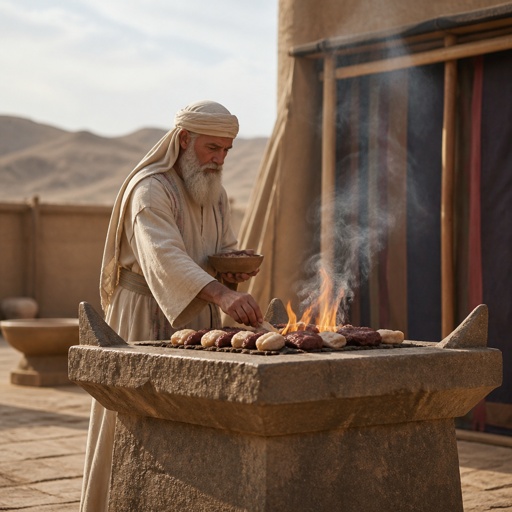
"And they put the fat upon the breasts, and he burnt the fat upon the altar:" - Leviticus 9:20
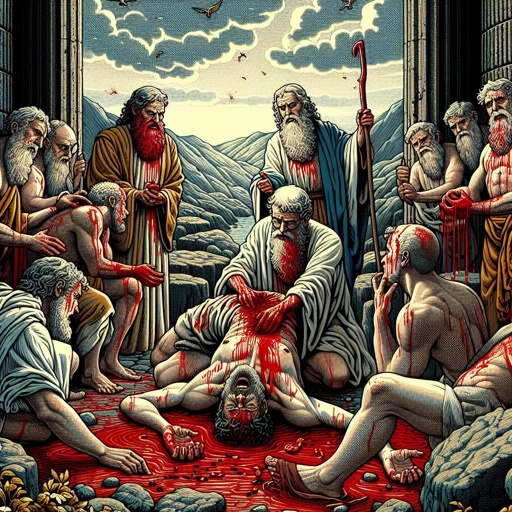
Leviticus 20:9 - "¶ For every one that curseth his father or his mother shall be surely put to death: he hath cursed his father or his mother; his blood shall be upon him."

Leviticus 23:20

Leviticus 24:20-23

Leviticus 20:1 - "And the LORD spake unto Moses, saying,"

Leviticus 10:20 - "And when Moses heard that, he was content."

Leviticus 20:22-26 simple picture

Picture to summarize Leviticus 20:22-26

Leviticus 20:20 - "And if a man shall lie with his uncle's wife, he hath uncovered his uncle's nakedness: they shall bear their sin; they shall die childless."
Leviticus 23:9 - "¶ And the LORD spake unto Moses, saying,"

Leviticus 8:20 - "And he cut the ram into pieces; and Moses burnt the head, and the pieces, and the fat."

Leviticus 22:20 - "But whatsoever hath a blemish, that shall ye not offer: for it shall not be acceptable for you."

Leviticus 20:7 - "¶ Sanctify yourselves therefore, and be ye holy: for I am the LORD your God."

Leviticus 9:16 - "And he brought the burnt offering, and offered it according to the manner."

Leviticus 18:20 - "Moreover thou shalt not lie carnally with thy neighbour's wife, to defile thyself with her."

Leviticus 11:20 - "All fowls that creep, going upon all four, shall be an abomination unto you."

Leviticus 21:20 - "Or crookbackt, or a dwarf, or that hath a blemish in his eye, or be scurvy, or scabbed, or hath his stones broken;"

Leviticus 9:11 - "And the flesh and the hide he burnt with fire without the camp."

"And the LORD spake unto Moses, saying," - Leviticus 20:1
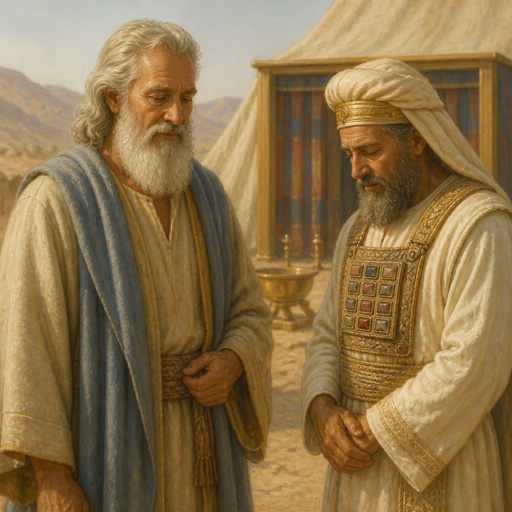
"And when Moses heard that, he was content." - Leviticus 10:20

Leviticus 20:8 - "And ye shall keep my statutes, and do them: I am the LORD which sanctify you."

Leviticus 27:20 - "And if he will not redeem the field, or if he have sold the field to another man, it shall not be redeemed any more."

Leviticus 13:9 - "¶ When the plague of leprosy is in a man, then he shall be brought unto the priest;"

Genesis 20:9

Leviticus 9:9 - "And the sons of Aaron brought the blood unto him: and he dipped his finger in the blood, and put it upon the horns of the altar, and poured out the blood at the bottom of the altar:"
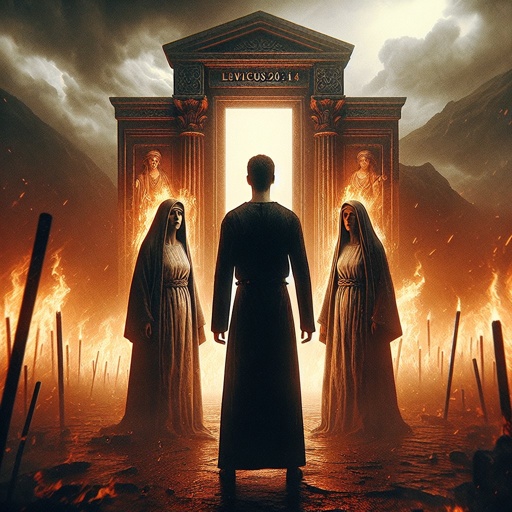
Leviticus 20:14 - "And if a man take a wife and her mother, it is wickedness: they shall be burnt with fire, both he and they; that there be no wickedness among you."

Leviticus 15:9 - "And what saddle soever he rideth upon that hath the issue shall be unclean."

Leviticus 9:14 - "And he did wash the inwards and the legs, and burnt them upon the burnt offering on the altar."

Leviticus 9:8 - "¶ Aaron therefore went unto the altar, and slew the calf of the sin offering, which was for himself."