The Heart of Atonement: Understanding Our High Priest
“Aaron therefore went unto the altar, and slew the calf of the sin offering, which was for himself.” — Leviticus 9:8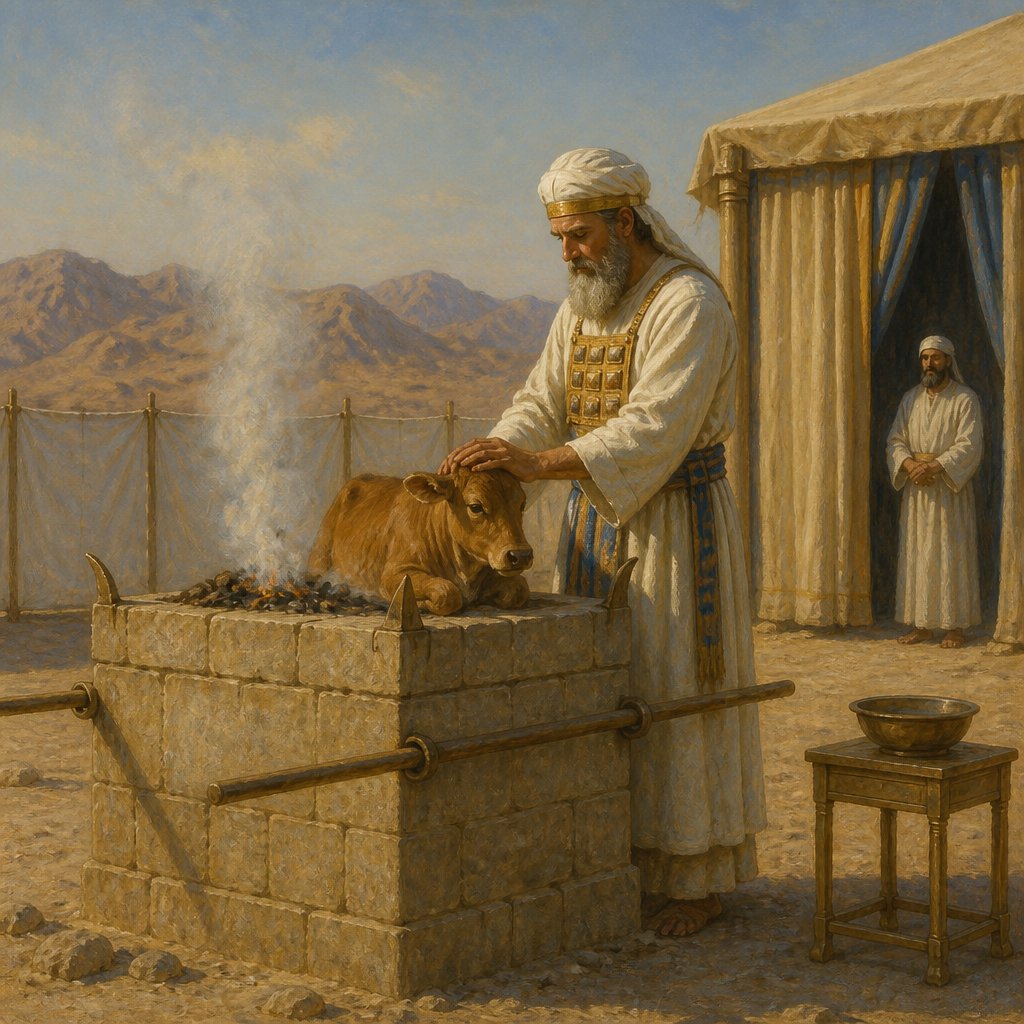
Leviticus 9:8 KJV states, "Aaron therefore went unto the altar, and slew the calf of the sin offering, which was for himself." This verse, deeply embedded in the rich tapestry of the Old Testament, is both a profound reminder of the seriousness of sin and the necessity of atonement, especially from the perspective of priesthood, a role that Aaron fulfilled as the first high priest of Israel.
To comprehend the full weight of this passage, we must first understand the context in which it was written. Leviticus is known for its detailed instructions regarding holiness and the sacrificial system that God established for His people. The sacrificial offerings were not mere rituals; they represented a necessary response to sin, acknowledging that a price must be paid for the transgressions against a holy God. In this process, the high priest played a pivotal role, not only for the community but also for himself. Aaron's action in slaying the calf for himself highlights an essential truth: Before he could intercede for the people, he had to first address his own need for cleansing and forgiveness.
The act of slaying the calf was significant in several ways. Firstly, it illustrated the principle of substitutionary atonement—the concept that another life (in this case, the calf) must be given in exchange for his sin. When Aaron approached the altar, he acknowledged his own imperfections and the weight of sin that separated him from God. This humility before God is foundational in our walk of faith. Before we can genuinely participate in God's work or lead others in worship, we must confront our own sinful nature. Psalm 139 invites us to introspect when it says, "Search me, O God, and know my heart: try me, and know my thoughts" (Psalm 139:23 KJV).
Moreover, this act teaches us about the character of God, who desires reconciliation over separation. The altar, where sacrifices were made, symbolizes God's provision for atonement. It stands as a testament to His grace, revealing a God who desires to restore His relationship with humanity. God's holiness demands a response; our sin necessitates sacrifice, yet God's love makes the way for redemption clear. This foreshadowing of Christ, our ultimate High Priest, who would offer not just a calf but Himself, underscores the depth of God's plan for humanity's reconciliation through Jesus.
Jesus, who knew no sin, became sin for us (2 Corinthians 5:21 KJV), ensuring that through His death, we might inherit everlasting life. When we give our lives to Him, we accept the atonement He made for us. In light of Aaron's actions, we reflect on how often we might want to "approach the altar" without first recognizing our need for confession and cleansing.
A deeper application of Aaron's sacrifice leads us to consider communal responsibility. As the high priest, Aaron did not only represent himself; he bore the sins of the entire nation. We, too, are called to intercede for others—bringing before God the needs of our families, friends, and communities. Our awareness of our redemption should inspire us to advocate for others, reminding us of our role not just as recipients of grace, but as conduits of God’s mercy in a broken world.
In conclusion, Leviticus 9:8 serves as a poignant reminder of the necessity of addressing our sin before God and the privilege we have to act as priests in our communities. As we witness Aaron's actions, may we be inspired to lead lives marked by humility and a desire for holiness, recognizing the incredible gift of atonement that allows us to stand before God, clean and renewed. Each encounter at the altar transforms us, drawing us closer to the heart of God, ever mindful that the sacrifice has already been made, but our response to it shapes the lives we lead and the legacy we leave behind.
Get our apps


Artwork for Leviticus 9:8

Leviticus 9:8 - "¶ Aaron therefore went unto the altar, and slew the calf of the sin offering, which was for himself."
"¶ Aaron therefore went unto the altar, and slew the calf of the sin offering, which was for himself." - Leviticus 9:8

Leviticus 8:9 - "And he put the mitre upon his head; also upon the mitre, even upon his forefront, did he put the golden plate, the holy crown; as the LORD commanded Moses."

Leviticus 16:8

Leviticus 8:30
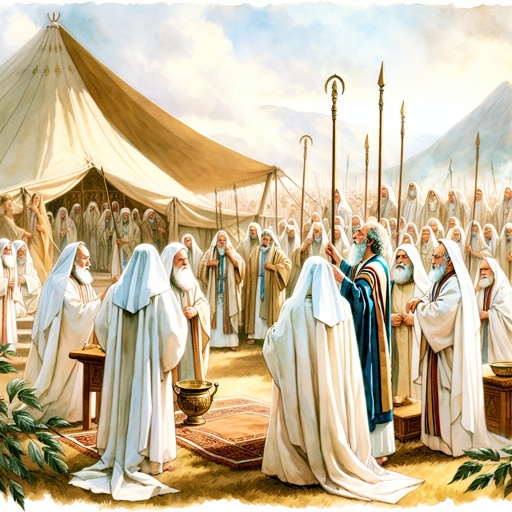
Leviticus 8:1-12

Leviticus 8:8 - "And he put the breastplate upon him: also he put in the breastplate the Urim and the Thummim."

Leviticus 6:8 - "¶ And the LORD spake unto Moses, saying,"
Leviticus 10:8 - "¶ And the LORD spake unto Aaron, saying,"

Leviticus 23:9 - "¶ And the LORD spake unto Moses, saying,"

Leviticus 8:1 - "And the LORD spake unto Moses, saying,"

Leviticus 9:16 - "And he brought the burnt offering, and offered it according to the manner."

Leviticus 9:11 - "And the flesh and the hide he burnt with fire without the camp."

Leviticus 8:32 - "And that which remaineth of the flesh and of the bread shall ye burn with fire."

Leviticus 8:6 - "And Moses brought Aaron and his sons, and washed them with water."

Leviticus 8:19 - "And he killed it; and Moses sprinkled the blood upon the altar round about."

Leviticus 8:3 - "And gather thou all the congregation together unto the door of the tabernacle of the congregation."

Leviticus 8:5 - "And Moses said unto the congregation, This is the thing which the LORD commanded to be done."

Leviticus 13:9 - "¶ When the plague of leprosy is in a man, then he shall be brought unto the priest;"

Leviticus 9:20 - "And they put the fat upon the breasts, and he burnt the fat upon the altar:"

Leviticus 8:20 - "And he cut the ram into pieces; and Moses burnt the head, and the pieces, and the fat."

Leviticus 18:8 - "The nakedness of thy father's wife shalt thou not uncover: it is thy father's nakedness."

Leviticus 9:9 - "And the sons of Aaron brought the blood unto him: and he dipped his finger in the blood, and put it upon the horns of the altar, and poured out the blood at the bottom of the altar:"

Leviticus 15:9 - "And what saddle soever he rideth upon that hath the issue shall be unclean."

Leviticus 9:14 - "And he did wash the inwards and the legs, and burnt them upon the burnt offering on the altar."

Leviticus 9:1 - "And it came to pass on the eighth day, that Moses called Aaron and his sons, and the elders of Israel;"
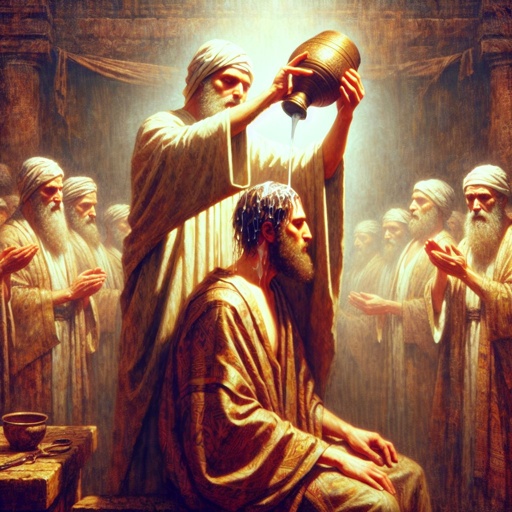
Leviticus 8:12 - "And he poured of the anointing oil upon Aaron's head, and anointed him, to sanctify him."

Leviticus 8:10 - "And Moses took the anointing oil, and anointed the tabernacle and all that was therein, and sanctified them."

Leviticus 11:8 - "Of their flesh shall ye not eat, and their carcase shall ye not touch; they are unclean to you."

Leviticus 9:19 - "And the fat of the bullock and of the ram, the rump, and that which covereth the inwards, and the kidneys, and the caul above the liver:"