Who Is My Neighbor? The Call to Compassion
"On one occasion an expert in the law stood up to test Jesus. "Teacher," he asked, "what must I do to inherit eternal life?" "What is written in the Law?" he replied. "How do you read it?" He answered, "‘Love the Lord your God with all your heart and with all your soul and with all your strength and with all your mind’; and, ‘Love your neighbor as yourself.’” "You have answered correctly," Jesus replied. "Do this and you will live." But he wanted to justify himself, so he asked Jesus, "And who is my neighbor?" In reply Jesus said: "A man was going down from Jerusalem to Jericho, when he was attacked by robbers. They stripped him of his clothes, beat him and went away, leaving him half dead. A priest happened to be going down the same road, and when he saw the man, he passed by on the other side. So too, a Levite, when he came to the place and saw him, passed by on the other side. But a certain Samaritan, as he journeyed, came where he was: and when he saw him, he had compassion on him, And went to him, and bound up his wounds, pouring in oil and wine, and set him on his own beast, and brought him to an inn, and took care of him. And on the morrow when he departed, he took out two pence, and gave them to the host, and said unto him, Take care of him; and whatsoever thou spendest more, when I come again, I will repay thee. Which now of these three, thinkest thou, was neighbour unto him that fell among the thieves?" And he said, He that shewed mercy on him. Then said Jesus unto him, Go, and do thou likewise." - Luke 10:25-37
In the Gospel of Luke, we encounter a profound interaction between Jesus and an expert in the law, found in Luke 10:25-37 (KJV). The lawyer's inquiry, “What must I do to inherit eternal life?” is met with the intensity of Jesus’ wisdom as He redirects the question back to the law. This passage is not merely a historical account but a vital teaching that still resonates powerfully today, challenging us to examine the depths of our compassion and understanding of love.
The lawyer answers correctly by quoting Deuteronomy 6:5 and Leviticus 19:18: "Love the Lord thy God with all thy heart, and with all thy soul, and with all thy strength, and with all thy mind; and thy neighbour as thyself.” Jesus confirms his answer, telling him, “Thou hast answered right: this do, and thou shalt live.” Here, Jesus summarizes the essence of eternal life—an existence rooted in love. But the lawyer, perhaps seeking self-justification, presses on with another question: “And who is my neighbor?” This inquiry reveals a common human tendency to seek limitations on our obligations to love.
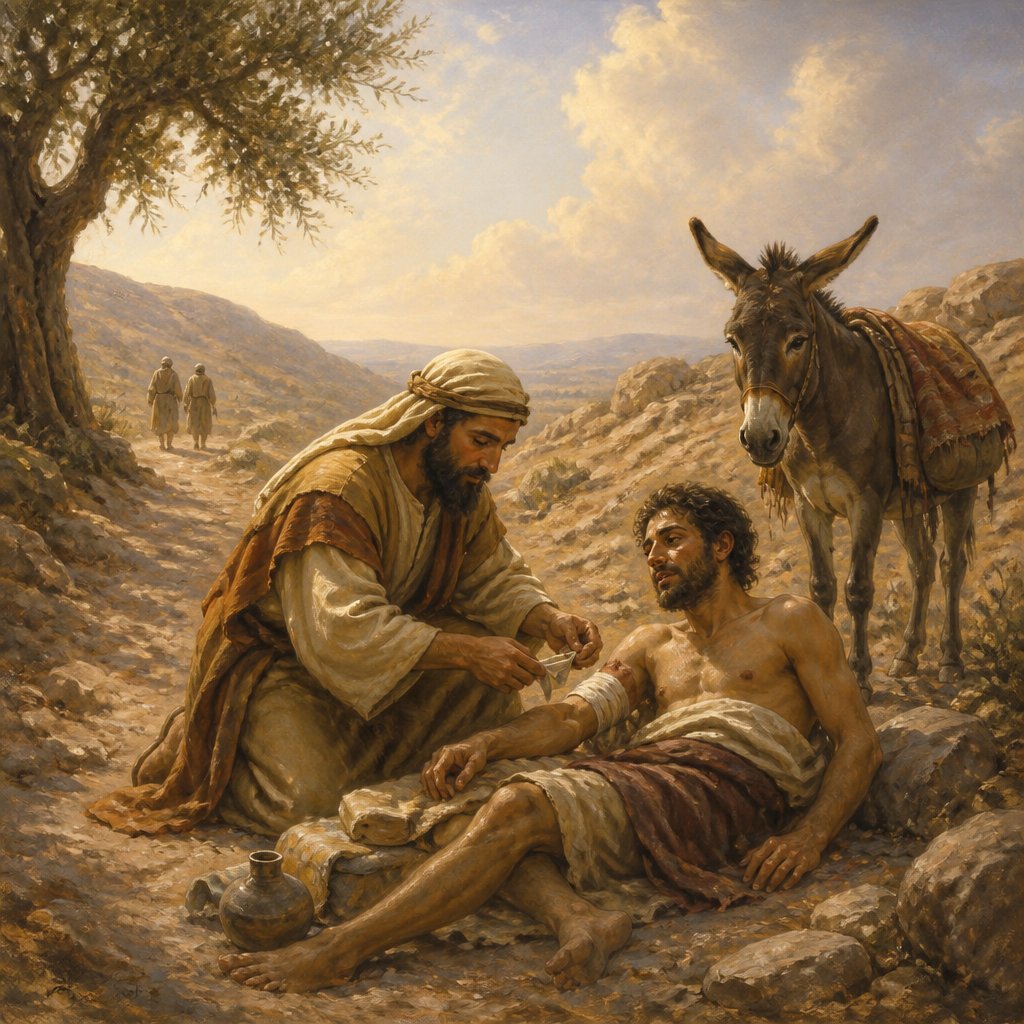
In response, Jesus tells the Parable of the Good Samaritan. A man traveling from Jerusalem to Jericho is accosted by robbers, stripped of his clothing, and left half dead on the road. The story takes a critical turn when two esteemed figures, a priest and a Levite, see the wounded man but choose to cross to the other side rather than help. This points to the stark reality that social status and religious affiliation do not guarantee moral action.
The story climaxes when a Samaritan—an individual from a group despised by the Jews—stops to assist the half-dead man. The Samaritan demonstrates true neighborliness, filled with compassion. He goes beyond mere sympathy; he binds the man’s wounds, transports him to an inn, and ensures his care, promising payment for any further expenses. Jesus then poses a pointed question, asking, “Which now of these three, thinkest thou, was neighbour unto him that fell among the thieves?” The lawyer responds correctly, acknowledging, “He that shewed mercy on him.”
This exchange challenges us on multiple levels. First, it compels a reflection on who we consider our neighbor. In our modern context, our neighbors are not just those who live next door or share our faith but anyone in need, regardless of race, religion, or social standing. The call to love expands beyond borders, urging us to look at our capacity for compassion in everyday situations.
Secondly, we must assess our reactions to those in need. The actions of the priest and the Levite can mirror our own: how often do we ignore cries for help? Jesus’ parable encourages not just awareness of suffering but proactive love. We are invited to become Good Samaritans, demonstrating mercy in tangible ways: through acts of kindness, understanding, and support to those we encounter.
To love our neighbors means embracing the discomfort of their circumstances, sharing burdens, and reflecting God's love in action. Whether it’s the homeless on the street, the distressed at work, or the inconvenienced fellow commuter, the call is clear—we must rise to the occasion of helping others.
Finally, Jesus concludes with the charge, “Go, and do thou likewise.” This command is not simply an admonition to love; it is a challenge to action. It underlines that eternal life is not an abstract concept but a lived experience characterized by love and service. Today, may we cultivate eyes that see the needs around us and hearts that respond with compassion. Let us not just read this parable but embody its spirit, going forth as neighbors to the world, showing mercy as illustrated by the Samaritan. As we do so, we not only inherit eternal life but also experience the fullness of joy that comes from serving others in love.
Want to reflect more on Luke 10:25-37?
Continue your spiritual journey with Bible Chat — an AI-powered tool for exploring God's Word through conversation. Ask questions, discover connections, and deepen your understanding.
Get Our Apps


Luke 10:25-37 Artwork

Luke 10:25-37 - "On one occasion an expert in the law stood up to test Jesus. "Teacher," he asked, "what must I do to inherit eternal life?" "What is written in the Law?" he replied. "How do you read it?" He answered, "‘Love the Lord your God with all your heart and with all your soul and with all your strength and with all your mind’; and, ‘Love your neighbor as yourself.’" "You have answered correctly," Jesus replied. "Do this and you will live." But he wanted to justify himself, so he asked Jesus, "And who is my neighbor?" In reply Jesus said: "A man was going down from Jerusalem to Jericho, when he was attacked by robbers. They stripped him of his clothes, beat him and went away, leaving him half dead. A priest happened to be going down the same road, and when he saw the man, he passed by on the other side. So too, a Levite, when he came to the place and saw him, passed by on the other side. But a Samaritan, as he traveled, came where the man was; and when he saw him, he took pity on him. He went to him and bandaged his wounds, pouring on oil and wine. Then he put the man on his own donkey, brought him to an inn and took care of him. The next day he took out two denarii and gave them to the innkeeper. 'Look after him,' he said, 'and when I return, I will reimburse you for any extra expense you may have.' "Which of these three do you think was a neighbor to the man who fell into the hands of robbers?" The expert in the law replied, "The one who had mercy on him." Jesus told him, "Go and do likewise.""
"On one occasion an expert in the law stood up to test Jesus. "Teacher," he asked, "what must I do to inherit eternal life?" "What is written in the Law?" he replied. "How do you read it?" He answered, "‘Love the Lord your God with all your heart and with all your soul and with all your strength and with all your mind’; and, ‘Love your neighbor as yourself.’" "You have answered correctly," Jesus replied. "Do this and you will live." But he wanted to justify himself, so he asked Jesus, "And who is my neighbor?" In reply Jesus said: "A man was going down from Jerusalem to Jericho, when he was attacked by robbers. They stripped him of his clothes, beat him and went away, leaving him half dead. A priest happened to be going down the same road, and when he saw the man, he passed by on the other side. So too, a Levite, when he came to the place and saw him, passed by on the other side. But a Samaritan, as he traveled, came where the man was; and when he saw him, he took pity on him. He went to him and bandaged his wounds, pouring on oil and wine. Then he put the man on his own donkey, brought him to an inn and took care of him. The next day he took out two denarii and gave them to the innkeeper. 'Look after him,' he said, 'and when I return, I will reimburse you for any extra expense you may have.' "Which of these three do you think was a neighbor to the man who fell into the hands of robbers?" The expert in the law replied, "The one who had mercy on him." Jesus told him, "Go and do likewise."" - Luke 10:25-37

Luke 10:37 - "And he said, He that shewed mercy on him. Then said Jesus unto him, Go, and do thou likewise."

Luke 10:25 - "¶ And, behold, a certain lawyer stood up, and tempted him, saying, Master, what shall I do to inherit eternal life?"

Luke 2:37

Luke 2:37

Luke 2:37

Luke 2:37

Luke 2:37

Luke (1:37) For nothing will be impossible with God.”

Luke (1:37) For nothing will be impossible with God.”

Luke (1:37) For nothing will be impossible with God.”

Luke (1:37) For nothing will be impossible with God.”

Luke (1:37) For nothing will be impossible with God.”

Luke (1:37) For nothing will be impossible with God.”

Luke (1:37) For nothing will be impossible with God.”

Luke (1:37) For nothing will be impossible with God.”

Luke (1:37) For nothing will be impossible with God.”

Luke (1:37) For nothing will be impossible with God.”

Luke (1:37) For nothing will be impossible with God.”

Luke (1:37) For nothing will be impossible with God.”

Luke (1:37) For nothing will be impossible with God.”

Luke (1:37) For nothing will be impossible with God.”

Luke (1:37) For nothing will be impossible with God.”

Luke (1:37) For nothing will be impossible with God.”

Luke (1:37) For nothing will be impossible with God.”

Luke (1:37) For nothing will be impossible with God.”
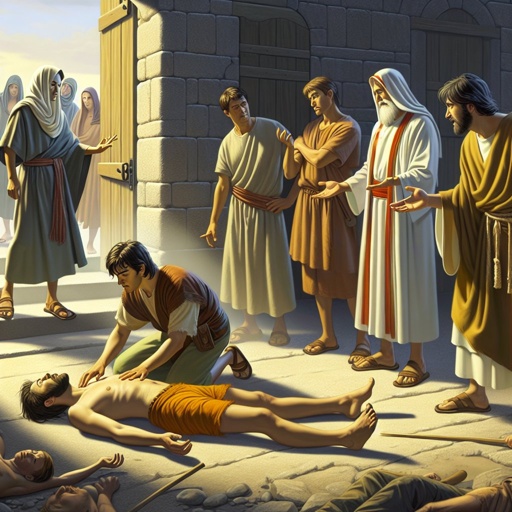
Luke 10:36-37 - "Which of these three, do you think, proved to be a neighbor to the man who fell among the robbers? He said, The one who showed him mercy. And Jesus said to him, You go, and do likewise."

Luke (1:37) For nothing will be impossible with God.”

Luke (1:37) For nothing will be impossible with God.”