A Heart Unmoved: Lessons from the Priest in the Parable
“And by chance there came down a certain priest that way: and when he saw him, he passed by on the other side.” — Luke 10:31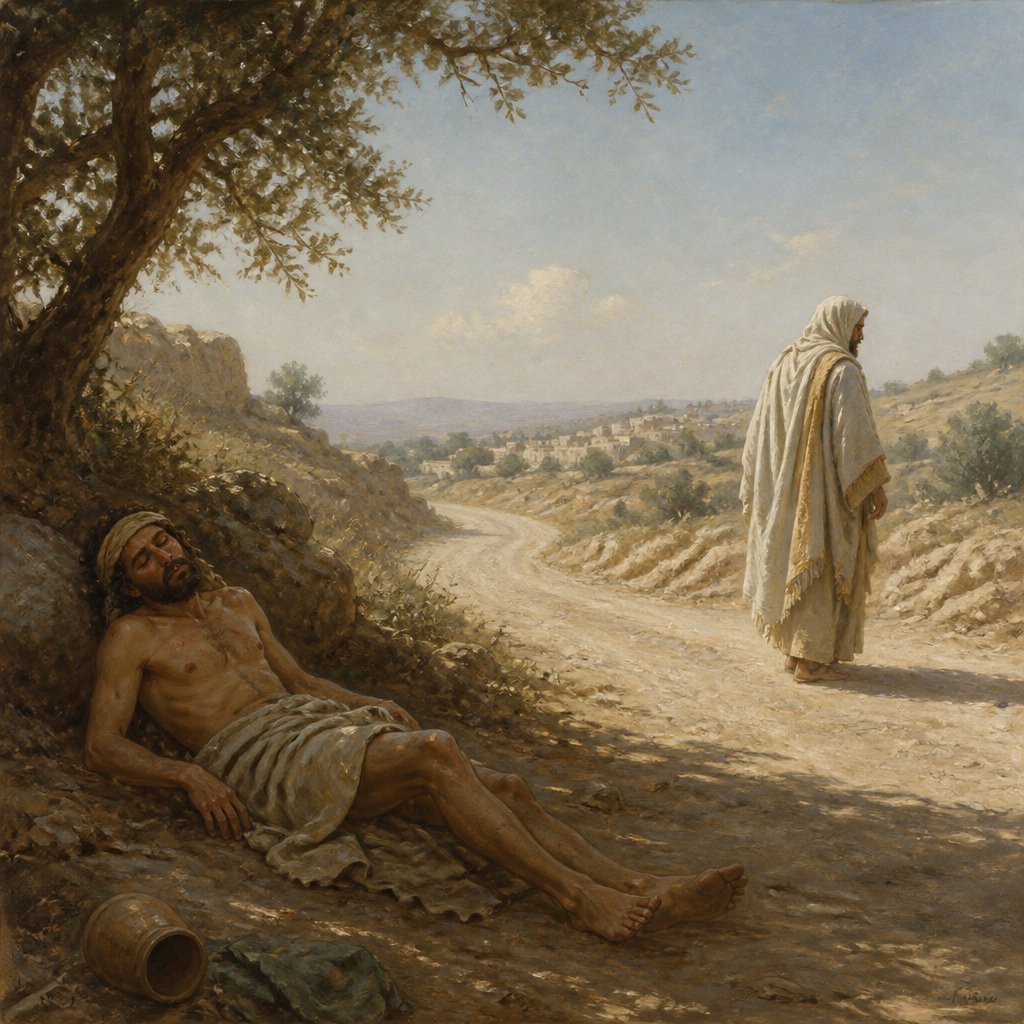
In the Gospel of Luke, chapter 10, we encounter one of the most poignant narratives that illustrates the essence of compassion and the call to love our neighbor. The verse that stands out sharply is Luke 10:31, which states, "And by chance there came down a certain priest that way: and when he saw him, he passed by on the other side." This moment captures the heart of a parable that teaches us invaluable lessons about our response to human suffering.
To set the scene, we must first understand the context of this parable. Jesus tells the story of a man who fell among thieves, was stripped of his raiment, wounded, and left half-dead on the roadside. The priest, a figure of religious authority and moral integrity, approaches the scene. One would expect this representative of God’s grace and mercy to stop, to offer help, to embody the very teachings he professes. Yet, we are confronted with a shocking reality: he passes by on the other side.
This act of avoidance raises critical questions about the nature of compassion and duty. The priest, in his role, was supposed to be a caretaker of souls, someone who would demonstrate love and assistance to those in need. However, here we see a stark contrast between societal expectations and spiritual obligation. Walking past the wounded man, the priest likely justified his actions by appealing to ritual purity, his duties, or perhaps his own busyness—after all, he had a holy profession.
It’s essential to reflect on what the priest’s actions reveal about ourselves. How often do we, too, encounter others in distress and choose to look the other way? Perhaps we have been too busy to notice the suffering around us or have allowed judgments about others to cloud our compassion. The priest represents what can occur when religious duty becomes more important than the practical manifestation of love. In our time, when we see someone struggling—whether physically or emotionally—are we willing to take the risk of being late to an appointment or stepping out of our comfort zone to help another?
In our world today, we often face situations that mirror this narrative. The homeless person asking for help, the friend who is struggling with mental health issues, the neighbor enduring a silent battle with grief—these are our modern-day versions of the wounded man. Jesus calls us, like the Samaritan who finally assists the injured man, to look beyond our own lives and seize every opportunity to extend love and kindness. The Samaritan's approach was defined by empathy and action—qualities the priest lacked.
Additionally, this parable provokes us to consider the societal barriers that may influence our perceptions of others. The priest, an esteemed member of the Jewish community, might have feared being tainted by the man’s condition or faced ridicule for stopping to assist someone viewed as inferior. In contrast, the Samaritan—a figure from a despised community—not only sees the need but also rises above societal expectations to provide care. This challenges us to confront our biases and prejudices. Are we allowing societal norms to dictate our actions, or are we prepared to break conventions for the sake of love and mercy?
In conclusion, the lesson from Luke 10:31 is a call to introspection and action. It pushes us to look inward and evaluate our reactions to the pain of others. We must ask ourselves: Are we being like the priest, too engrossed in our own lives to acknowledge the suffering around us? Or will we choose to embody the spirit of the Good Samaritan—seeing the need, feeling compassion, and taking action? Let us strive to reflect God’s love in our actions, reaching out to those who suffer, thus allowing the grace within us to move beyond mere observation to actual service.
Get our apps


Artwork for Luke 10:31

Luke 10:31 - "And by chance there came down a certain priest that way: and when he saw him, he passed by on the other side."
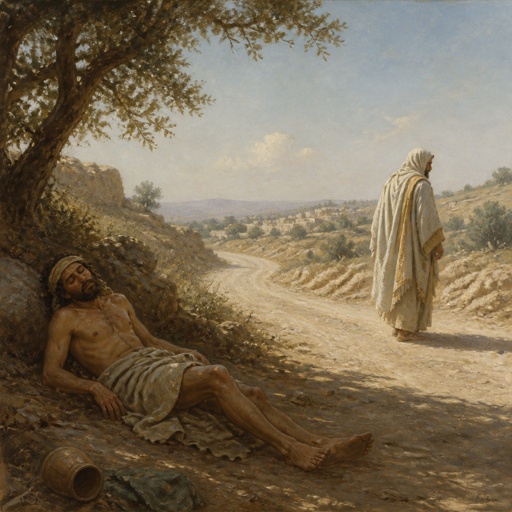
"And by chance there came down a certain priest that way: and when he saw him, he passed by on the other side." - Luke 10:31

Luke 1:31

Mark 10:31

Luke 22:31-32 - "Luke 22:31-32: And the Lord said, Simon, Simon, behold, Satan hath desired to have you, that he may sift you as wheat: But I have prayed for thee, that thy faith fail not: and when thou art converted, strengthen thy brethren."

Luke 23:31 - "For if they do these things in a green tree, what shall be done in the dry?"

Luke 2:31 - "Which thou hast prepared before the face of all people;"

Luke 24:31 - "And their eyes were opened, and they knew him; and he vanished out of their sight."

Luke 8:31 - "And they besought him that he would not command them to go out into the deep."

Luke 5:31 - "And Jesus answering said unto them, They that are whole need not a physician; but they that are sick."

Luke 4:31 - "And came down to Capernaum, a city of Galilee, and taught them on the sabbath days."

Luke 7:31 - "¶ And the Lord said, Whereunto then shall I liken the men of this generation? and to what are they like?"

Luke 20:31 - "And the third took her; and in like manner the seven also: and they left no children, and died."

Luke 6:31 - "And as ye would that men should do to you, do ye also to them likewise."

Luke 9:31 - "Who appeared in glory, and spake of his decease which he should accomplish at Jerusalem."

Luke 12:31 - "¶ But rather seek ye the kingdom of God; and all these things shall be added unto you."

Luke 10:5

Luke 10:5

Luke 10:5

Hebrews 10:31 - "It is a fearful thing to fall into the hands of the living God."

Mark 10:31 - "But many that are first shall be last; and the last first."

Luke 10:18-19

Luke 10:18-19

Luke 10:18-19

Luke 10:17-19

Luke 10:18-19

Luke 10:18-19

Luke 10:18-19

Luke 10:17-19

John 10:31 - "Then the Jews took up stones again to stone him."