The Beauty of Dependence: Lessons from the Lilies
"Consider the lilies how they grow: they toil not, they spin not; and yet I say unto you, that Solomon in all his glory was not arrayed like one of these." - Luke 12:27
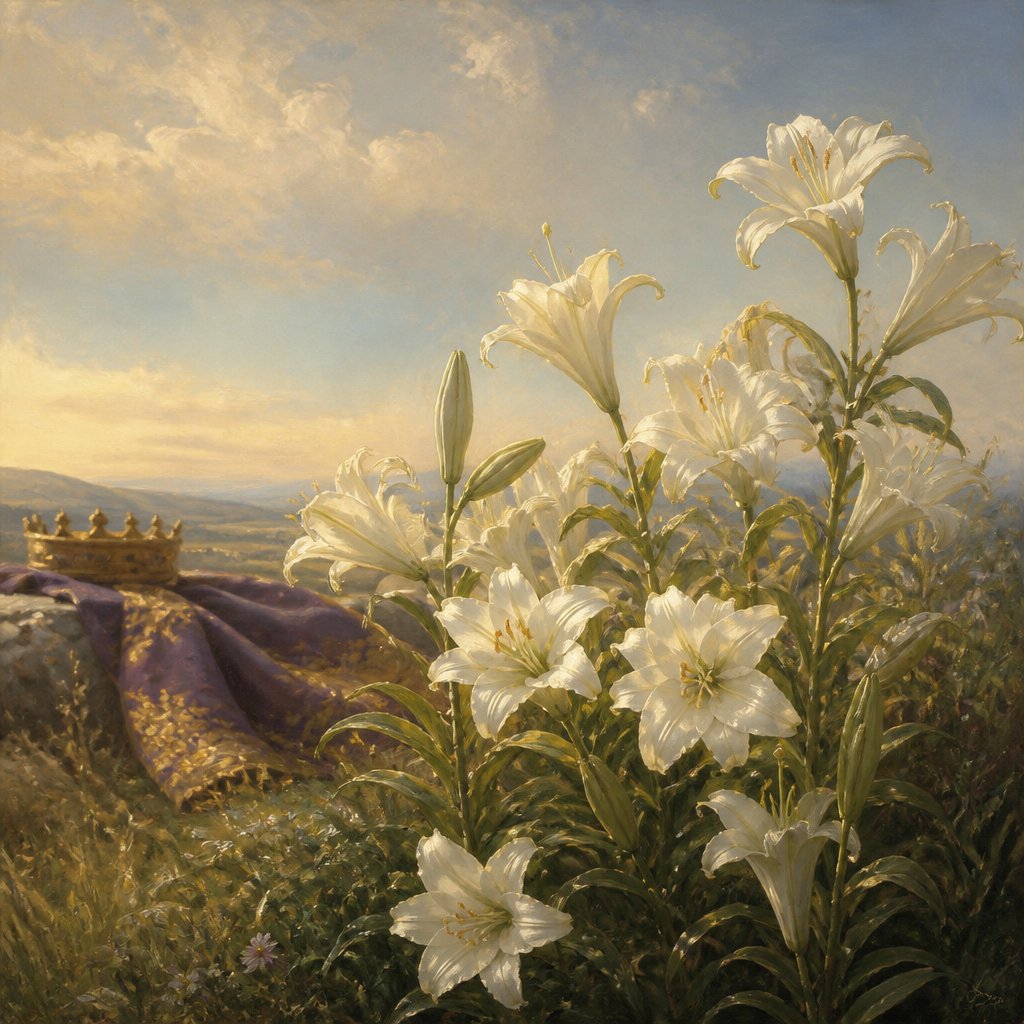
In our fast-paced world, where accomplishments and responsibilities often weigh heavily on our hearts and minds, the words of Jesus in Luke 12:27 pierce that chaos with profound simplicity and wisdom. The verse states, "Consider the lilies how they grow: they toil not, they spin not; and yet I say unto you, that Solomon in all his glory was not arrayed like one of these." This invitation to contemplate the lilies offers us insights into both the nature of creation and the essence of our reliance on God.
First, it is essential to understand the context of this scripture. Jesus, speaking to His disciples, addresses common human anxieties regarding daily needs such as food, clothing, and the unexpected worries that come with life's uncertainties. In a culture where material wealth was often equated with favor and success, Jesus highlights the lilies of the field—simple, beautiful, and completely dependent on God for their sustenance. The contrast between the natural beauty of the lilies and the grandeur of Solomon, often regarded as the epitome of wealth and wisdom, reveals a vital truth: outer magnificence pales in comparison to the beauty that comes from God.
The phrase "Consider the lilies" calls us to a deeper engagement with creation. To consider something is to observe it thoughtfully, to take time to appreciate the details, and to draw lessons from it. Jesus wants us to pause and reflect. Lilies grow effortlessly, relying on the earth and rain, exhibiting a beauty that is unforced and serene. They do not labor in anxiety; they do not fret over their appearance, and yet they bloom in an unparalleled elegance. This natural display reminds us of how our lives should be—a reflection of divine grace and provision, not fueled by anxiety or unattainable standards.
As we reflect on the lilies, we are beckoned to examine our own relationship with God. We often find ourselves in seasons of striving—working overtime, chasing deadlines, and worrying about our futures. Yet the simple existence of the lilies reminds us that our worth is not rooted in our productivity. Jesus implies that beauty, in its purest form, arises from grace rather than effort. In Philippians 4:6-7, we are reminded not to be anxious but to present our requests to God, allowing His peace to guard our hearts. This peace comes from trusting in Him wholly, just as the lilies trust in the Divine for their needs.
Moreover, the beauty of dependence and God's faithfulness is beautifully paradoxical. Solomon, with all his wealth, grandeur, and wisdom, was outshone by the simplest flower created by God. This revelation challenges us to reconsider our definitions of success and value. Are we chasing after wealth, status, and recognition, or are we seeking to cultivate a life of peace and trust in God’s provision? The answer lies in the heart posture of dependence versus striving. Jesus uses this contrast to illustrate to us that the most beautiful expressions of life come not from our toil, but from resting in God's abundant provision.
Additionally, by reflecting on the lilies, we are reminded of the fleeting nature of life. They bloom for a season and then wither, teaching us that our time is precious. We can choose to fill our days with stress or cultivate a life that appreciates the beautiful moments God places before us. What if we chose to live fully in each moment, as the lilies do in their brief time of blooming? What kind of beauty might we reflect if we embraced a life of reliance instead of striving?
In conclusion, as we meditate on Luke 12:27, let us take solace in the beauty that comes from trusting God. Let the lilies serve as a reminder of our identity in Christ and the assurance that our worth is found not in our efforts, but in the grace and provision of our heavenly Father. May we learn to flourish like the lilies—exuding beauty not through our own toil but through our unwavering reliance on God’s loving care and faithfulness.
Want to reflect more on Luke 12:27?
Continue your spiritual journey with Bible Chat — an AI-powered tool for exploring God's Word through conversation. Ask questions, discover connections, and deepen your understanding.
Get Our Apps


Luke 12:27 Artwork

Luke 12:27 - "Consider the lilies how they grow: they toil not, they spin not; and yet I say unto you, that Solomon in all his glory was not arrayed like one of these."
"Consider the lilies how they grow: they toil not, they spin not; and yet I say unto you, that Solomon in all his glory was not arrayed like one of these." - Luke 12:27

luke 1:27

luke 6: 27

Luke 10:27

Luke 6: 27-38

Luke 6:27-38

Luke 13:28-27

Luke 13:28-27

Luke 13:28-27

Luke 18:27 - "And he said, The things which are impossible with men are possible with God."

1 Corinthians 12:27

Luke 21:27 - "And then shall they see the Son of man coming in a cloud with power and great glory."

Luke 12:25

Luke 12:25

Luke 12: 49

Luke 12:34

Luke 12:10

Luke 12:50

Luke 20:27 - "¶ Then came to him certain of the Sadducees, which deny that there is any resurrection; and they asked him,"

Luke 20:27-38. All people of color.

Luke 23:27 - "¶ And there followed him a great company of people, and of women, which also bewailed and lamented him."

Luke 14:27 - "And whosoever doth not bear his cross, and come after me, cannot be my disciple."

Luke 1:27 - "To a virgin espoused to a man whose name was Joseph, of the house of David; and the virgin's name was Mary."

Luke 12:12 - "For the Holy Ghost shall teach you in the same hour what ye ought to say."

Luke 1:11-12

Luke 12:25-26

Luke 12:25-26

Luke 12:25-26

Luke 12:25-26