The Folly of Abundance: A Call to Eternal Riches
"And he spake a parable unto them, saying, The ground of a certain rich man brought forth plentifully: And he thought within himself, saying, What shall I do, because I have no room where to bestow my fruits? And he said, This will I do: I will pull down my barns, and build greater; and there will I bestow all my fruits and my goods. And I will say to my soul, Soul, thou hast much goods laid up for many years; take thine ease, eat, drink, and be merry. But God said unto him, Thou fool, this night thy soul shall be required of thee: then whose shall those things be, which thou hast provided? So is he that layeth up treasure for himself, and is not rich toward God." - Luke 12:16-21
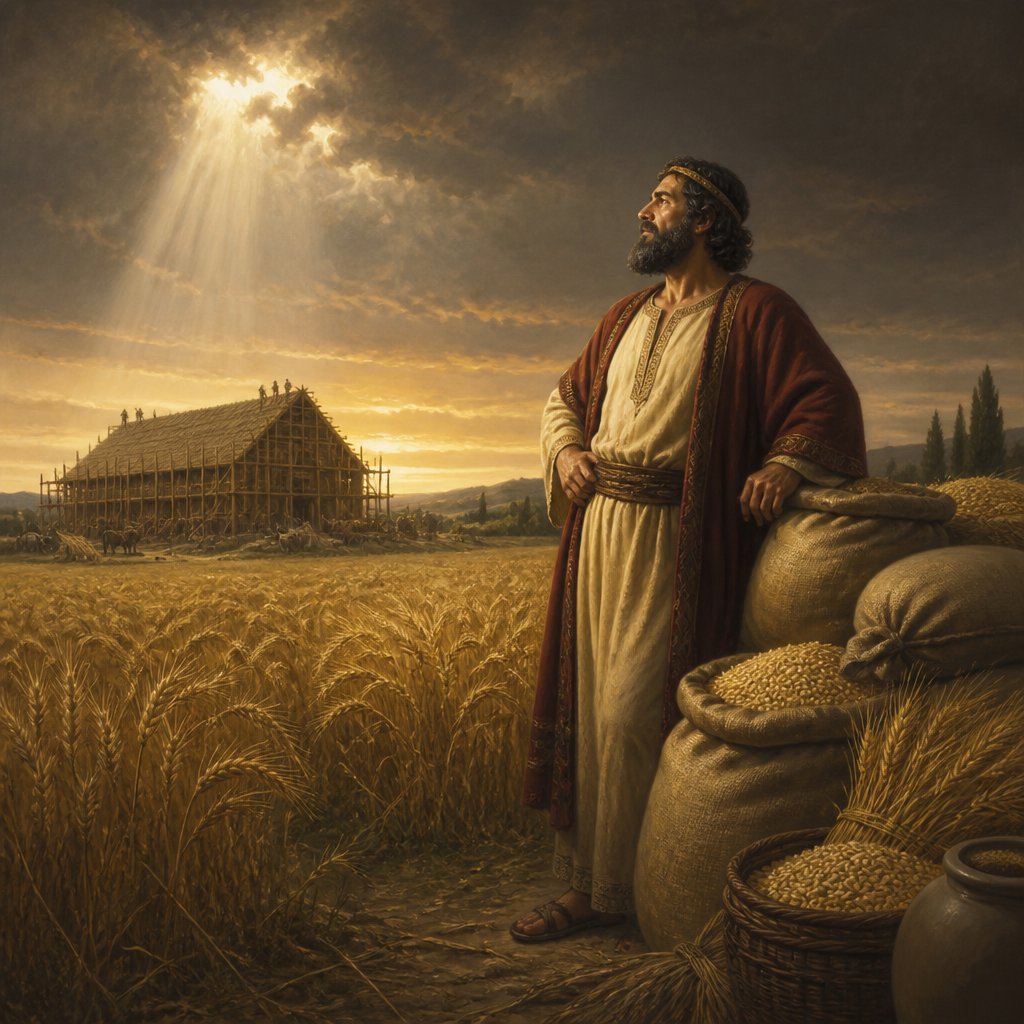
In the parable presented in Luke 12:16-21, we encounter a wealthy man who reflects the reality of many in our society. The passage begins with the proclamation of prosperity: "The ground of a certain rich man brought forth plentifully." Here we see a man blessed with bounty, one whose agricultural efforts have yielded an abundant harvest. However, rather than acknowledging this blessing as a gift from God, the man considers his wealth in a self-centered manner.
His internal dialogue reveals the root of his folly: "What shall I do, because I have no room where to bestow my fruits?" (Luke 12:17). In this line, we can observe the focal point of his concerns—his possessions. The rich man is overwhelmed not by gratitude or a sense of responsibility for his abundance but rather by the problem of storage. He sees his wealth as a puzzle to be solved rather than the opportunity to serve others or give back to God.
This man’s response is telling. He devises a plan, stating, "This will I do: I will pull down my barns, and build greater; and there will I bestow all my fruits and my goods" (Luke 12:18). In his quest for security and comfort, he elevates his possessions over his purpose. He builds larger barns without regard for the ultimate use of those goods beyond his own comfort and self-indulgence.
His final proclamation, "Soul, thou hast much goods laid up for many years; take thine ease, eat, drink, and be merry" (Luke 12:19), reflects a dangerous mindset—a mindset that finds satisfaction in hoarding and indulgence, dismissing the transient nature of life itself. We are reminded here of the essential truth: that wealth can create a false sense of security. The rich man is oblivious to the brevity of life and the uncertain nature of fortune.
Then God speaks the ultimate judgment: "Thou fool, this night thy soul shall be required of thee" (Luke 12:20). At this point, the parable takes a grave turn. In these words, we are confronted with the reality of our mortality and the folly of prioritizing earthly treasures. The man’s wealth, which he assumed would ensure his ease for many years, cannot be carried with him into eternity. Instead, it remains behind, unclaimed by anyone who understands its true meaning. God then asks a penetrating question: "then whose shall those things be, which thou hast provided?" This rhetorical question compels us to consider the spiritual implications of our treasure hoarding.
The closing line, "So is he that layeth up treasure for himself, and is not rich toward God" (Luke 12:21), serves as a sobering reminder and a call to introspection. Are we investing in what is of eternal value? Or are we consumed by the pursuit of material wealth? Jesus emphasizes the importance of being rich toward God, which involves a life characterized by generosity, faith, and active engagement in God’s kingdom.
As we reflect on this parable, we are called to assess our priorities. God desires us to share our blessings, serve others, and build His kingdom rather than our little empires on earth. Rather than storing up goods, we should be laying up treasures in heaven (Matthew 6:20), where moth and rust cannot destroy. True richness lies not in the abundance of our possessions but in the depth of our relationship with God.
In conclusion, let us heed the warning of the rich man's folly. May we aspire to be rich toward God—utilizing our blessings not as ends in themselves but as means to glorify Him and support His work here on earth. Secure in our identity as children of God, let us joyfully invest our lives in those things that will last for eternity.
Want to reflect more on Luke 12:16-21?
Continue your spiritual journey with Bible Chat — an AI-powered tool for exploring God's Word through conversation. Ask questions, discover connections, and deepen your understanding.
Get Our Apps


Luke 12:16-21 Artwork

Luke 12:16-21 - "And he told them this parable: “The ground of a certain rich man yielded an abundant harvest. He thought to himself, ‘What shall I do? I have no place to store my crops.’ Then he said, ‘This is what I’ll do. I will tear down my barns and build bigger ones, and there I will store my surplus grain. And I’ll say to myself, “You have plenty of grain laid up for many years. Take life easy; eat, drink and be merry.”’ But God said to him, ‘You fool! This very night your life will be demanded from you. Then who will get what you have prepared for yourself?’ This is how it will be with whoever stores up things for themselves but is not rich toward God."
"And he told them this parable: “The ground of a certain rich man yielded an abundant harvest. He thought to himself, ‘What shall I do? I have no place to store my crops.’ Then he said, ‘This is what I’ll do. I will tear down my barns and build bigger ones, and there I will store my surplus grain. And I’ll say to myself, “You have plenty of grain laid up for many years. Take life easy; eat, drink and be merry.”’ But God said to him, ‘You fool! This very night your life will be demanded from you. Then who will get what you have prepared for yourself?’ This is how it will be with whoever stores up things for themselves but is not rich toward God." - Luke 12:16-21

Luke 2:16 - 21

Luke 12:21 - "So is he that layeth up treasure for himself, and is not rich toward God."

Matthew 2:1-2

Genesis 2:1-2

Genesis 2:1-2
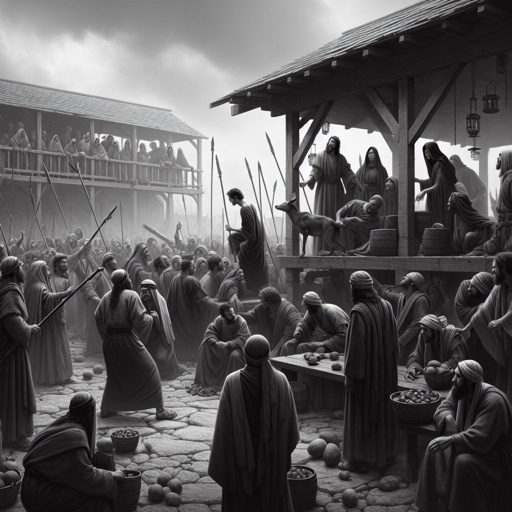
Luke 21:16 - "And ye shall be betrayed both by parents, and brethren, and kinsfolks, and friends; and some of you shall they cause to be put to death."

Luke 16:21 - "And desiring to be fed with the crumbs which fell from the rich man's table: moreover the dogs came and licked his sores."

Luke 12:16 - "And he spake a parable unto them, saying, The ground of a certain rich man brought forth plentifully:"

Luke 16:12 - "And if ye have not been faithful in that which is another man's, who shall give you that which is your own?"
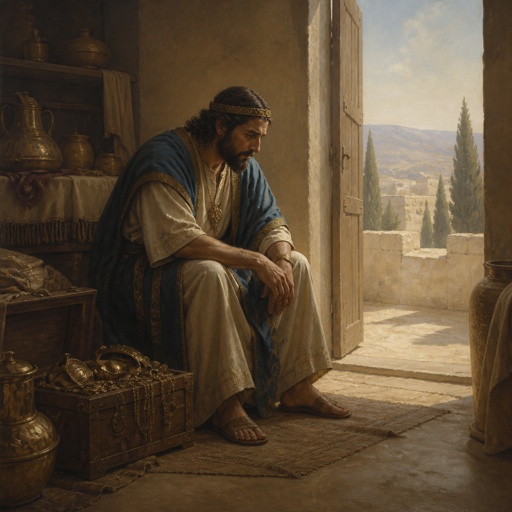
"So is he that layeth up treasure for himself, and is not rich toward God." - Luke 12:21
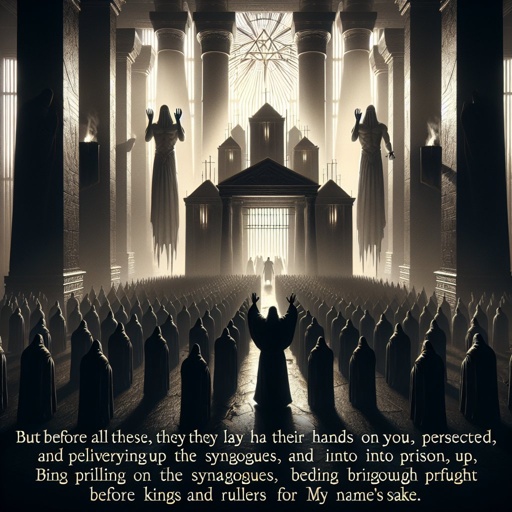
Luke 21:12 - "But before all these, they shall lay their hands on you, and persecute you, delivering you up to the synagogues, and into prisons, being brought before kings and rulers for my name's sake."

Luke 21:16-18 - "And ye shall be betrayed both by parents, and brethren, and kinsfolks, and friends; and some of you shall they cause to be put to death. And ye shall be hated of all men for my name's sake. But there shall not an hair of your head perish."

Luke 13:20-21

Luke 13:20-21
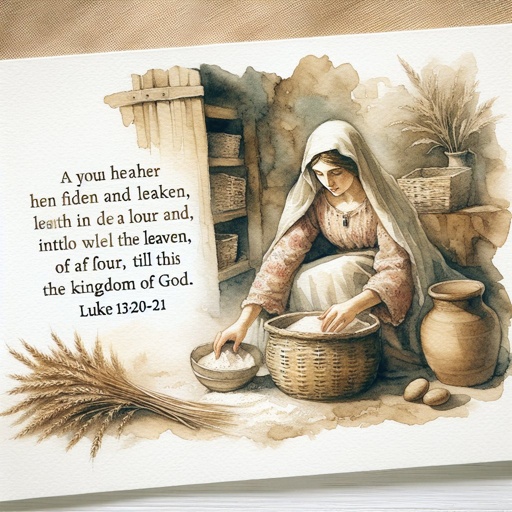
Luke 13:20-21

Luke 13:20-21

Luke 13:20-21
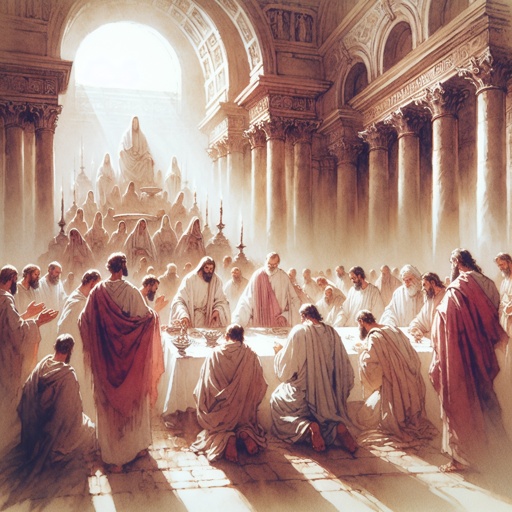
Luke 21:12 But before all these things, they will lay their hands on you and persecute you, delivering you up to the synagogues and prisons. You will be brought before kings and rulers for My name’s sake.

Luke 21:12 But before all these things, they will lay their hands on you and persecute you, delivering you up to the synagogues and prisons. You will be brought before kings and rulers for My name’s sake.
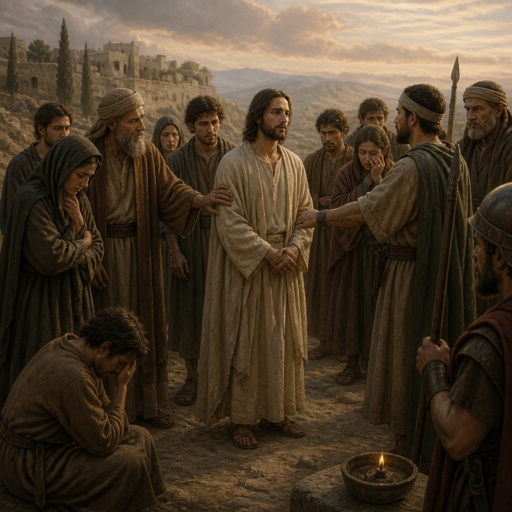
"And ye shall be betrayed both by parents, and brethren, and kinsfolks, and friends; and some of you shall they cause to be put to death." - Luke 21:16

Luke 15:21

Luke 21:24

Luke 15:21
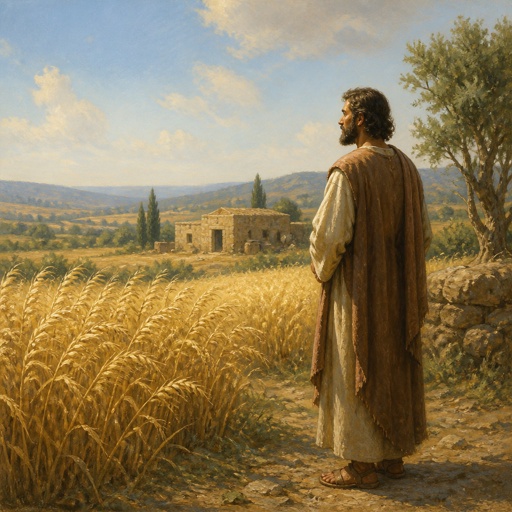
"And he spake a parable unto them, saying, The ground of a certain rich man brought forth plentifully:" - Luke 12:16
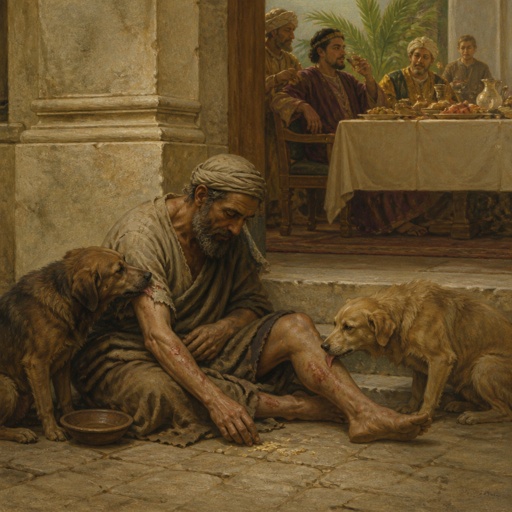
"And desiring to be fed with the crumbs which fell from the rich man's table: moreover the dogs came and licked his sores." - Luke 16:21

Luke 6:21-26

luke 21:5-19
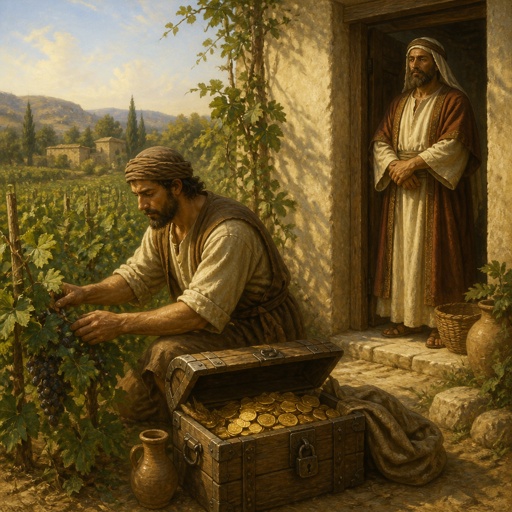
"And if ye have not been faithful in that which is another man's, who shall give you that which is your own?" - Luke 16:12