The Burden of Abundance: Finding Purpose in Our Plenty
“And he thought within himself, saying, What shall I do, because I have no room where to bestow my fruits?” — Luke 12:17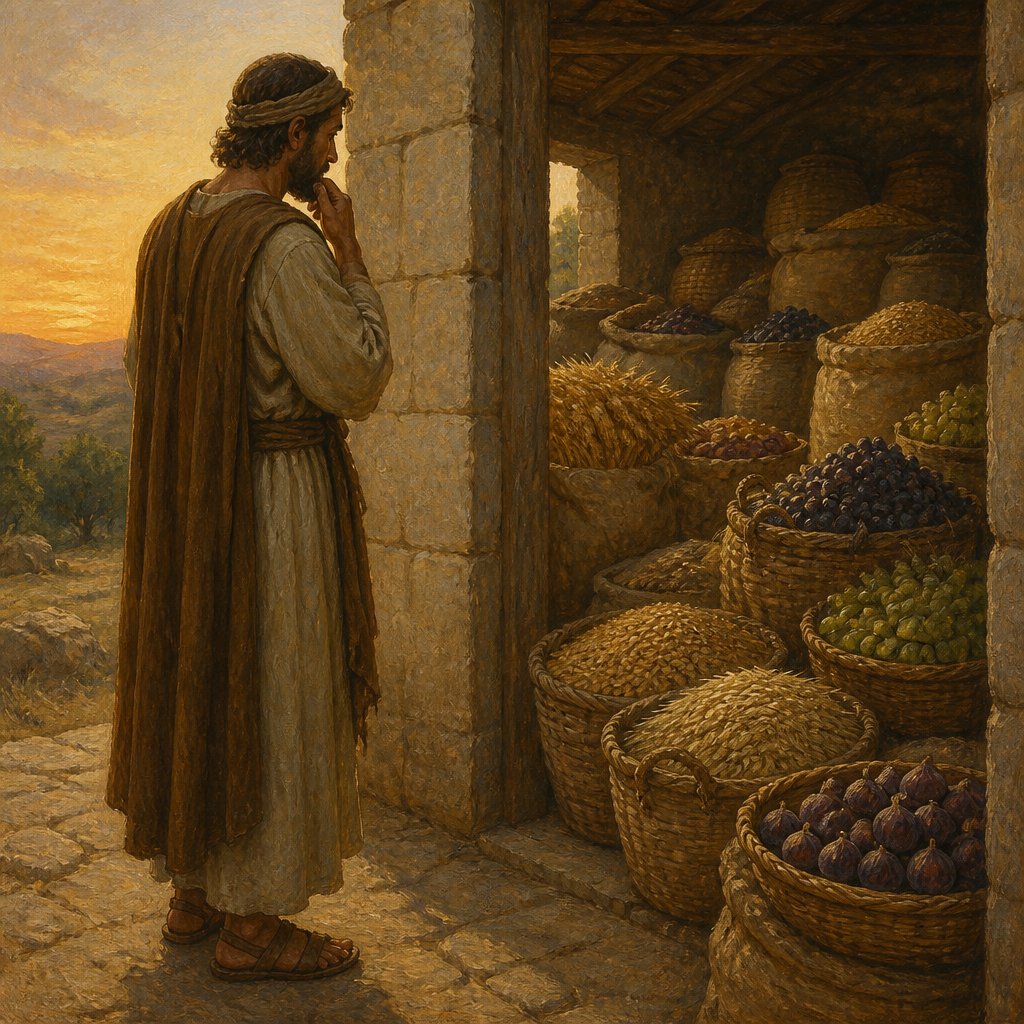
In the Gospel according to Luke, we encounter a parable that illuminates the condition of the human heart when faced with abundance. In Luke 12:17, we read, "And he thought within himself, saying, What shall I do, because I have no room where to bestow my fruits?" This verse speaks powerfully to the tension between the blessings we receive and the way we manage those blessings in our lives.
As we consider the rich man in this parable, we find a character who has experienced a season of great harvest. His barns are overflowing with fruits, a symbol of prosperity and success in his agricultural endeavors. Yet, rather than rejoicing in this abundance, he is confronted with a dilemma: his current storehouses cannot contain all that he has produced. This situation leads him to a moment of introspection, questioning himself about how to handle the wealth he has accumulated.
This internal struggle beckons us to reflect upon our own lives. How often do we worry about our possessions? Are we driven to accumulate more, without ever pausing to consider the purpose behind our pursuit of wealth? The rich man's dilemma reveals an often-overlooked truth: abundance can become a burden when it is not accompanied by a heart of stewardship. Instead of seeking ways to share his blessings, he is consumed by thoughts of self-preservation and personal comfort.
In our contemporary society, the temptation to hoard our resources can be just as strong as it was for that man. We live in a culture that promotes individualism and self-gratification, often pushing us to chase after material success. Yet, the teachings of Christ compel us to reevaluate our goals. The abundance we experience—whether it be financial, relational, or spiritual—invites us to consider how we can use it for the greater good.
By asking, “What shall I do?” the rich man acknowledges the existence of a problem, but he stops short of seeking a righteous solution. As believers, we are called to a different response. Rather than giving in to fear or selfishness, we must embrace the spirit of generosity that reflects Christ's love for us. We are reminded in 1 Peter 4:10 (KJV) that "As every man hath received the gift, even so minister the same one to another, as good stewards of the manifold grace of God."
Understanding our role as stewards of the blessings bestowed upon us leads us to consider how we can be fruitful for the Kingdom of God. The question, then, transforms from “What shall I do with my abundance?” to “How can I use what I have to bless others and honor God?” The rich man had the potential to share his harvest with those in need, to support the work of the Temple, or to invest in his community. Instead, he was blinded by his own concerns, and his story serves as a cautionary tale against the pitfalls of greed and self-centeredness.
Moreover, we must recognize that true fulfillment comes not from hoarding riches but from giving. Jesus reminds us in Acts 20:35 (KJV), "It is more blessed to give than to receive." Our blessings become a source of joy and power as we surrender them to the Lord, allowing Him to direct our paths and uses.
As we reflect upon this passage, let us ask ourselves: How do we respond to the blessings of abundance? Are we hoarding our wealth, or are we seeking opportunities to bless others? May our prayer be that God would open our eyes to His will and transform our hearts to embrace generosity rather than fear. Let us not just store up treasures for ourselves but instead invest wisely in the lives around us, ensuring that our harvest brings glory to God and compassion to others. In this way, we find true life and purpose in our abundance, aligning ourselves with God's will and becoming conduits of His grace.
Get our apps


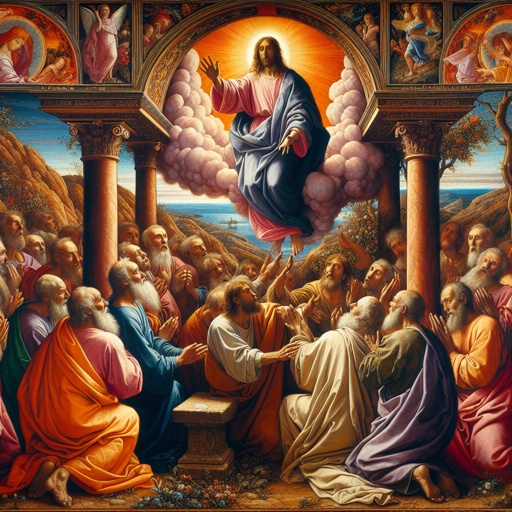
Artwork for Luke 12:17

Luke 12:17 - "And he thought within himself, saying, What shall I do, because I have no room where to bestow my fruits?"
"And he thought within himself, saying, What shall I do, because I have no room where to bestow my fruits?" - Luke 12:17
Luke 17:12 - "And as he entered into a certain village, there met him ten men that were lepers, which stood afar off:"

Luke 10:17-19

Luke 10:17-19

Luke 17:17 - "And Jesus answering said, Were there not ten cleansed? but where are the nine?"

Luke 8:17

Luke 17:10

luke 24:17
"And as he entered into a certain village, there met him ten men that were lepers, which stood afar off:" - Luke 17:12

Luke 17:12-14 - "As he was going into a village, ten men who had leprosy met him. They stood at a distance and called out in a loud voice, "Jesus, Master, have pity on us!" When he saw them, he said, "Go, show yourselves to the priests." And as they went, they were cleansed."

Luke 17:32-37

Luke 17:32 - "Remember Lot's wife."

Luke 5:17-26

Luke 12:25

Luke 12:25

Luke 12: 49

Luke 12:34

Luke 12:10

Luke 12:50

Luke 12:12 - "For the Holy Ghost shall teach you in the same hour what ye ought to say."

Genesis 17-12

Luke 1:11-12

Luke 12:25-26

Luke 12:25-26

Luke 12:25-26

Luke 12:25-26

Luke 17:5 - "And the apostles said unto the Lord, Increase our faith."

Luke 12:25-26
Luke 12:25-26