Cultivating Fruitfulness: A Reflection on Luke 13:6
"¶ He spake also this parable; A certain man had a fig tree planted in his vineyard; and he came and sought fruit thereon, and found none." - Luke 13:6
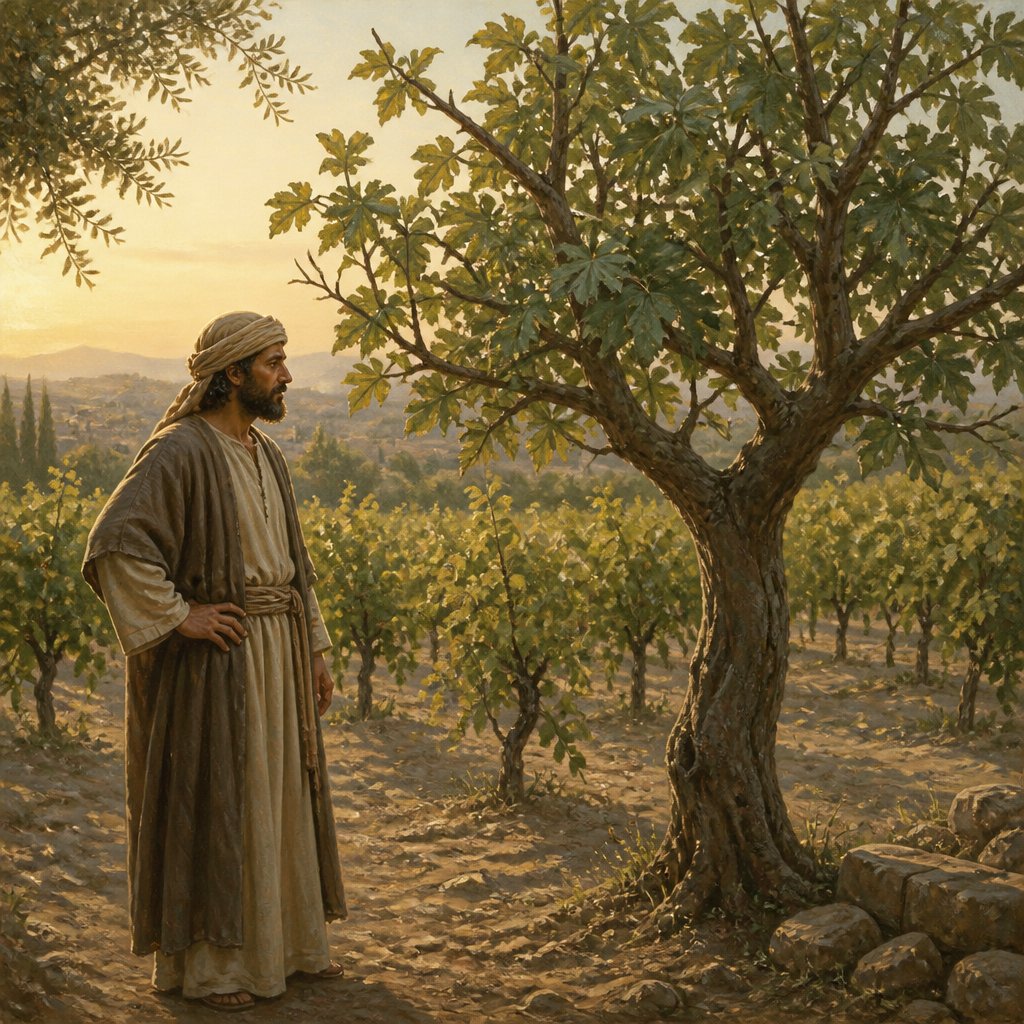
In the Gospel of Luke 13:6, we find a vivid parable imbued with poignant lessons on the nature of our spiritual lives and the expectations of our Creator: "He spake also this parable; A certain man had a fig tree planted in his vineyard; and he came and sought fruit thereon, and found none." This simple yet profound narrative beckons us to examine our own spiritual fruitfulness and our relationship with the Lord as the ultimate Gardner of our lives.
To fully appreciate the message encapsulated within this verse, we must first understand the context of the parable. The fig tree, a symbol rooted deep in the agricultural traditions of Israel, represents God's people, and more broadly, all of humanity. It is not merely a tree; it signifies our lives and the purpose for which we have been created—to bear fruit that glorifies God.
In the parable, the man who owns the vineyard seeks fruit from the fig tree—an act that illustrates God’s keen interest in our spiritual well-being. Just as this vineyard owner's desire is for the fig tree to produce what it was meant to produce, God desires the same of us. He does not merely seek our existence; He desires evidence of growth, transformation, and productivity in our spiritual lives.
The mention of finding "none" bears a heavy weight. It elicits questions about our own lives: Are we bearing fruit? What does that fruit look like? In the New Testament, Galatians 5:22-23 presents us with the fruits of the Spirit: love, joy, peace, longsuffering, gentleness, goodness, faith, meekness, and temperance. Evaluating our lives against this divine checklist encourages introspection. Do we embody these characteristics? Are we allowing the Holy Spirit to cultivate these qualities within us?
Moreover, the placement of the fig tree in a vineyard indicates that it was meant to thrive in a carefully chosen environment. Similarly, we have been placed in our specific contexts—family, work, community, and church—to flourish and testify about God’s goodness. Thus, when the gardener visits our lives, what does he find? In a world filled with distractions and hardships, do we cultivate our relationship with God so that we may produce fruit? Or are we content with a barren existence?
The narrative does not end with the disappointment of finding no fruit. The owner of the vineyard expresses frustration but also exhibits patience. He calls upon the keeper, hoping to give the tree another opportunity: "Cut it down; why cumbereth it the ground?" This plea for intervention speaks to the mercy of God who does not swiftly judge but instead allows time for repentance and growth. God often allows us seasons of grace to reconsider our ways, to turn from stagnancy, and to pursue a life that is vibrant with purpose.
Dear friends, let us not miss the grace laden within this parable. It compels us to realize that no matter how barren we might feel, there is always hope. With each new day, God provides us with fresh opportunities to seek Him, nurture our faith, and produce fruit. We are assured in His Word that it is never too late to change trajectory. Just as the vineyard keeper tended to the fig tree with care and commitment, so is God’s relentless devotion toward us. If we humble ourselves, seek His face, and open our hearts to His work, we will find ourselves changed.
Ultimately, the vastness of God’s love and mercy beckons us to action. Let us commit to a life of fruitfulness, for as we are grafted into Christ, we become part of that Divine Vine that nourishes and sustains us. Engage fervently in prayer and diligent study of His Word, and invite the Holy Spirit to cultivate the fruit within us. May we strive, as godly stewards, to bear fruit worthy of our calling.
In conclusion, Luke 13:6 serves as both a warning and an encouragement. It calls us to fervently assess the condition of our spiritual lives. May we aspire to embody the essence of a flourishing fig tree, bringing glory to the Gardener who nurtures us.
Want to reflect more on Luke 13:6?
Continue your spiritual journey with Bible Chat — an AI-powered tool for exploring God's Word through conversation. Ask questions, discover connections, and deepen your understanding.
Get Our Apps


Luke 13:6 Artwork

Luke 13:6-9

Luke 13:6 - "¶ He spake also this parable; A certain man had a fig tree planted in his vineyard; and he came and sought fruit thereon, and found none."

Luke 13:6-9 - "He also spoke this parable: “A certain man had a fig tree planted in his vineyard, and he came seeking fruit on it and found none. Then he said to the keeper of his vineyard, ‘Look, for three years I have come seeking fruit on this fig tree and find none. Cut it down; why does it use up the ground?’ But he answered and said to him, ‘Sir, let it alone this year also, until I dig around it and fertilize it. And if it bears fruit, well. But if not, after that you can cut it down.’"
"¶ He spake also this parable; A certain man had a fig tree planted in his vineyard; and he came and sought fruit thereon, and found none." - Luke 13:6
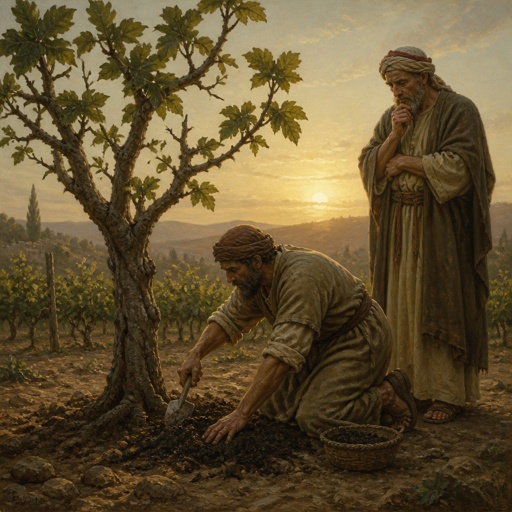
"He also spoke this parable: “A certain man had a fig tree planted in his vineyard, and he came seeking fruit on it and found none. Then he said to the keeper of his vineyard, ‘Look, for three years I have come seeking fruit on this fig tree and find none. Cut it down; why does it use up the ground?’ But he answered and said to him, ‘Sir, let it alone this year also, until I dig around it and fertilize it. And if it bears fruit, well. But if not, after that you can cut it down.’" - Luke 13:6-9

Luke 6:13 - "¶ And when it was day, he called unto him his disciples: and of them he chose twelve, whom also he named apostles;"

Luke 13:18-19

Luke 13:20-21

Luke 13:20-21

Luke 13:18-19
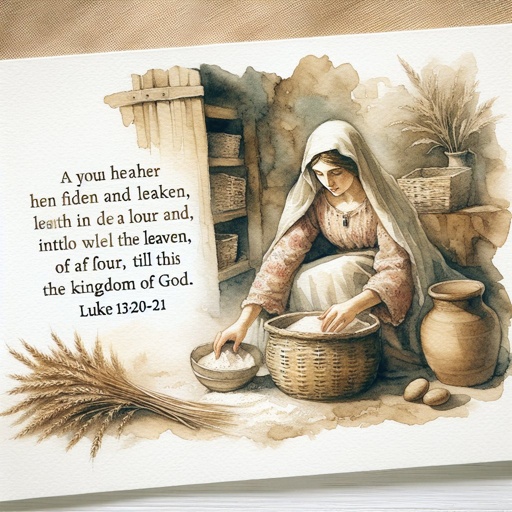
Luke 13:20-21

Luke 13:20-21

Luke 13:20-21

Luke 1:13

Luke 1:13

Luke 8:13

Luke 13:24

Luke 8:13

Luke 1:13

Luke 1:13

Luke 8:13

Luke 6

Luke 1:13

Luke 2:13

Luke 1:13

Luke 13:13 - "And he laid his hands on her: and immediately she was made straight, and glorified God."

Luke 2:13-14

Luke 16:1-13

Luke 2:13-14

luke 6:30