The Great Paradox of Humility: Exaltation Through Abasement
"For whosoever exalteth himself shall be abased; and he that humbleth himself shall be exalted." - Luke 14:11
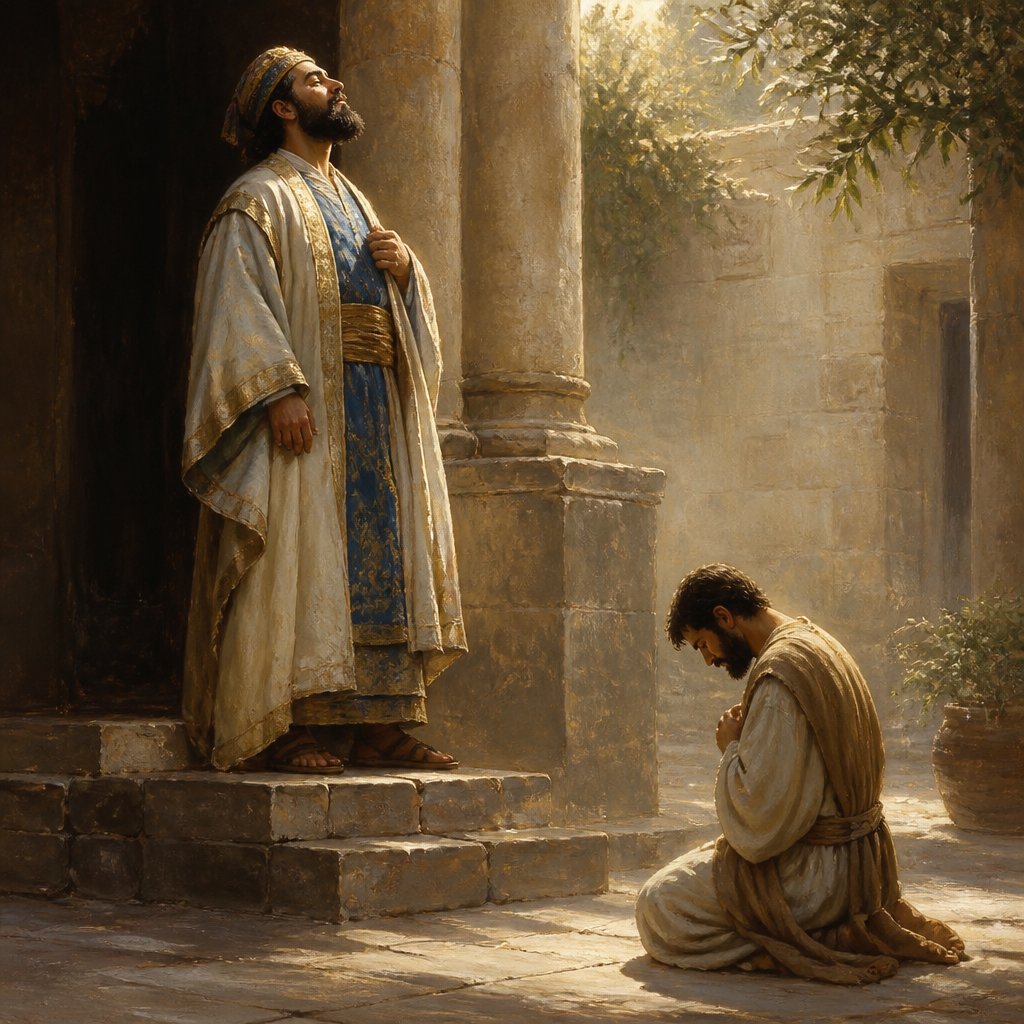
In the realm of Christian teachings, humility tends to be one of the most counterintuitive virtues one can embrace. In Luke 14:11, we delve into a profound truth spoken by our Lord: "For whosoever exalteth himself shall be abased; and he that humbleth himself shall be exalted." (KJV)
This verse presents a striking paradox that challenges our worldly perceptions of success and honor. In a society that often idolizes power, prestige, and self-promotion, the Kingdom of God beckons us to an upside-down view of greatness. Jesus, in this simple yet powerful statement, invites us into the beauty of humility, asserting that true exaltation comes not from self-promotion but from genuine humility before God and others.
The context of this verse is critical for understanding its significance. Jesus had been invited to dine at the house of a prominent Pharisee. Observing the guests who were choosing the best seats at the table, He seized the opportunity to teach a parable about humility. Those who strive for the highest places often find themselves humiliated, whereas those who take the lower positions will be honored as God sees fit.
Humility is perhaps one of the hardest attributes to cultivate because it runs contrary to the age-old instinct of self-preservation and self-focus. Our first response is often to seek recognition and approval from others as a way to build our self-worth. We gauge our significance by the titles we hold, the accolades we receive, and the popularity we gain. However, Jesus calls us to a different measure of worth—a measure based on our ability to place ourselves lower in the eyes of others.
When we choose to humble ourselves, we embrace a posture that acknowledges our dependence on God. We cultivate an attitude of servanthood that mirrors Christ—a standard not just for our behavior but for our hearts. Philippians 2:5-7 reminds us: "Let this mind be in you, which was also in Christ Jesus: Who, being in the form of God, thought it not robbery to be equal with God: But made himself of no reputation, and took upon him the form of a servant, and was made in the likeness of men." (KJV) Jesus exemplified humility; He served rather than demanded honor, showing that in God's kingdom, servanthood is the highest calling.
Moreover, humility enables us to genuinely connect with others. It breaks down barriers of pride and arrogance, allowing us to enter into relationships grounded in love and mutual respect. When we view ourselves through the lens of humility, we recognize every person as valuable, deserving of dignity and kindness. In contrast, exalting oneself creates distance, engendering competition and comparison instead of unity and love.
In our spiritual journey, we may find ourselves wrestling with the tension between striving for excellence and grappling with the call to humility. It is essential, therefore, to remember that humility does not equate to self-deprecation or a lack of ambition. Rather, true humility empowers us to pursue God’s purpose with passion while recognizing that our abilities and successes derive from God’s grace.
This brings us back to Jesus's words: "he that humbleth himself shall be exalted." To be exalted by God is to be recognized for who we truly are in Christ. It is to accept our identity as beloved children of God—an acceptance that releases us from the bondage of needing to prove ourselves before others. In due time, God lifts us up, perhaps not in the ways the world would expect, but in the deep soul-satisfaction of a life lived fully for Him.
To embody this principle in our daily lives, we can start by practicing gratitude for what we have been given, serving others without seeking recognition, and genuinely elevating those around us. As we embrace humility, may we find our hearts transformed, our relationships flourishing, and our spirits exalted in the presence of our great God. In humility, we discover the true essence of our identity—secure, valued, and exalted by the One who knows us best.
Want to reflect more on Luke 14:11?
Continue your spiritual journey with Bible Chat — an AI-powered tool for exploring God's Word through conversation. Ask questions, discover connections, and deepen your understanding.
Get Our Apps


Luke 14:11 Artwork

Luke 14:11 - "For whosoever exalteth himself shall be abased; and he that humbleth himself shall be exalted."

"For whosoever exalteth himself shall be abased; and he that humbleth himself shall be exalted." - Luke 14:11

Luke 11:14-15

Luke 11:1-14

Luke 11:1-14

Luke 11:14 - "¶ And he was casting out a devil, and it was dumb. And it came to pass, when the devil was gone out, the dumb spake; and the people wondered."

"¶ And he was casting out a devil, and it was dumb. And it came to pass, when the devil was gone out, the dumb spake; and the people wondered." - Luke 11:14
Luke 11:9

luke 11:23

luke 11:23

luke 11:23

Luke 8:11

luke 11:23

Luke 11:9

Nehemiah 11:11-14

Luke 14:14 - "And thou shalt be blessed; for they cannot recompense thee: for thou shalt be recompensed at the resurrection of the just."

Luke 18:9-14

Luke 14:25 - 33

Luke 2:13-14

Luke 18: 9-14

Luke 2:13-14

Luke 1:11-12

Luke 11:9-10

Song of Solomon 1:4

Luke 5:1-11

Luke 15:11-32

Luke 1:11-12

Luke 1:11-12

Luke 5:1-11

Luke 1:11-12