The Heart of the Savior: Embracing the Outcast
“And the Pharisees and scribes murmured, saying, This man receiveth sinners, and eateth with them.” — Luke 15:2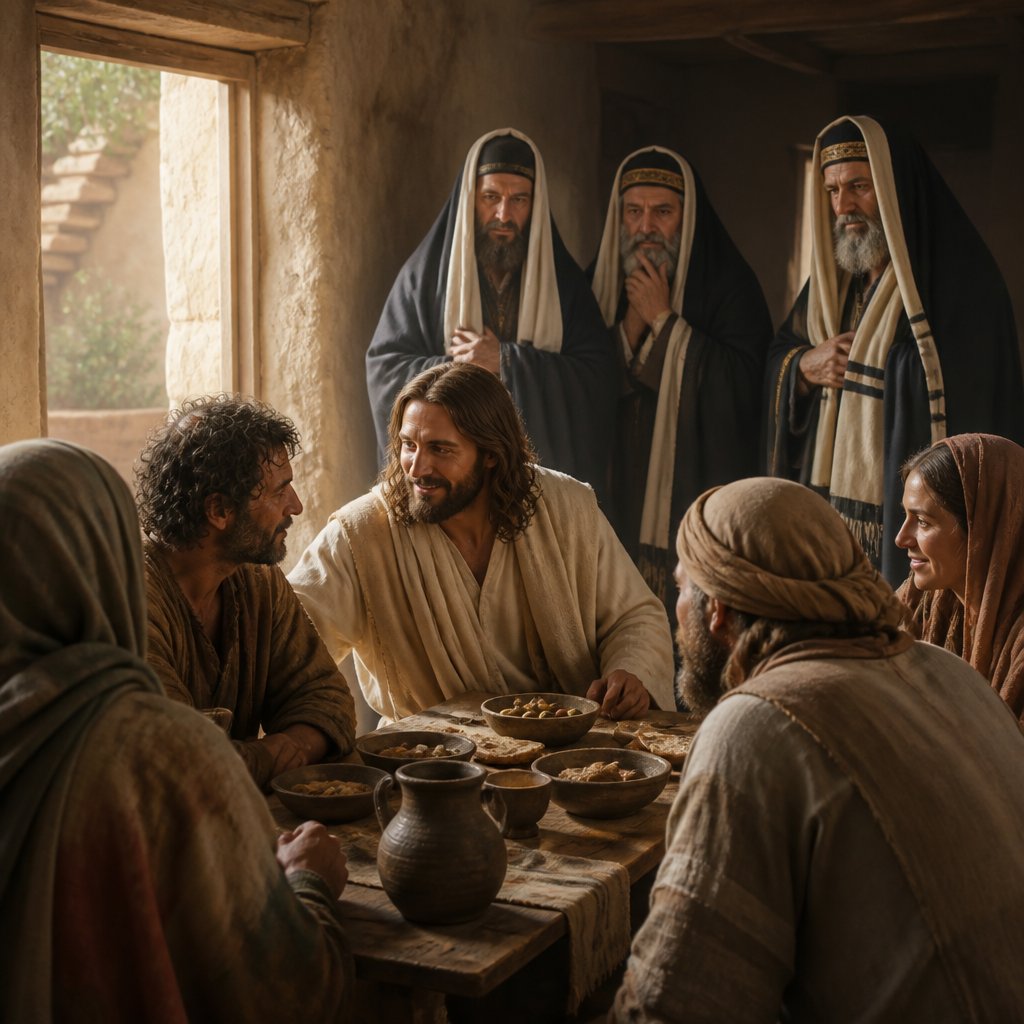
In the Gospel of Luke, we witness the evolving narrative of Jesus Christ as He interacts with various groups of society, including the most marginalized and outcast. In Luke 15:2, we find a profound encounter that unveils the core of Jesus' mission and delivers a potent lesson on grace and acceptance: "And the Pharisees and scribes murmured, saying, This man receiveth sinners, and eateth with them." This verse serves as a lens through which we can examine our own hearts and our understanding of the gospel.
To grasp the weight of this verse, we must first appreciate the social climate surrounding Jesus' ministry. The Pharisees and scribes were the religious elite of their day—guardians of the Law, they prided themselves on their piety and felt a deep disdain for those considered 'sinners.' In their eyes, these individuals—tax collectors, prostitutes, and various transgressors—were unworthy of God’s favor, and their presence was a stain on righteousness. Yet, here was Jesus, a rabbi, choosing to associate with those very individuals. He dined with them, shared stories with them, and more importantly, demonstrated the unrelenting love of God for the brokenhearted.
This moment reveals a fundamental truth: the mission of Christ was not to seek the righteous, but to save those who were lost. The murmurs of the Pharisees reflect a heart that has yet to understand the nature of God’s mercy—a mercy that shatters the constraints of human judgment. Jesus’ actions challenged the prevailing notions of holiness and righteousness. He was not endorsing sin; rather, He was extending a hand of love and inviting all to partake in the transformative power of grace.
Imagine the scene: the table spread, the aroma of food in the air, laughter and conversation flowing freely as Jesus engaged with those labeled as outcasts. This setting was not just a social gathering; it was a radical act of love that pointed to a new kingdom reality—the Kingdom of God where all, regardless of their past, are welcomed into fellowship with the Father. It shows us that the church is not a museum for saints but a hospital for sinners.
Jesus understood the depths of human brokenness and came to mend what was shattered. The scribes and Pharisees, on the other hand, highlighted a law that led to isolation rather than inclusion. They exemplified a mentality that often exists within religious circles today—a tendency to forget the very essence of love and compassion in favor of preserving a facade of purity.
As we reflect on this profound scripture, we must ask ourselves: who are the "sinners" in our lives? Who do we consider unworthy of grace? Are there stereotypes, prejudices, or judgments that cloud our vision and hinder us from extending friendship and love? The heart of Jesus calls us beyond these boundaries, urging us to approach the marginalized and make space at our tables for those whom society has deemed unworthy.
In our own contexts, we are called to be conduits of God’s grace—active participants in His redemptive plan. It is important to remember that the grace we receive from God is not simply for our consumption; it is intended to flow through us into the lives of those around us. This means not just welcoming others into our homes or churches but also into our hearts. To embody the heart of Jesus means getting our hands dirty in the messiness of others' lives. It means letting go of murmurs and embracing collaboration with those whom we would otherwise shun.
Today, let us embody the love of Christ. Let us confront our own attitudes and reflect on where we stand. Do we murmur like the Pharisees, or do we celebrate the grace that transforms? In accepting the outcast, we fulfill the very essence of our calling as followers of Christ. May we become a community that mirrors Jesus—receiving sinners and eating, laughing, and rejoicing in their presence.
In doing so, we not only invite transformation in their lives but also open ourselves to the deeper work of God in our own hearts.
Get our apps


Artwork for Luke 15:2

Luke 15:2 - "And the Pharisees and scribes murmured, saying, This man receiveth sinners, and eateth with them."
"And the Pharisees and scribes murmured, saying, This man receiveth sinners, and eateth with them." - Luke 15:2

Luc 15:1-2

Luc 15:1-2

Luc 15:1-2

Luc 15:1-2

Luke 15:23

Luke 15:10

Luke 15:21

Luke 15:21

Luke 15: 4-7

Luke 11:14-15

Luke 21:15-19

Luke 15:11-32

Luke 15:15 - "And he went and joined himself to a citizen of that country; and he sent him into his fields to feed swine."

Luke 4:15 - "And he taught in their synagogues, being glorified of all."

Luke 15:3 - "¶ And he spake this parable unto them, saying,"

Luke 15:11 - "¶ And he said, A certain man had two sons:"

Luke 9:15 - "And they did so, and made them all sit down."

Luke 6:15 - "Matthew and Thomas, James the son of Alphaeus, and Simon called Zelotes,"

Luke 15:26 - "And he called one of the servants, and asked what these things meant."

Luke 15:23 - "And bring hither the fatted calf, and kill it; and let us eat, and be merry:"

Luke 2:15 - "And it came to pass, as the angels were gone away from them into heaven, the shepherds said one to another, Let us now go even unto Bethlehem, and see this thing which is come to pass, which the Lord hath made known unto us."

Luke 15:5 - "And when he hath found it, he layeth it on his shoulders, rejoicing."

Luke 15:1 - "Then drew near unto him all the publicans and sinners for to hear him."

Luke 2:2

Luke 10:15 - "And thou, Capernaum, which art exalted to heaven, shalt be thrust down to hell."

Luke 15:24 - "For this my son was dead, and is alive again; he was lost, and is found. And they began to be merry."

Luke 11:15 - "But some of them said, He casteth out devils through Beelzebub the chief of the devils."

Luke 7:15 - "And he that was dead sat up, and began to speak. And he delivered him to his mother."