Rejoicing in Redemption: The Fatted Calf of Grace
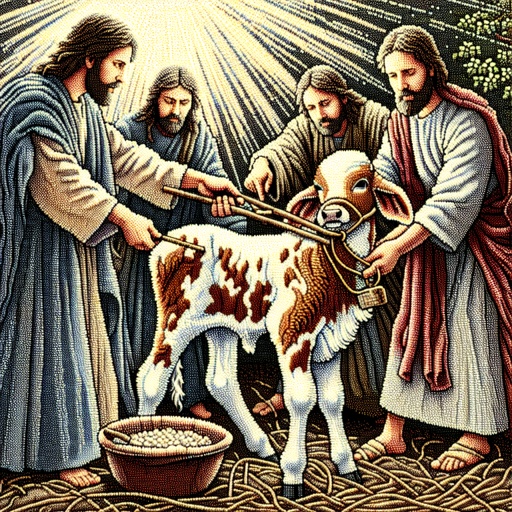
“And bring hither the fatted calf, and kill it; and let us eat, and be merry:” — Luke 15:23
Luke 15:23 (KJV) states, "And bring hither the fatted calf, and kill it; and let us eat, and be merry:" This verse is drawn from the parable of the Prodigal Son, one of the most cherished and profound teachings of Jesus. It is a narrative rich with themes of forgiveness, grace, and unconditional love.
The story begins with a wayward son who, tired of the constraints of home and driven by the allure of independence, demands his inheritance and travels to a distant land. There, he squanders his wealth on reckless living. Eventually, he finds himself destitute, yearning for the food that pigs eat. In his lowest moment, he remembers his father’s house, where even the hired servants eat better than he does. This moment of clarity leads him to decide to return home, not as a son, but as a servant, bearing the weight of his sins and the shame of his decisions.
When he finally returns, a remarkable thing happens. His father sees him from a distance and runs to him, embracing him with open arms, filled with compassion and love. He does not dwell on the waywardness of his son but instead celebrates his return. The command to “bring hither the fatted calf” symbolizes a celebration—a joyous occasion, a banquet of reconciliation and redemption. Why a fatted calf? Because in biblical times, the fatted calf represented the best of what one had to offer, signifying that something extraordinary was being given to mark the occasion.
This father’s response reflects the heart of God toward those who repent and return to Him. It challenges our perceptions of worthiness and reminds us that no one is beyond grace. The act of killing the fatted calf represents the sacrificial nature of grace—that enormous joy and celebration are reserved not for the righteous, but for the lost who are found.
In today's world, we often find ourselves in a position akin to the Prodigal Son. We stray due to various temptations, whether they stem from pride, impatience, or the pursuit of worldly desires. The reassurance is profound: God’s arms are ever open, His heart, ever ready for our return. His promise: to restore us, not to condemn us, to redeem us, not to reject us.
As you meditate on this passage, consider how often we’ve put ourselves in positions of shame and regret. Each of us has our own much shameful legacy. Yet, God’s heart beats fiercely for reconciliation. The fatted calf signifies that there is joy in God's heart when we turn back to Him. He prepares for our return with more than just forgiveness; He prepares celebration.
The next part of the verse, "and let us eat, and be merry," invites us into a communal experience of joy and gratitude. It reminds the Church of our call to rejoice in the grace of God. When one sinner repents, heaven rejoices. We, too, should partake in that celebration, sharing in the joy of others' redemption. Let our hearts be filled with gratitude for our own salvation and an eagerness to welcome back the lost.
As we reflect on this verse today, ask yourself: What areas of your life need a return to the Father? What burdens are you carrying that you need to lay down before Him? Understand that the Father is waiting, eager to embrace you. He is calling for the fatted calf in anticipation of your return, a celebration brewing in the depths of His love.
Let us be a community that celebrates grace, ever ready to gather around the fatted calf—ready to rejoice when a life is transformed. Let our gatherings be filled with joy, for each meal shared in His name is a testament to His redemptive power. Glory in the Father’s love, for it is a love that invites you to eat and be merry in His presence.
Get our apps


Artwork for Luke 15:23
Luke 15:23

Luke 15:23 - "And bring hither the fatted calf, and kill it; and let us eat, and be merry:"

"And bring hither the fatted calf, and kill it; and let us eat, and be merry:" - Luke 15:23

Luke 23:15 - "No, nor yet Herod: for I sent you to him; and, lo, nothing worthy of death is done unto him."

"No, nor yet Herod: for I sent you to him; and, lo, nothing worthy of death is done unto him." - Luke 23:15

Luke 23:53

Luke 19:23

luke 11:23

Luke 19:23

luke 11:23

luke 11:23

luke 11:23

Luke 23:54 - "And that day was the preparation, and the sabbath drew on."

Luke 23:23 - "And they were instant with loud voices, requiring that he might be crucified. And the voices of them and of the chief priests prevailed."

Luke 15:10

Exodus 15:23

Matthew 15:23

Luke 23:24 - "And Pilate gave sentence that it should be as they required."

Luke 15:21

Luke 15:21
Exodus 15:23

Matthew 15:23

Genesis 23-15

Luke 23:45 - "And the sun was darkened, and the veil of the temple was rent in the midst."

Luke 7:23 - "And blessed is he, whosoever shall not be offended in me."

Luke 23:21 - "But they cried, saying, Crucify him, crucify him."

Luke 23:16 - "I will therefore chastise him, and release him."

Luke 23:37 - "And saying, If thou be the king of the Jews, save thyself."

Luke 23:10 - "And the chief priests and scribes stood and vehemently accused him."

Joshua 15:23 - "And Kedesh, and Hazor, and Ithnan,"