Rejoicing Over the Lost: A Celebration of Redemption
“And when he cometh home, he calleth together his friends and neighbours, saying unto them, Rejoice with me; for I have found my sheep which was lost.” — Luke 15:6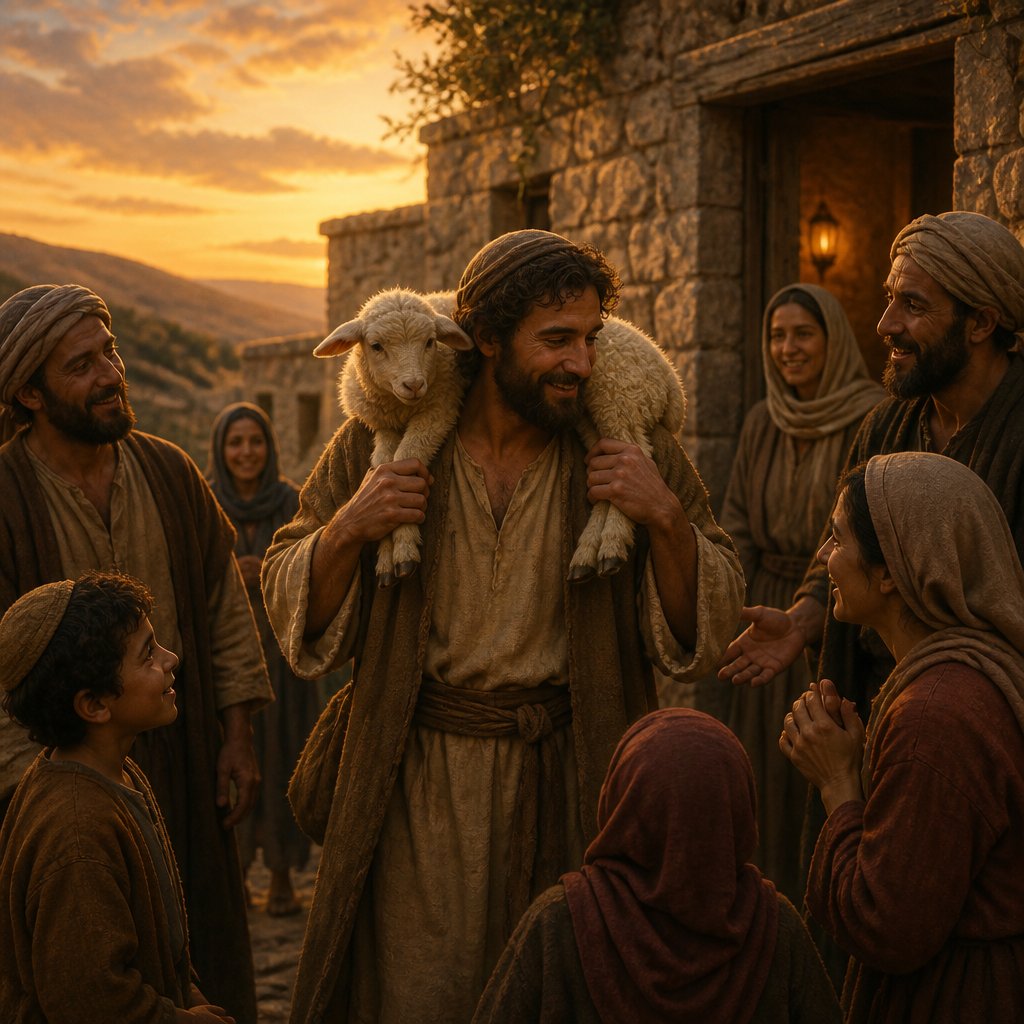
The essence of joy, particularly within the spiritual journey, is encapsulated in the parable of the lost sheep, as summarized in Luke 15:6, where we read, "And when he cometh home, he calleth together his friends and neighbours, saying unto them, Rejoice with me; for I have found my sheep which was lost." This verse not only speaks of personal victory but also highlights the communal joy associated with redemption.
In this parable, Jesus chooses sheep as an emblem of humanity, emphasizing the vulnerability and helplessness of each individual when separated from the Divine Shepherd. The imagery of loss and recovery presents a powerful metaphor for the spiritual journey. Just as a shepherd risks everything to seek out the one sheep that has strayed, God, our true Shepherd, is relentlessly pursuing us, reflecting His immeasurable love.
The phrase "when he cometh home" signifies more than just the physical act of returning to a place. It is symbolic of safety, belonging, and restoration of relationships. Home is a sacred space where we can reminisce and celebrate the journey we have undergone. It is in this sacred space that the shepherd gathers his friends and neighbors, inviting them to share in his joy. This communal gathering serves as a powerful reminder that when one person comes to know the Lord, it is a cause for collective celebration in the Kingdom of Heaven.
What is fascinating in this verse is the shepherd’s call: "Rejoice with me." This exhortation reminds us of our responsibility as part of God's family—not only to rejoice in our own growth and recovery but also to engage others in the same spirit of joy. Celebrating God’s work in our lives fosters a sense of community and connection among believers. When we see others coming home from their lost state, it should elicit a heartfelt response: rejoicing together in the goodness of God’s grace.
The act of rejoicing together enacts the very essence of what it means to live in community. When friends and neighbors join in celebration, they acknowledge their collective journey and recognize that every individual matters in the eyes of God. By inviting them to celebrate, the shepherd creates a shared moment of divine healing that extends beyond himself to encompass everyone present. This narrative promotes unity and interdependence, a hallmark of the Body of Christ.
Moreover, the shepherd’s joy is derived from the act of retrieval: "for I have found my sheep which was lost." Herein lies the crux of the gospel message—every lost soul is of immense value to the Kingdom. In a world often riddled with challenges, isolation, and brokenness, we must remind ourselves that no one is beyond the reach of God's grace. Each time a heart turns back to the Lord, heaven rejoices, and we, too, must join in that eternal song.
As followers of Christ, we are called to be bearers of good news—agents of joy in a world that often dwells in sorrow and despair. Reflecting on the shepherd's actions, we should assess our commitment to the lost. Are we actively seeking to embrace those who have wandered away? Are we ready to celebrate their return with the same fervor as the shepherd?
In conclusion, Luke 15:6 is a powerful reminder of God’s relentless pursuit for His children and our calling to share in the joy of redemption. As we navigate our discipleship journey, let us remember to reach out, rejoice, and rally our communities when a soul is restored. For in every celebration of recovery, a part of Heaven breaks through our earthly existence, inviting us into the dance of divine joy.
Get our apps


Artwork for Luke 15:6

Luke 15:6 - "And when he cometh home, he calleth together his friends and neighbours, saying unto them, Rejoice with me; for I have found my sheep which was lost."
"And when he cometh home, he calleth together his friends and neighbours, saying unto them, Rejoice with me; for I have found my sheep which was lost." - Luke 15:6

Luke 6:15 - "Matthew and Thomas, James the son of Alphaeus, and Simon called Zelotes,"
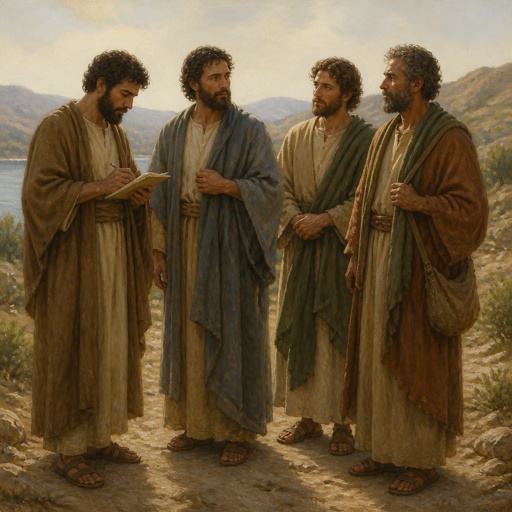
"Matthew and Thomas, James the son of Alphaeus, and Simon called Zelotes," - Luke 6:15
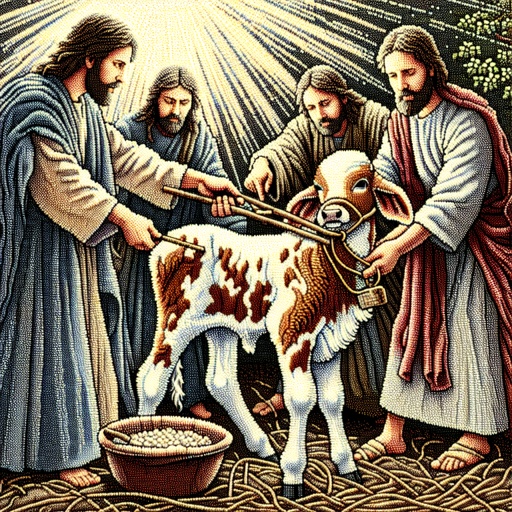
Luke 15:23

Luke 15:10

Luke 15:21

Luke 15:21

Luke 6

Luke 15: 4-7

Luke 11:14-15

Luke 21:15-19

Luke 15:11-32

luke 6: 27

luke 6:30

Luke 15:15 - "And he went and joined himself to a citizen of that country; and he sent him into his fields to feed swine."

Luke 4:15 - "And he taught in their synagogues, being glorified of all."

Luke 15:3 - "¶ And he spake this parable unto them, saying,"

Luke 6: 27-38

Luke 6:21-26

Luke 13:6-9

Luke 3:1-6

Luke 3:1-6

Luke 6:27-38

Luke 6:21-26

luke 3:1-6

Luke 15:11 - "¶ And he said, A certain man had two sons:"

Luke 9:15 - "And they did so, and made them all sit down."

Luke 15:26 - "And he called one of the servants, and asked what these things meant."

Luke 14:6 - "And they could not answer him again to these things."