The Eternal Perspective: Lessons from the Rich Man and Lazarus
"But Abraham said, Son, remember that thou in thy lifetime receivedst thy good things, and likewise Lazarus evil things: but now he is comforted, and thou art tormented." - Luke 16:25
**Introduction**
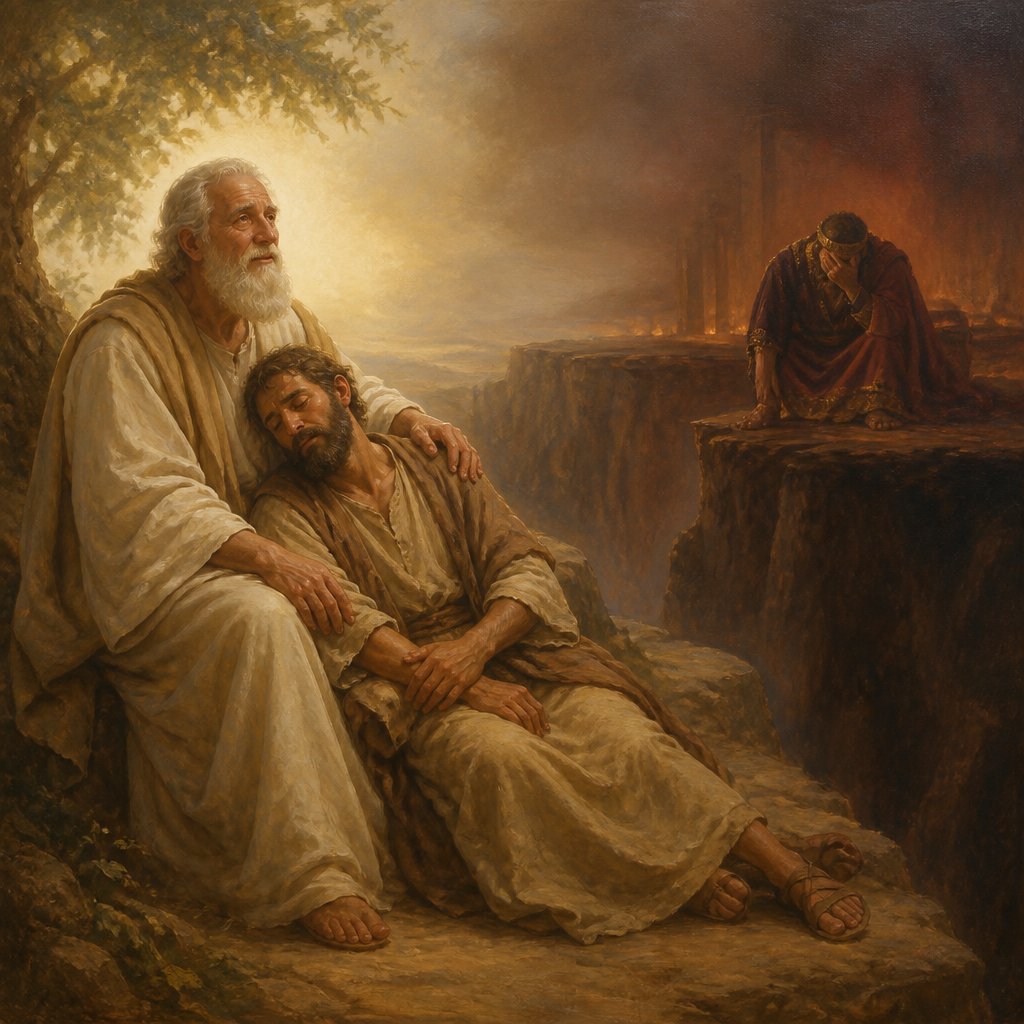
In Luke 16:25, we encounter a potent and sobering truth articulated by Abraham in a parable about two individuals at opposite extremes of the social spectrum: the rich man and Lazarus. Abraham states, "But Abraham said, Son, remember that thou in thy lifetime receivedst thy good things, and likewise Lazarus evil things: but now he is comforted, and thou art tormented." This passage invites us to reflect deeply on our lives, priorities, and the consequences of our choices.
**Understanding the Context**
The parable of the rich man and Lazarus serves a dual purpose: first, it highlights the stark contrasts between earthly life and eternal reality; second, it serves as a warning against complacency and the neglect of the needy in our society. The rich man wallows in comfort, adorned in luxury, and oblivious to the suffering of Lazarus, who lay at his gate, desperate for scraps.
In death, their roles are reversed—Lazarus, once poor and afflicted, is now in the embrace of comfort in the bosom of Abraham, while the rich man finds himself in torment, unable to quench his thirst or escape his agony. The narrative challenges us to consider how we allocate our resources and respond to the needs of those around us.
**The Danger of Complacency**
The rich man's life can be a reflection of our own if we are not careful. In our pursuit of personal success, comfort, and earthly pleasures, we can easily become oblivious to the lives and struggles of those less fortunate. The rich man's indifference, which led to his eternal torment, serves as a grave reminder of what happens when we ignore the Biblical commands to love and care for our neighbors.
In comparison, Lazarus represents those marginalized by society, suffering injustices without support. Jesus’ depiction of their lives injects a sense of urgency into our understanding of compassion and mercy. It is worth contemplating: How often do we distance ourselves from those in need because it is inconvenient?
**Eternal Consequences**
Abraham's words to the rich man emphasize the importance of remembering our earthly choices and their potential eternal ramifications. These choices determine our legacy and the state of our souls. The rich man's comfort was ephemeral; he received his rewards in the short span of his lifetime but failed to invest in the eternal. Lazarus, who endured suffering and rejection during his life, now experiences the richness of God’s comfort in eternity.
From a Kingdom perspective, earthly riches are not inherently evil; however, when they eclipse our ability to show love and service to others, they can become our undoing. It begs the question: Are we living with eternity in mind? Do we structure our lives around an understanding that physical wealth is transient, but spiritual wealth lasts forever?
**Embracing God’s Heart for the Poor**
As believers, we are called to reflect the heart of God. Jesus frequently associated with the marginalized and challenged societal norms of His time. The ministry of Christ was focused on the restoration and healing of those rejected by others. In light of the rich man’s plight, we are reminded to extend our hands to help those in need.
In practicing generosity, kindness, and love towards others, particularly the vulnerable, we embody the Gospel. Our good deeds here on earth may be our response to God’s grace and love towards us; they reflect the generosity we have received from our Heavenly Father.
**Conclusion**
The words of Abraham in Luke 16:25 compel us to examine our lives through the lens of eternity. Are we living for the transient pleasures of this world, or are we storing up treasures in heaven through acts of love and service? Let our time on earth be spent creating a legacy of compassion, reflecting Christ’s heart to those around us. In doing so, we prepare ourselves for the eternal comfort that awaits those who remain faithful and loving, even amidst trials.
Want to reflect more on Luke 16:25?
Continue your spiritual journey with Bible Chat — an AI-powered tool for exploring God's Word through conversation. Ask questions, discover connections, and deepen your understanding.
Get Our Apps


Luke 16:25 Artwork

Luke 16:25 - "But Abraham said, Son, remember that thou in thy lifetime receivedst thy good things, and likewise Lazarus evil things: but now he is comforted, and thou art tormented."
"But Abraham said, Son, remember that thou in thy lifetime receivedst thy good things, and likewise Lazarus evil things: but now he is comforted, and thou art tormented." - Luke 16:25

Luke 1:25

Luke 1:25

Luke 1:25

Luke 12:25

Luke 1:25

Luke 12:25

Luke 1:25

Luke 12:25-26
Luke 12:25-26

Luke 12:25-26

Luke 12:25-26

Luke 12:25-26

Luke 12:25-26

Luke 14:25 - 33

Luke 12:25-26

Genesis 25-16

Matthew 16:25

Exodus 25:16

Exodus 25:16

Exodus 25:16

Luke 8:16

luke 4:16

Luke 11:25 - "And when he cometh, he findeth it swept and garnished."

Luke 19:25 - "(And they said unto him, Lord, he hath ten pounds.)"

Numbers 25:16 - "¶ And the LORD spake unto Moses, saying,"

Luke 17:25 - "But first must he suffer many things, and be rejected of this generation."

Luke 16:1-13

Luke 14:25 - "¶ And there went great multitudes with him: and he turned, and said unto them,"