The Humility of the Heart: A Reflection on Luke 18:13
"And the publican, standing afar off, would not lift up so much as his eyes unto heaven, but smote upon his breast, saying, God be merciful to me a sinner." - Luke 18:13
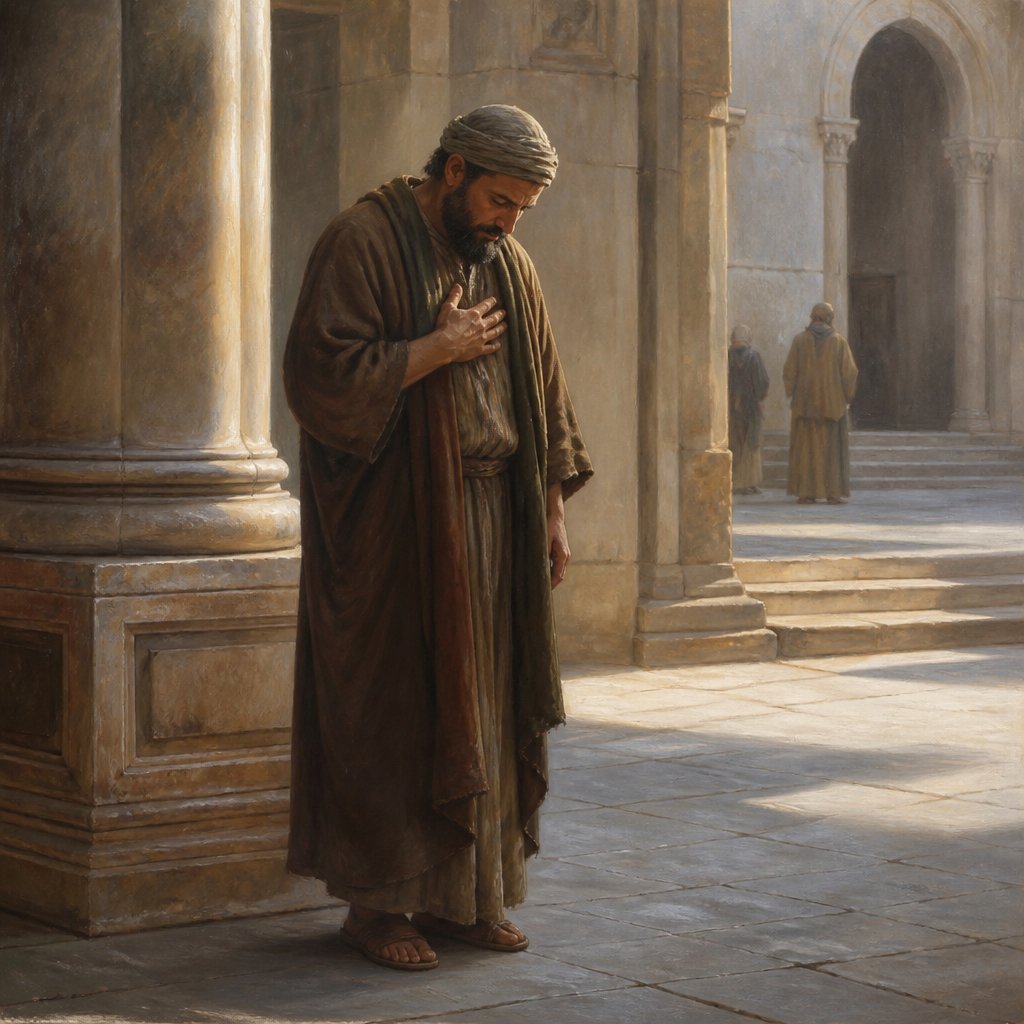
In the Gospel of Luke, we encounter the profound humility of a publican in chapter 18, verse 13: "And the publican, standing afar off, would not lift up so much as his eyes unto heaven, but smote upon his breast, saying, God be merciful to me a sinner." This powerful verse invites us to reflect on the nature of true repentance, the posture of our hearts before God, and the boundless mercy available to those who seek it.
To fully grasp the depth of this moment, we must first understand the context of the characters involved. The publican, or tax collector, was often despised in Jewish society. Seen as traitors for collecting taxes on behalf of their Roman oppressors, they were notorious for corruption and dishonesty. The Pharisee, on the other hand, represents the religious elite, esteemed and respected for their adherence to the law.
In this parable told by Jesus, we find two men in the temple, each presenting themselves before God in prayer. The Pharisee boasts of his own righteousness, recounting his acts of fasting and commitment to the Law. Yet, standing apart, the publican embodies a stark contrast. He does not lift his eyes heavenward; he does not engage in self-justification. Instead, he beats his breast—a powerful gesture of sorrow and remorse. His plea, "God be merciful to me a sinner," captures the essence of humility before God.
The position of the publican illustrates a critical truth of our relationship with God: it is not our status or our deeds that draw us near to Him, but our contrite hearts. The physical act of standing afar and refusing to lift his eyes signifies an acknowledgment of his own unworthiness before the holy standards of God. In a world that often values pride and self-assertion, the publican teaches us that humility is a vital posture. It is a recognition of our own failures and the realization that we need divine mercy.
This moment extends beyond the publican’s past sins; it is a reminder of the ongoing need for grace in our lives. Each one of us, regardless of our past actions or societal standing, falls short of the glory of God (Romans 3:23). The publican’s cry is one we should all echo daily, as we navigate our own imperfections and temptations. "God be merciful to me a sinner" is a prayer that cuts straight to the heart, reminding us of our reliance on God’s mercy rather than our own works.
Furthermore, this verse compels us to reflect on the nature of God as merciful and compassionate. When the publican sought mercy, he did so in faith, believing that God would respond to his cry. And we know from Scripture that God is faithful to His Word; He extends mercy to all who call on Him (Psalm 86:5). In Jesus' parable, it is evident that the publican leaves justified, for his humility opened the door to God’s grace.
In our prayer life, we can gain encouragement from the publican’s example. Let us approach God with the same heart—acknowledging our sinfulness and the need for repentance. It is easy to become caught up in the performance metrics of spirituality, measuring our worth by our achievements. However, true spirituality is found in recognizing our need for God’s mercy. When we come before Him in humility, we position ourselves to receive His grace abundantly.
As we reflect on Luke 18:13, let us adopt the publican’s heart posture in our own lives. May we refrain from elevating ourselves above others and instead develop a deep, authentic relationship with God—one characterized by humility, repentance, and the joyous recognition of His unfailing mercy. Let this verse inspire us to be merciful towards others as we have encountered mercy ourselves, and to keep our eyes fixed on the source of our salvation, Jesus Christ.
Want to reflect more on Luke 18:13?
Continue your spiritual journey with Bible Chat — an AI-powered tool for exploring God's Word through conversation. Ask questions, discover connections, and deepen your understanding.
Get Our Apps


Luke 18:13 Artwork

Luke 18:13 - "And the publican, standing afar off, would not lift up so much as his eyes unto heaven, but smote upon his breast, saying, God be merciful to me a sinner."
"And the publican, standing afar off, would not lift up so much as his eyes unto heaven, but smote upon his breast, saying, God be merciful to me a sinner." - Luke 18:13

Luke 13:18-19

Luke 13:18-19

Luke 13:18 - "¶ Then said he, Unto what is the kingdom of God like? and whereunto shall I resemble it?"

"¶ Then said he, Unto what is the kingdom of God like? and whereunto shall I resemble it?" - Luke 13:18

Luke 10:18-19

Luke 10:18-19

Luke 10:18-19

Luke 10:18-19

Luke 10:18-19

Luke 10:18-19

Luke 4:18

Luke 4:18

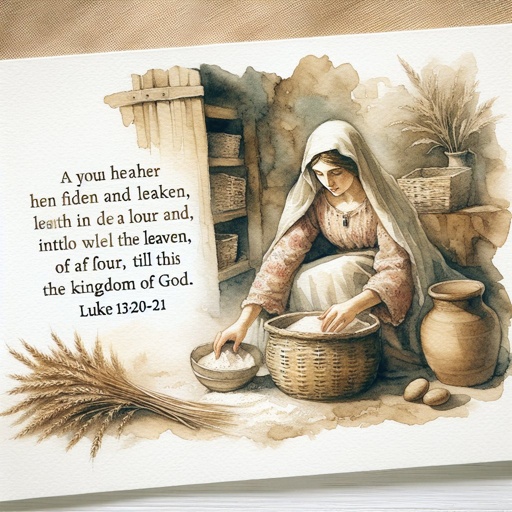
Luke 13:20-21

Luke 13:20-21
Luke 13:20-21

Luke 13:20-21

Luke 13:20-21

Luke 18: 9-14

Luke 8:4-18

Luke 1:13

Luke 1:13

Luke 8:13

Luke 13:24

Luke 8:13

Luke 1:13

Luke 1:13

Luke 8:13

Luke 10:18-19