The Nobleman's Journey: A Call to Faithfulness
"He said therefore, A certain nobleman went into a far country to receive for himself a kingdom, and to return." - Luke 19:12
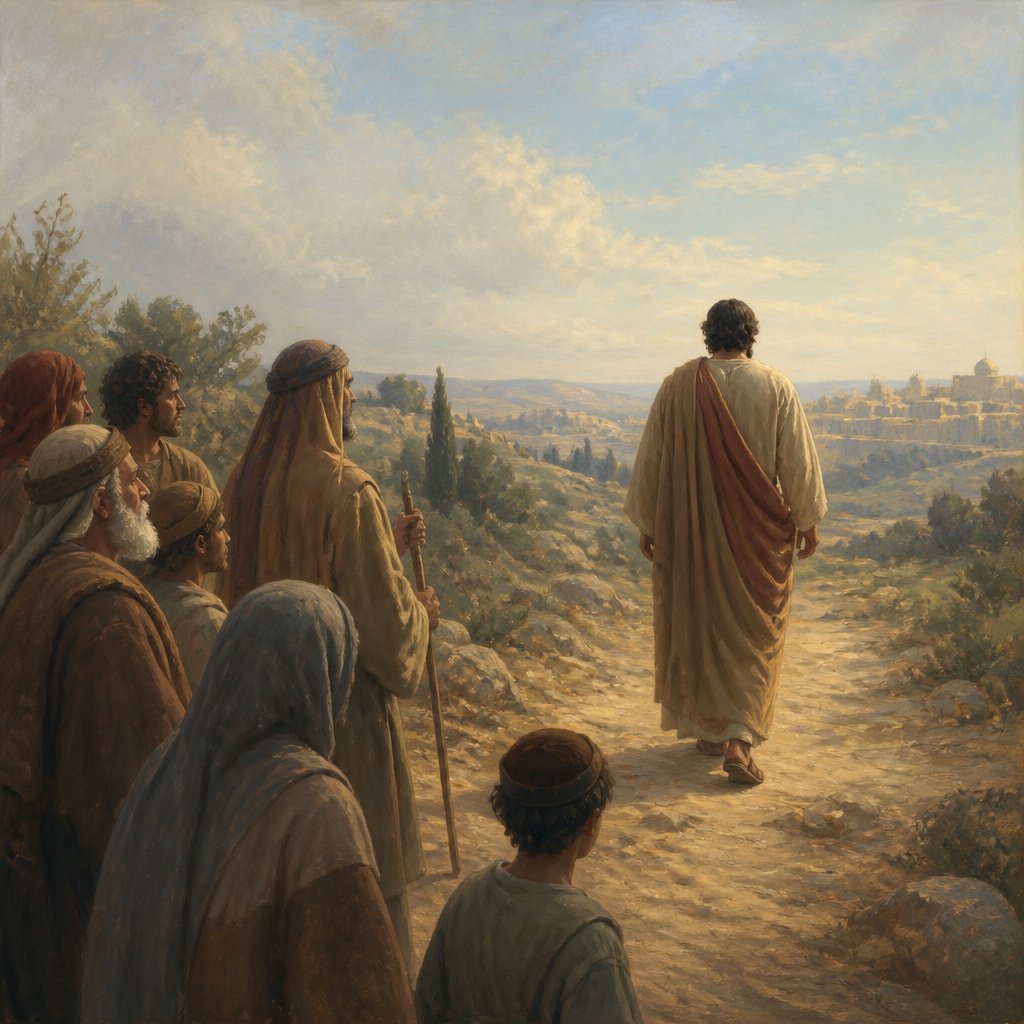
In the Gospel of Luke, chapter 19, verse 12, we encounter a parable that carefully weaves together themes of responsibility, expectation, and the return of Christ. The verse states, "He said therefore, A certain nobleman went into a far country to receive for himself a kingdom, and to return." This statement forms the foundation of the parable known as the Parable of the Ten Minas, wherein the nobleman entrusts his servants with varying amounts of money—each tasked with investing and multiplying what they have been given.
**Exploring the Context**
To fully appreciate the weight of this verse, we must consider its context within the broader narrative of Jesus' ministry. Shortly before this parable, Jesus is making His way to Jerusalem, aware that His time on earth is drawing to a close. The people are excited, believing that He will soon establish a political kingdom. Jesus, however, uses this story to shift their expectations, illustrating that His kingdom is not of this world and must first undergo a time of waiting until His return.
In the parable, the nobleman represents Christ, going to receive His kingdom, indicative of His ascension to heaven. Just as the nobleman would eventually return, so too will Christ return at the end of the age. The mention of a far-off country reminds us that Christ’s reign is not immediate; there is a period of waiting that requires action and faithfulness from His followers.
**Investing Our Gifts**
The nobleman entrusts each servant with a mina, a unit of currency. Notably, the sum of money is not given equally but distributed according to each servant’s ability. This serves as a powerful reminder that we have all been given different gifts, talents, and resources by God. The expectations are not merely about how much we have but how faithfully we use what we are given. The servants' responses demonstrate varied levels of faithfulness, which ultimately affect their reward.
As believers, it is crucial that we recognize the gifts and resources God has entrusted to us. Are we using our time, talents, and treasures for the expansion of His kingdom? In a society often consumed with self-gratification and accumulation, the call is to engage in kingdom work, actively participating in the growth of faith in ourselves and others.
**Faithfulness in Waiting**
The nobleman’s departure into a far-off land puts an emphasis on waiting—a concept that can be both daunting and spiritually enriching. In our own lives, waiting is often uncomfortable. We are creatures of action; we want things to happen on our timeline. Yet, the call to wait—for a season, for a promise, for the return of our King—is an act of faith. It requires us to trust in God’s plan and timing.
The waiting period is not one of inactivity. Each servant was expected to engage with their gift and produce results during the nobleman's absence. Likewise, believers are not called to sit idly by but to actively engage in their spiritual journey. In our waiting, we cultivate patience, develop character, and deepen our relationship with God.
**Looking Forward to His Return**
Finally, the parable culminates in the nobleman's return, corresponding to our future hope as believers in Christ. The promise of His return is not merely a distant event; it is a reality that shapes how we live today. We live with the anticipation of His second coming, which calls for vigilance and active participation in His kingdom work.
In conclusion, "A certain nobleman went into a far country to receive for himself a kingdom, and to return" serves as a profound reminder of our calling as followers of Christ. As we wait for the return of our King, we must faithfully invest our gifts, engage in the kingdom work entrusted to us, and actively anticipate His glorious return, where our faithfulness will be rewarded. Let us live each day with that expectation and commitment.
Want to reflect more on Luke 19:12?
Continue your spiritual journey with Bible Chat — an AI-powered tool for exploring God's Word through conversation. Ask questions, discover connections, and deepen your understanding.
Get Our Apps


Luke 19:12 Artwork

Luke 19:12 - "He said therefore, A certain nobleman went into a far country to receive for himself a kingdom, and to return."
"He said therefore, A certain nobleman went into a far country to receive for himself a kingdom, and to return." - Luke 19:12

Luke 12:19 - "And I will say to my soul, Soul, thou hast much goods laid up for many years; take thine ease, eat, drink, and be merry."

Luke 10:18-19

Luke 13:18-19

Luke 10:18-19

Luke 10:18-19

Luke 13:18-19

Luke 10:17-19

Luke 10:18-19

Luke 10:18-19

Luke 10:18-19

Luke 10:17-19

Luke 19:23

Luke 1:19

Luke 19:23

Luke 19:19 - "And he said likewise to him, Be thou also over five cities."

Luke 19:10
Luke 1:19

Luke 19:28

Luke 1:19

luke 21:5-19

Luke 19:1-10

Luke 10:18-19

Luke 19:1-10

Luke 21:15-19

Luke 4:19 - "To preach the acceptable year of the Lord."

Luke 12:25

Luke 12:25

Luke 12: 49