Faithful Stewardship: The Call to Accountability
"And it came to pass, that when he was returned, having received the kingdom, then he commanded these servants to be called unto him, to whom he had given the money, that he might know how much every man had gained by trading." - Luke 19:15
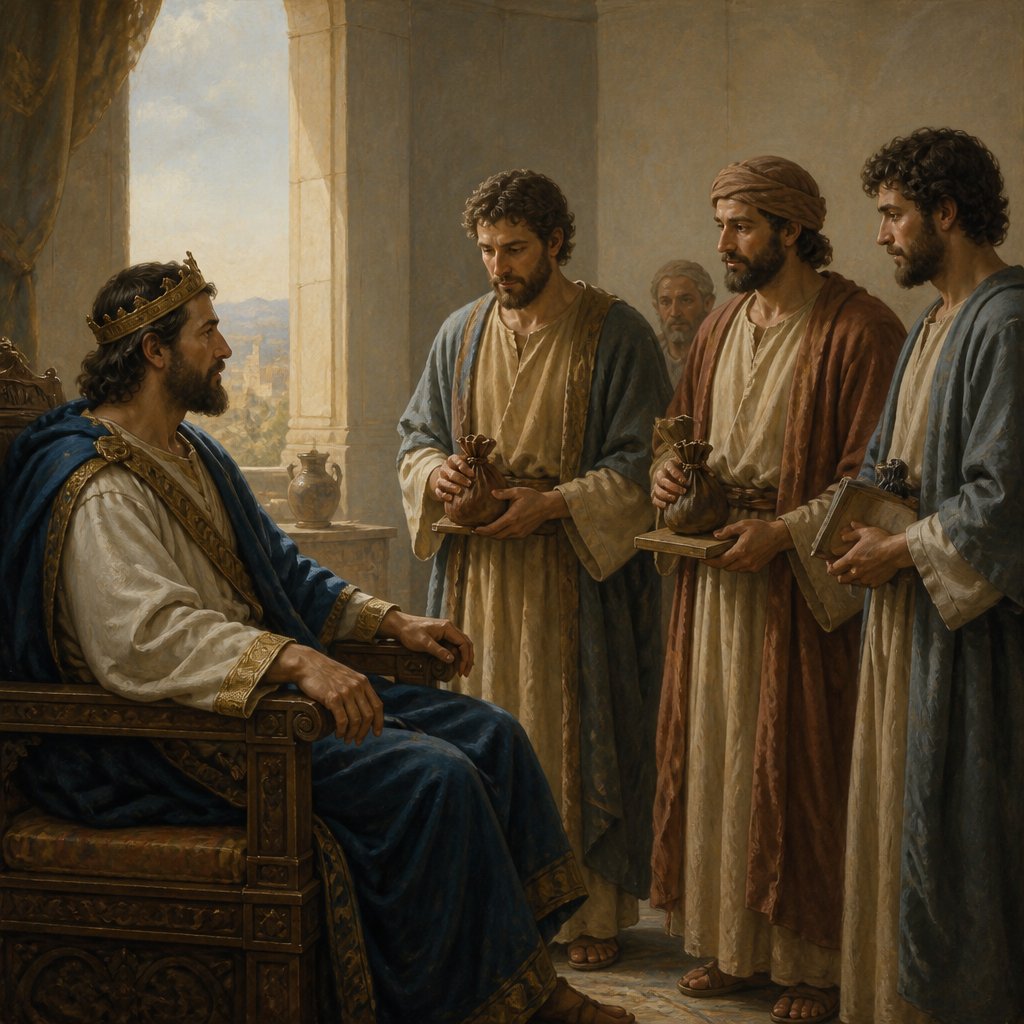
In the parable recorded in Luke 19:15, we glean profound insights into the nature of stewardship and the call to accountability that resonates with each of us as followers of Christ. The verse reads as follows in the King James Version: "And it came to pass, that when he was returned, having received the kingdom, then he commanded these servants to be called unto him, to whom he had given the money, that he might know how much every man had gained by trading."
At first glance, this verse may seem to usher us into a narrative purely about economics and gain; however, it unfolds a much richer theological depth from which we can draw critical life applications. The central figure in this parable is a nobleman who goes to a distant country to receive a kingdom. Upon his return, he examines the faithfulness of his servants, who were entrusted with money—symbolizing their gifts, talents, and responsibilities.
As believers in Christ, we are entrusted with various gifts and responsibilities, and the question we must confront is how we are to engage with these blessings. Just like the nobleman, we are reminded that a day of reckoning will come—a time when we will stand before our Creator and give an account of how we have utilized what He has given us.
**Stewardship Defined**
Stewardship is not merely about managing money; it encompasses how we use our time, influence, relationships, and talents. The idea of being a steward implies that we do not own these resources outright; rather, they are entrusted to us by God for His glory and the good of others. Each servant was given a specific amount of money (in the parable, ten and five pounds, respectively), demonstrating that God distributes His blessings according to His wisdom and purpose—"For I know the thoughts that I think toward you... thoughts of peace, and not of evil" (Jeremiah 29:11).
The text underlines an important principle: what matters is not how much we have been given, but how faithfully we use what we have. The servants who doubled their money exemplified a proactive approach to stewardship, whereas the one who buried his pound was aware of the expectations but chose to act out of fear rather than faith. Which servant do we resemble? How often do we shy away from investing our time or talents, fearing failure or judgment?
**Accountability in Stewardship**
When the nobleman calls his servants to account, it creates a moment of reflection. In that revealing interaction, the nobleman validates the effort of those who worked hard to invest wisely. He applauds their diligence and grants them additional responsibilities—a reflection of the biblical principle found in Matthew 25:21: "Well done, thou good and faithful servant: thou hast been faithful over a few things, I will make thee ruler over many things." This promise reinforces the idea that faithfulness in small matters leads to greater opportunities.
Conversely, the servant who played it safe and did not take risks was met with disappointment. He failed to understand that the master expected fruitfulness, not fear. The lesson is clear: God desires us to take calculated risks for His kingdom, stepping out in faith rather than retreating into a place of comfort and stagnation.
**Embracing the Call to Faith**
This parable culminates in the powerful understanding that every believer is called to a life of faith, where risk-taking for the glory of God is foundational. As Christ-followers, we are called to engage in the Great Commission, using our unique gifts and resources to build His kingdom. We should remember that the tasks we undertake in service to our King will be measured, and our love, time, and efforts in the kingdom will be positively evaluated.
In conclusion, let us faithfully steward all that God has offered us with joy, diligence, and great anticipation, knowing that we will one day give an account just as those servants did. Let us invest ourselves wholeheartedly in the calling we have received, echoing the sentiment of the Apostle Paul in 1 Corinthians 15:58: "Therefore, my beloved brethren, be ye steadfast, unmovable, always abounding in the work of the Lord, forasmuch as ye know that your labor is not in vain in the Lord." May we hear the commendation from our Master: "Well done!"
Want to reflect more on Luke 19:15?
Continue your spiritual journey with Bible Chat — an AI-powered tool for exploring God's Word through conversation. Ask questions, discover connections, and deepen your understanding.
Get Our Apps


Luke 19:15 Artwork
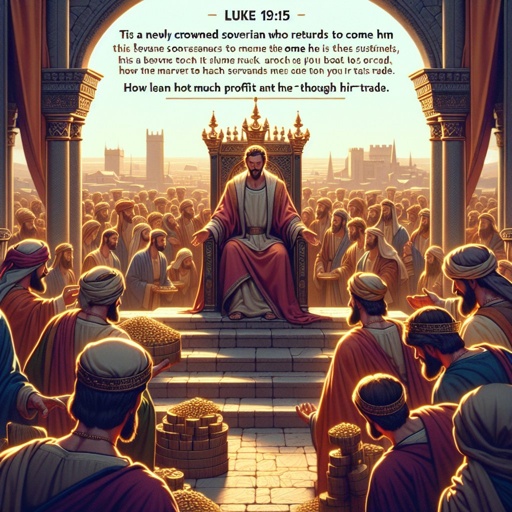
Luke 19:15 - "And it came to pass, that when he was returned, having received the kingdom, then he commanded these servants to be called unto him, to whom he had given the money, that he might know how much every man had gained by trading."

Luke 19:15-19 - "And it came to pass, that when he was returned, having received the kingdom, then he commanded these servants to be called unto him, to whom he had given the money, that he might know how much every man had gained by trading. Then came the first, saying, Lord, thy pound hath gained ten pounds. And he said unto him, Well, thou good servant: because thou hast been faithful in a very little, have thou authority over ten cities. And the second came, saying, Lord, thy pound hath gained five pounds. And he said likewise to him, Be thou also over five cities."
"And it came to pass, that when he was returned, having received the kingdom, then he commanded these servants to be called unto him, to whom he had given the money, that he might know how much every man had gained by trading." - Luke 19:15

"And it came to pass, that when he was returned, having received the kingdom, then he commanded these servants to be called unto him, to whom he had given the money, that he might know how much every man had gained by trading. Then came the first, saying, Lord, thy pound hath gained ten pounds. And he said unto him, Well, thou good servant: because thou hast been faithful in a very little, have thou authority over ten cities. And the second came, saying, Lord, thy pound hath gained five pounds. And he said likewise to him, Be thou also over five cities." - Luke 19:15-19

Luke 21:15-19

Luke 15:19 - "And am no more worthy to be called thy son: make me as one of thy hired servants."

"And am no more worthy to be called thy son: make me as one of thy hired servants." - Luke 15:19

Luke 10:18-19

Luke 13:18-19

Luke 10:18-19

Luke 10:18-19

Luke 13:18-19

Luke 10:17-19

Luke 10:18-19

Luke 10:18-19

Luke 10:18-19

Luke 10:17-19

Luke 19:23

Luke 1:19

Luke 19:23

Luke 19:19 - "And he said likewise to him, Be thou also over five cities."

Luke 19:10

Luke 1:19

Luke 19:28

Luke 1:19
Luke 15:23

Luke 15:10

luke 21:5-19

Luke 19:1-10

Luke 15:21