A Divine Appointment: The Call of Zacchaeus
“And when Jesus came to the place, he looked up, and saw him, and said unto him, Zacchæus, make haste, and come down; for to day I must abide at thy house.” — Luke 19:5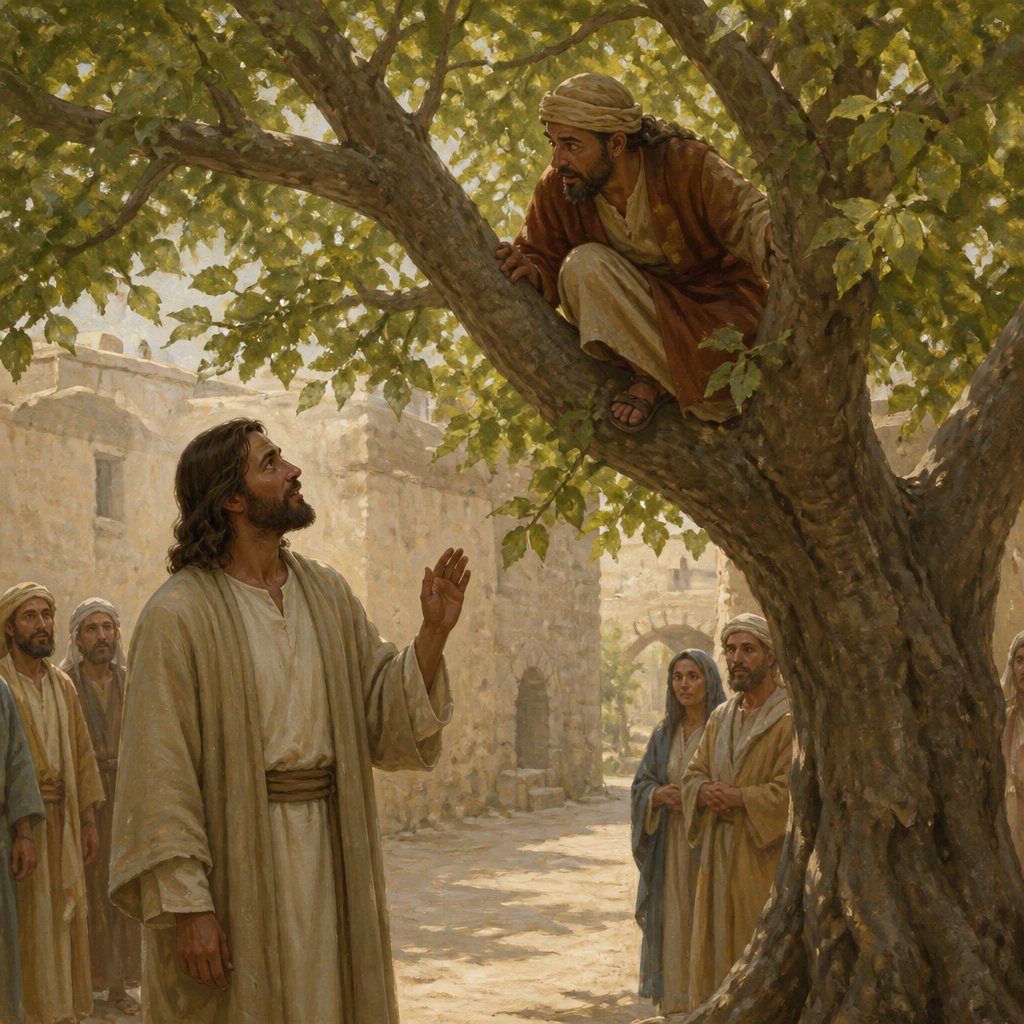
In the Gospel of Luke, chapter 19, we encounter a remarkable narrative that highlights the transforming power of Jesus’ love and the profound call to fellowship. The key verse, Luke 19:5, states: "And when Jesus came to the place, he looked up, and saw him, and said unto him, Zacchaeus, make haste, and come down; for to day I must abide at thy house." This passage opens a window into not only the life of Zacchaeus but also the heart of Jesus and His mission on earth.
Zacchaeus, a chief tax collector, was not merely a man of wealth but also a symbol of social rejection. Tax collectors were often despised for their role in collaborating with the Roman oppressors and for their reputation of extorting from their fellow Jews. However, Zacchaeus’ quest to see Jesus reveals a deep yearning for something beyond material wealth. His actions indicate an inherent understanding that Jesus represented hope, acceptance, and spiritual renewal in a world that had cast him out.
When Jesus passed through Jericho, Zacchaeus climbed a sycamore tree—a desperate yet determined act to overcome his short stature and crowded surroundings. This tree symbolizes a place of separation, yet also of opportunity. By elevating himself above the crowd, Zacchaeus, albeit hidden from view, created a vantage point that allowed him to see Jesus. This reflects the essence of seeking: sometimes, we must rise above the distractions and judgments of the world to encounter Christ.
As Jesus approaches the spot where Zacchaeus is perched, He looks up and sees him. The significance of being looked upon by Jesus cannot be overstated. This was a moment of recognition; Jesus, in His divine knowledge, not only saw Zacchaeus but saw through the layers of his identity, past his profession and societal influence, straight to his heart's longing. Jesus’ gaze was not one of condemnation but of compassion. He calls Zacchaeus by name, an intimate act that conveys acknowledgment and care. In that instant, all of Zacchaeus' fears and shame were met with grace.
The command to “make haste, and come down” is urgent. It reflects Jesus’ desire for fellowship with humanity, particularly with those who feel unworthy of it. It’s significant to note that Jesus does not ask Zacchaeus to change his life before coming down. Instead, he invites him to a relationship that will transform him from the inside out. This immediacy also challenges us today: when we hear Jesus calling us to step down from our metaphorical trees, are we hesitant or eager to respond?
Furthermore, Jesus states, "for to day I must abide at thy house.” This was no mere social visit; it was a divine appointment. In the Jewish culture, sharing a meal was an act of deep fellowship, an acknowledgment of acceptance and intimacy. By choosing to dine with Zacchaeus, Jesus extended grace to a man who had been ostracized, showcasing the heart of the Gospel—Christ came not for the righteous, but for the sinners. This radical inclusion calls us to reflect on our own lives and the ways we may exclude others based on their past, choices, or status.
As we meditate on this passage, let us contemplate our own ‘sycamore trees’. What are the barriers preventing us from fully engaging with Jesus? Are we climbing to escape judgment or to seek Him? Jesus’ example teaches us about love that transcends society's norms. His invitation to Zacchaeus serves as a reminder that Jesus desires to dwell in the houses of each person, including those whom we deem unworthy or lost.
In conclusion, this passage beckons us to be more than mere spectators in the life of faith. It calls us to action—urgent action, to seek, to come down from our places of safety, and to let Jesus abide with us. In Jesus, every encounter, like the one with Zacchaeus, has the power to redefine our narrative and transform our lives. May we embrace His loving invitation daily, allowing Him to enter our hearts and homes, starting a journey of healing, redemption, and belonging.
Get our apps


Artwork for Luke 19:5

Luke 19:5 - "And when Jesus came to the place, he looked up, and saw him, and said unto him, Zacchaeus, make haste, and come down; for to day I must abide at thy house."
"And when Jesus came to the place, he looked up, and saw him, and said unto him, Zacchaeus, make haste, and come down; for to day I must abide at thy house." - Luke 19:5

luke 21:5-19

luke 21:5-19 with all people of color

luke 21:5-19 with all people of color

luke 21:5-19 with all people of color

luke 21:5-19 with all people of color

Luke 5:19 - "And when they could not find by what way they might bring him in because of the multitude, they went upon the housetop, and let him down through the tiling with his couch into the midst before Jesus."

Luke 10:18-19

Luke 13:18-19

Luke 10:18-19

Luke 10:18-19

Luke 10:17-19

Luke 13:18-19

Luke 10:18-19

Luke 10:18-19

Luke 10:18-19

Luke 10:17-19

luke 5:5

Luke 19:23

Luke 1:19

Luke 19:23

Luke 19:19 - "And he said likewise to him, Be thou also over five cities."

Luke 19:10

Luke 19:28

Luke 1:19

Luke 1:19

Luke 19:1-10

Luke 10:5

Luke 10:5