A Heart That Magnifies: The Worship of Mary
“And Mary said, My soul doth magnify the Lord,” — Luke 1:46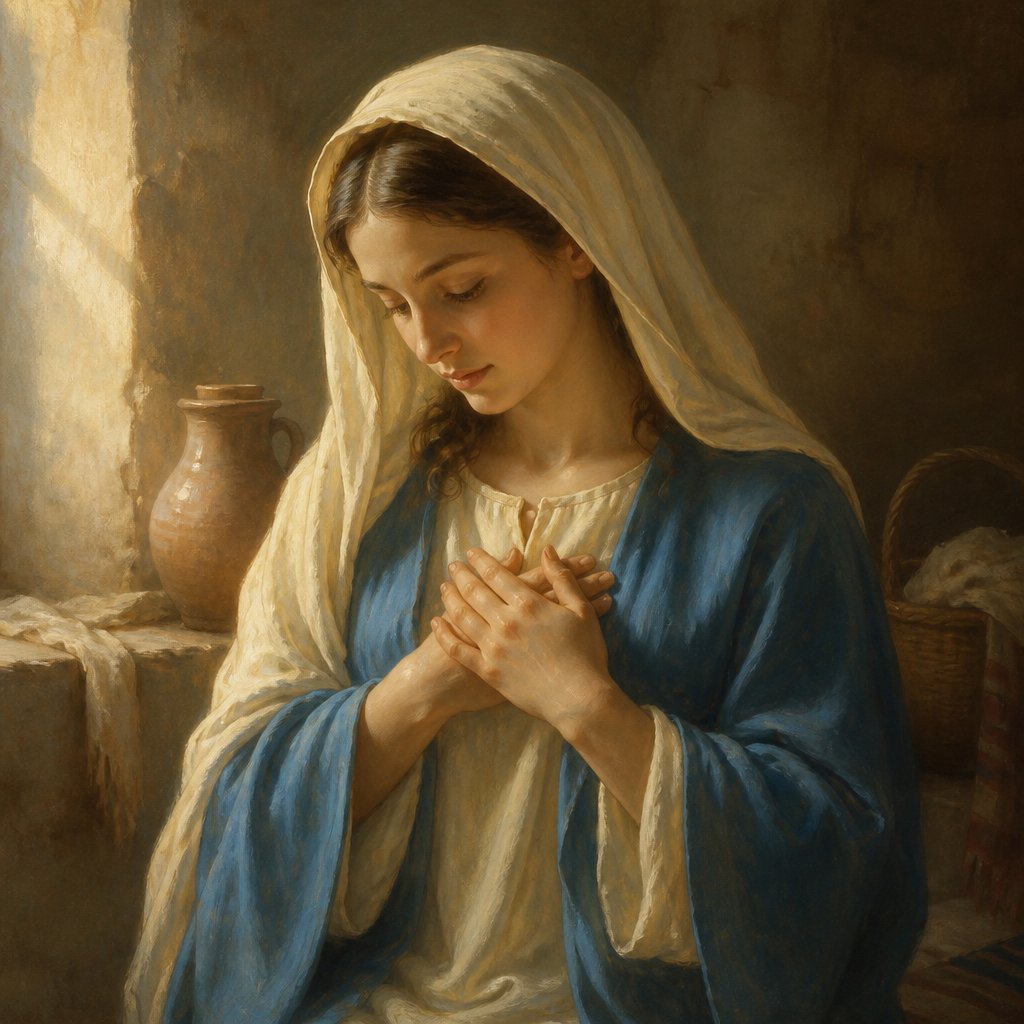
When we consider the young woman named Mary, chosen to be the mother of Jesus, we are often captivated by her humility and bravery. In the Gospel of Luke, we find a profound moment captured in chapter 1, verse 46: "And Mary said, My soul doth magnify the Lord." This declaration is not merely a spontaneous outburst of emotion; it is a deep theological affirmation rooted in her understanding of God’s nature and purpose.
Mary's words come after the Annunciation, when the angel Gabriel informs her that she will conceive the Son of God. In the midst of overwhelming circumstances, she expresses a heart that seeks to exalt and glorify the Lord. This magnification is not focused on herself, but on the majestic glory of God. The idea of magnifying something typically implies making something larger or more visible, yet it is crucial to understand that in this context, Mary could not possibly make God greater than He already is. Instead, she desires to make known, to reveal, and to celebrate His greatness to the world around her.
Throughout her Magnificat—the beautiful song that follows in verses 46-55—Mary's worship portrays an intimate relationship with God, marked by her knowledge of Scripture and history. This is significant: her hymn of praise echoes the prayer of Hannah from 1 Samuel 2. This intertextuality not only positions Mary within the grand narrative of salvation history but also demonstrates how deeply rooted her soul is in the Scriptures. Her ability to articulate her song stems from her meditative engagement with God’s Word, reflecting the notion that true worship is informed by His truth.
When Mary says, "My soul doth magnify the Lord," we witness the centrality of her identity as a servant of God. This act of magnifying the Lord becomes an essential part of her very being, indicating her understanding of the relationship between the Creator and His creation. Her Declaration transforms into a serious commitment to praise him, regardless of her circumstances. At this moment, she may be beset by fears of potential misunderstanding or societal rejection, yet she remains steadfast.
In a broader context, Mary’s example teaches us about the essence of worship. Today’s culture is often preoccupied with magnifying personal successes and human achievements. Social media can easily become a platform where individuals seek to elevate themselves above others, craving recognition and adulation. However, a heart that truly magnifies the Lord redirects this desire towards making God’s greatness known. Like Mary, we must cultivate spirits that celebrate the Lord’s goodness in our lives.
Moreover, Mary’s bold proclamation encourages us to examine our own souls. Do our lives reflect a magnification of the Lord? Are we, like Mary, willing to surrender our dreams and aspirations to participate in God’s plan? Our worship should be an overflow of who we are at our very core, constantly pointing others to the reflection of His grace and glory in our lives. This call to worship isn’t confined to songs sung on Sunday mornings, but rather a daily commitment to embody the Gospel in our actions, thoughts, and interactions with others.
In the quietness of her humble abode, Mary sets an example that resonates through centuries. Her song reminds us that praise is not a feeling reserved for the mountaintops of life but a posture we maintain even in valleys. As we go through life’s challenges, let us remember to magnify the Lord just as Mary did. And in doing so, may we bring glory and honor to Him, illuminating the path for others to encounter His love.
As we meditate on Mary’s Magnificat, we are invited into a deeper relationship with God, leading us to share the light of His presence in every moment. Let our souls, too, magnify the Lord, reflecting His greatness in all we do.
Get our apps


Artwork for Luke 1:46

Luke 1:46 - "And Mary said, My soul doth magnify the Lord,"

Luke 1:46-47 - "And Mary said: “My soul glorifies the Lord and my spirit rejoices in God my Savior."

"And Mary said, My soul doth magnify the Lord," - Luke 1:46

"And Mary said: “My soul glorifies the Lord and my spirit rejoices in God my Savior." - Luke 1:46-47

Luke 9:46 - "¶ Then there arose a reasoning among them, which of them should be greatest."

Luke 8:46 - "And Jesus said, Somebody hath touched me: for I perceive that virtue is gone out of me."

Luke 6:46 - "¶ And why call ye me, Lord, Lord, and do not the things which I say?"

Luke 7:46 - "My head with oil thou didst not anoint: but this woman hath anointed my feet with ointment."

Luke 22:46 - "And said unto them, Why sleep ye? rise and pray, lest ye enter into temptation."

Luke 19:46 - "Saying unto them, It is written, My house is the house of prayer: but ye have made it a den of thieves."

Luke 20:46 - "Beware of the scribes, which desire to walk in long robes, and love greetings in the markets, and the highest seats in the synagogues, and the chief rooms at feasts;"

Luke 24:46 - "And said unto them, Thus it is written, and thus it behoved Christ to suffer, and to rise from the dead the third day:"

Luke 2:46 - "And it came to pass, that after three days they found him in the temple, sitting in the midst of the doctors, both hearing them, and asking them questions."

"¶ Then there arose a reasoning among them, which of them should be greatest." - Luke 9:46

Luke 12:46 - "The lord of that servant will come in a day when he looketh not for him, and at an hour when he is not aware, and will cut him in sunder, and will appoint him his portion with the unbelievers."

1 Kings 1:46 - "And also Solomon sitteth on the throne of the kingdom."

Luke 8:46 - "And Jesus said, Somebody hath touched me: for I perceive that virtue is gone out of me."

Luke 8:46 - "And Jesus said, Somebody hath touched me: for I perceive that virtue is gone out of me."

Luke 23:46 - "¶ And when Jesus had cried with a loud voice, he said, Father, into thy hands I commend my spirit: and having said thus, he gave up the ghost."

acts 10:44-46

Luke 11:46 - "And he said, Woe unto you also, ye lawyers! for ye lade men with burdens grievous to be borne, and ye yourselves touch not the burdens with one of your fingers."

Jeremiah 46:1 - "The word of the LORD which came to Jeremiah the prophet against the Gentiles;"

1 Chronicles 11:46 - "Eliel the Mahavite, and Jeribai, and Joshaviah, the sons of Elnaam, and Ithmah the Moabite,"

"My head with oil thou didst not anoint: but this woman hath anointed my feet with ointment." - Luke 7:46

1 Chronicles 6:46 - "The son of Amzi, the son of Bani, the son of Shamer,"

God is within her she will not fall Psalm 46:5

1 Corinthians 15:46 - "Howbeit that was not first which is spiritual, but that which is natural; and afterward that which is spiritual."

"¶ And why call ye me, Lord, Lord, and do not the things which I say?" - Luke 6:46

Psalms 46:1 - "God is our refuge and strength, a very present help in trouble."

1 Chronicles 2:46 - "And Ephah, Caleb's concubine, bare Haran, and Moza, and Gazez: and Haran begat Gazez."