The Vineyard and the Rejected Stone: Embracing God’s Call
"Then began he to speak to the people this parable; A certain man planted a vineyard, and let it forth to husbandmen, and went into a far country for a long time. And at the season he sent a servant to the husbandmen, that they should give him of the fruit of the vineyard: but the husbandmen beat him, and sent him away empty. And again he sent another servant: and they beat him also, and entreated him shamefully, and sent him away empty. And again he sent a third: and they wounded him also, and cast him out. Then said the lord of the vineyard, What shall I do? I will send my beloved son: it may be they will reverence him when they see him. But when the husbandmen saw him, they reasoned among themselves, saying, This is the heir: come, let us kill him, that the inheritance may be ours. So they cast him out of the vineyard, and killed him. What therefore shall the lord of the vineyard do unto them? He shall come and destroy these husbandmen, and shall give the vineyard to others. And when they heard it, they said, God forbid. And he beheld them, and said, What is this then that is written, The stone which the builders rejected, the same is become the head of the corner? Whosoever shall fall upon that stone shall be broken; but on whomsoever it shall fall, it will grind him to powder." - Luke 20:9-18
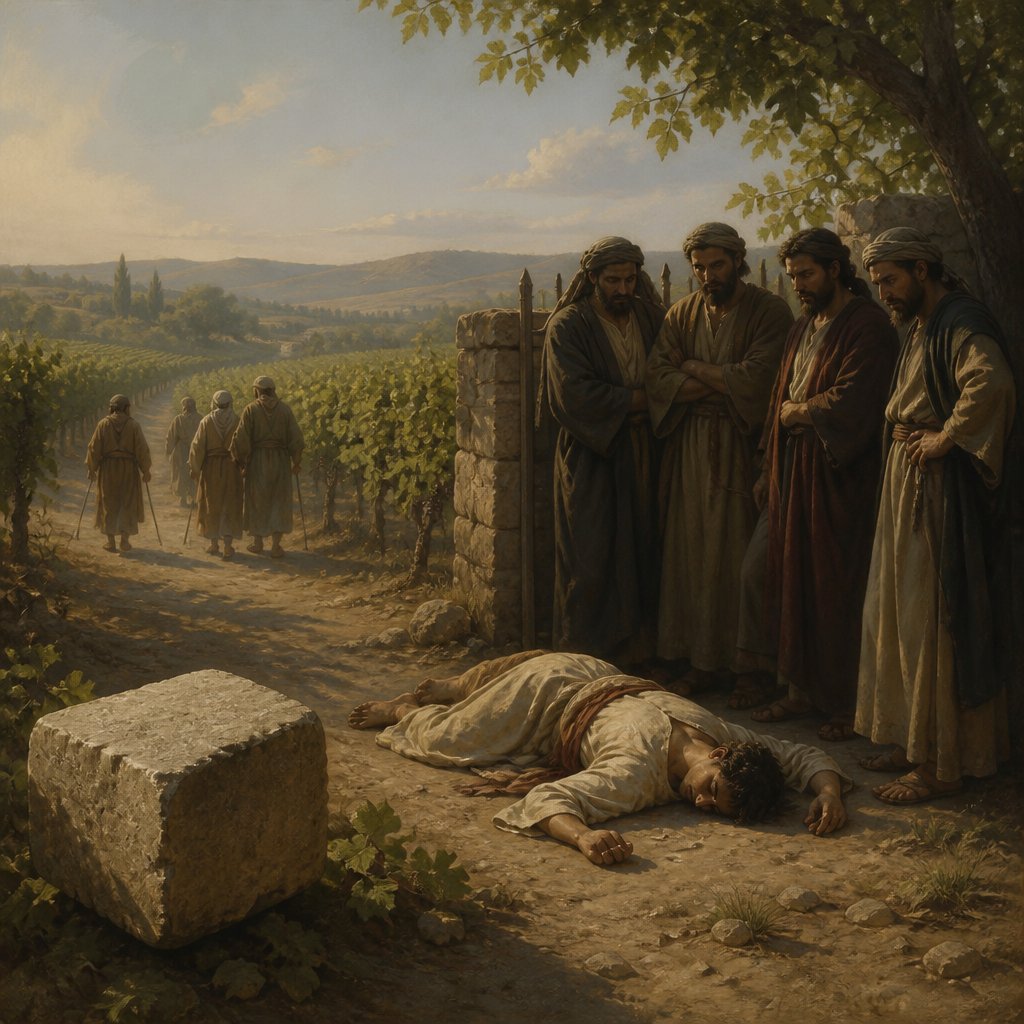
In the Gospel of Luke, chapter 20, verses 9 to 18, we encounter a powerful parable that unveils profound truths about God’s sovereignty, humanity's rebellion, and the unmatchable grace extended through His Son. In this narrative, Jesus intricately weaves the story of a man who plants a vineyard and rents it out to vine-growers, only to be met with rejection and violence when he sends servants to collect the fruits of the land. Finally, he sends his beloved son, expecting respect, yet the vine-growers conspire to murder him, hoping to seize the inheritance for themselves.
"Then He began to tell the people this parable: 'A man planted a vineyard and rented it out to vine-growers, and went on a journey for a long time.'" (Luke 20:9, KJV) This opening sets the stage for a story that resonates deeply not only with the Jewish leaders of Jesus’ time but also with us today. The vineyard represents God’s Kingdom, His people – entrusted to caretakers who are to nurture it and bear fruit. However, instead of honoring the owner and the sacrifices made for the vineyard, the caretakers rebel.
As Jesus narrates the fate of the slaves sent by the vineyard owner, we begin to see the foreshadowing of God’s relentless pursuit of His people through the prophets, who often met hostility and persecution. "At the harvest time he sent a slave to the vine-growers, so that they would give him some of the produce of the vineyard; but the vine-growers beat him and sent him away empty-handed." (Luke 20:10, KJV) This verse highlights human rebellion against divine authority: instead of returning the fruit of their labor, the vine-growers choose violence. It is a reflection of humanity’s tendency to resist God’s call, leading us to consider our own responses to His prompting in our lives.
As we delve deeper, we see the heartbreaking climax when the owner, driven by love and a hope for respect, sends his beloved son. "But when the vine-growers saw him, they reasoned with one another, saying, 'This is the heir; let us kill him so that the inheritance will be ours.'" (Luke 20:14, KJV) This moment encapsulates the essence of rejection; the son, representing Christ Himself, who would soon be delivered to death by the very people tasked with caring for the vineyard. It is a somber reminder of how we sometimes disregard the very gifts God sends our way, through fear, jealousy, or pride.
Jesus pierces through the hearts of his listeners with a stinging question: "What, therefore, will the owner of the vineyard do to them?" (Luke 20:15, KJV) He lays down the reality of consequence. The vineyard owner’s anger reflects divine justice. Jesus warns that the rejection of the Son would lead to dire shortcomings for those who refuse the abundant grace of God: they will be cast out. The fearless declaration of judgment brings us to a critical point of reflection in our own walk with God.
Furthermore, in verse 17, Jesus alludes to Scripture, saying, "What then is this that is written: ‘The stone which the builders rejected. This became the chief corner stone’?" (Luke 20:17, KJV). This quote from Psalms highlights the irony of rejection and ultimate success. The stone, once dismissed, becomes the very foundation upon which the church is built. It emphasizes that what we see as failure can often be transformed into profound triumph through God’s divine plan.
The parable leaves us with two contrasting outcomes. We can willingly engage and become fruitful stewards of God’s Kingdom, or we can reject His call and face the consequences of our disobedience. "Everyone who falls on that stone will be broken to pieces; but on whomever it falls, it will scatter him like dust." (Luke 20:18, KJV). This serves as a call to humility; it challenges us to examine our hearts and align our lives with Christ, our cornerstone.
In embracing our role as caretakers of God’s vineyard, we must reflect on the produce of our lives. Are we bearing fruit that glorifies God? Are we acting as beloved children rather than rebellious tenants? May we choose to accept the Son, to bring forth a harvest of righteousness, and to know the joy of being fully and forever rooted in the love and grace of our Heavenly Father.
Want to reflect more on Luke 20:9-18?
Continue your spiritual journey with Bible Chat — an AI-powered tool for exploring God's Word through conversation. Ask questions, discover connections, and deepen your understanding.
Get Our Apps


Luke 20:9-18 Artwork

Luke 20:9-18 - "Then He began to tell the people this parable: “A man planted a vineyard and rented it out to vine-growers, and went on a journey for a long time. At the harvest time he sent a slave to the vine-growers, so that they would give him some of the produce of the vineyard; but the vine-growers beat him and sent him away empty-handed. And he proceeded to send another slave; and they beat him also and treated him shamefully and sent him away empty-handed. And he proceeded to send a third; and this one also they wounded and cast out. The owner of the vineyard said, ‘What shall I do? I will send my beloved son; perhaps they will respect him.’ But when the vine-growers saw him, they reasoned with one another, saying, ‘This is the heir; let us kill him so that the inheritance will be ours.’ So they threw him out of the vineyard and killed him. What, therefore, will the owner of the vineyard do to them? He will come and destroy these vine-growers and will give the vineyard to others.” When they heard it, they said, “May it never be!” But Jesus looked at them and said, “What then is this that is written: ‘The stone which the builders rejected, This became the chief corner stone’? Everyone who falls on that stone will be broken to pieces; but on whomever it falls, it will scatter him like dust.”"
"Then He began to tell the people this parable: “A man planted a vineyard and rented it out to vine-growers, and went on a journey for a long time. At the harvest time he sent a slave to the vine-growers, so that they would give him some of the produce of the vineyard; but the vine-growers beat him and sent him away empty-handed. And he proceeded to send another slave; and they beat him also and treated him shamefully and sent him away empty-handed. And he proceeded to send a third; and this one also they wounded and cast out. The owner of the vineyard said, ‘What shall I do? I will send my beloved son; perhaps they will respect him.’ But when the vine-growers saw him, they reasoned with one another, saying, ‘This is the heir; let us kill him so that the inheritance will be ours.’ So they threw him out of the vineyard and killed him. What, therefore, will the owner of the vineyard do to them? He will come and destroy these vine-growers and will give the vineyard to others.” When they heard it, they said, “May it never be!” But Jesus looked at them and said, “What then is this that is written: ‘The stone which the builders rejected, This became the chief corner stone’? Everyone who falls on that stone will be broken to pieces; but on whomever it falls, it will scatter him like dust.”" - Luke 20:9-18

Luke 18: 9-14

Luke 18:9-14

Luke 20:18 - "Whosoever shall fall upon that stone shall be broken; but on whomsoever it shall fall, it will grind him to powder."

Luke 20:9 - "Then began he to speak to the people this parable; A certain man planted a vineyard, and let it forth to husbandmen, and went into a far country for a long time."

Luke 18:9 - "And he spake this parable unto certain which trusted in themselves that they were righteous, and despised others:"

Create a scene of Luke 20:9 from the Christian Bible, inspired by the art of Richard Gunther and Lambsong.

Luke 9:20 - "He said unto them, But whom say ye that I am? Peter answering said, The Christ of God."

Luke 18:20 - "Thou knowest the commandments, Do not commit adultery, Do not kill, Do not steal, Do not bear false witness, Honour thy father and thy mother."

Luke 9:18 - "¶ And it came to pass, as he was alone praying, his disciples were with him: and he asked them, saying, Whom say the people that I am?"

Create a respectful and devotional art piece visualizing the sentiment of Luke 20:9 from the Christian Bible, inspired by the expressive and fluid style of pre-1912 watercolor paintings.

Luke 9:20 He said to them, “But who do you say that I am?” Peter answered and said, “The Christ of God.”
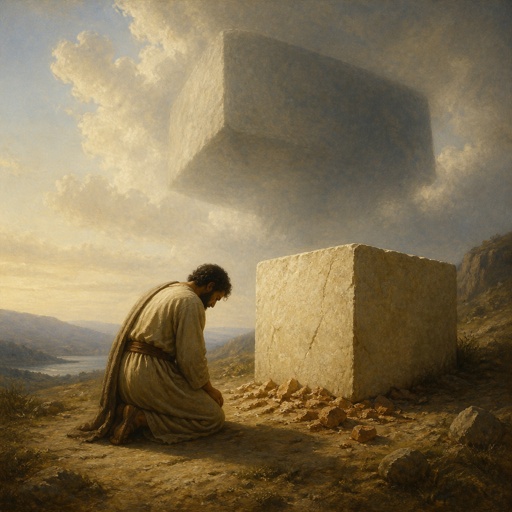
"Whosoever shall fall upon that stone shall be broken; but on whomsoever it shall fall, it will grind him to powder." - Luke 20:18

"And he spake this parable unto certain which trusted in themselves that they were righteous, and despised others:" - Luke 18:9

Luke 13:20-21

Luke 13:20-21

Luke 13:20-21

Luke 13:20-21
Luke 13:20-21

Luke 10:18-19

Luke 13:18-19

Luke 10:18-19

Luke 10:18-19

Luke 13:18-19

Luke 10:18-19

Luke 10:18-19

Luke 10:18-19
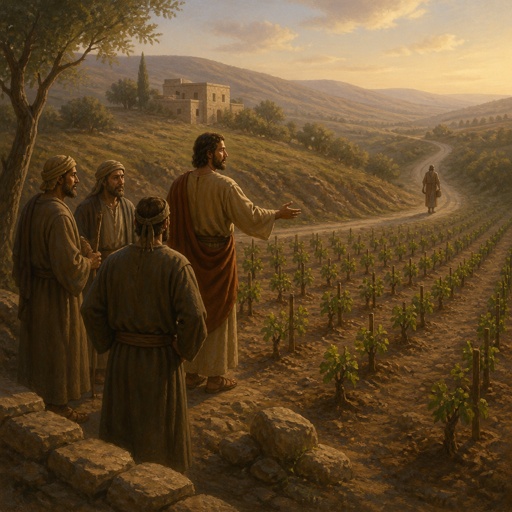
"Then began he to speak to the people this parable; A certain man planted a vineyard, and let it forth to husbandmen, and went into a far country for a long time." - Luke 20:9

Luke 20:28