Silenced by Wisdom: The Power of Divine Truth
“And they could not take hold of his words before the people: and they marvelled at his answer, and held their peace.” — Luke 20:26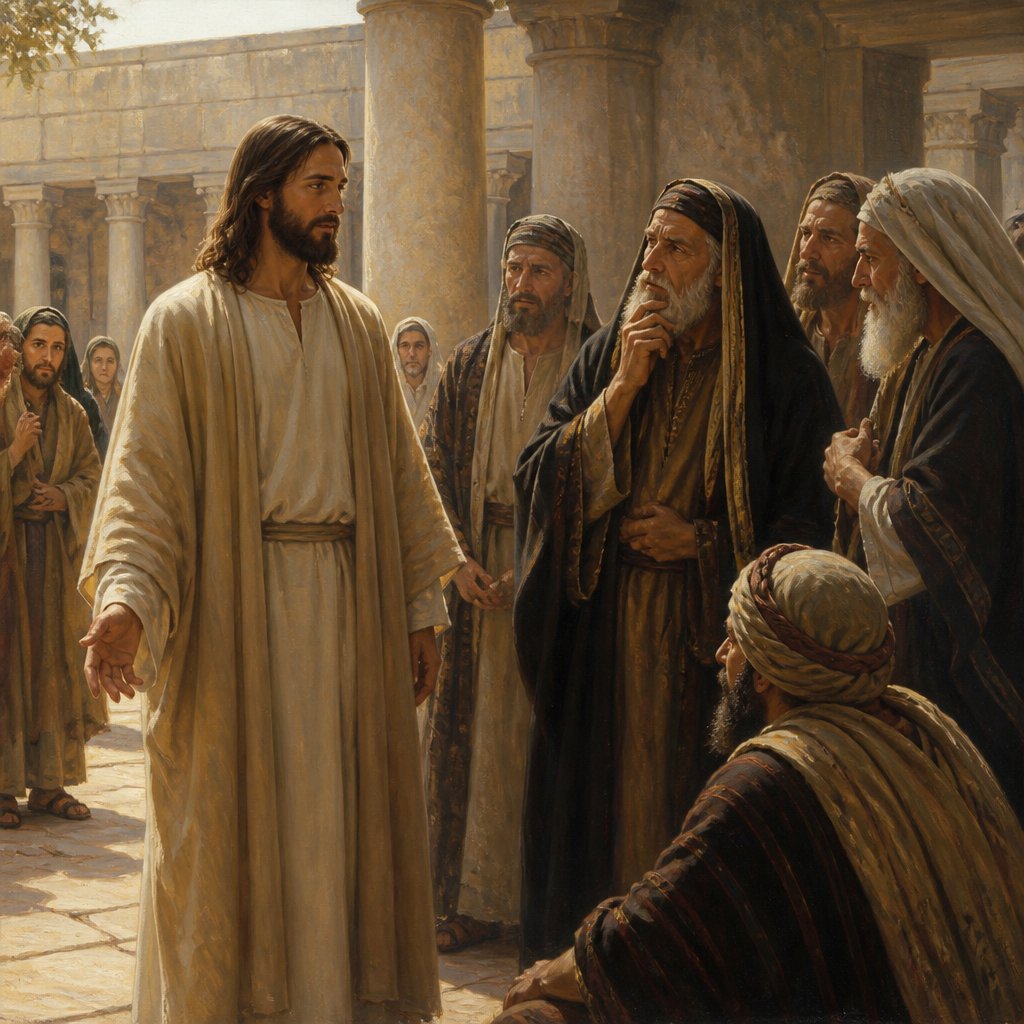
In the realm of discourse, especially within a religious and philosophical context, words hold immeasurable power. In Luke 20:26, we encounter a scene charged with tension as religious leaders entrap Jesus in a verbal skirmish, a desperate attempt to undermine his authority amongst the people. The verse reads: "And they could not take hold of his words before the people: and they marvelled at his answer, and held their peace" (KJV). This brief yet profound interaction provides us with a rich tapestry of reflections on wisdom, authority, and the profound impact of truth.
The context of this event is critical to unpacking its meaning. Jesus is approached by the scribes and Pharisees, who ask him whether it is lawful to give tribute unto Caesar. By posing this question, they hoped to trap him: if he said yes, they could accuse him of siding with the oppressive Roman government; if he said no, they could charge him with inciting rebellion. Their intentions were not merely rhetorical; they sought to discredit him in front of a crowd that was rapidly growing in admiration and belief.
Yet, in response, Jesus artfully disarms them. He asks them to show him a coin, inquires whose image is inscribed upon it, and delivers the now-famous line, "Render therefore unto Caesar the things which be Caesar’s; and unto God the things which be God’s" (Matthew 22:21, KJV). Herein lies the brilliance of Jesus’ reply — he simultaneously acknowledges the rightful role of civil authority while steering the conversation towards the greater truth of spiritual obligation.
This moment must have been electrifying for those present. They were witnesses to a masterclass in wisdom and discernment. "They could not take hold of his words before the people", as the verse states. Jesus' understanding of both the complexities of earthly governance and the supremacy of divine law left his questioners short-circuited, unable to find an argument or counterpoint that could challenge him effectively. The ultimate irony here is that those who were supposed to be the stewards of God’s word found themselves unarmed in the presence of the living Word.
In examining the response of the crowd, we see that they marvelled at his answer, recognizing the profound wisdom that resonated in his words. The silence that followed — they "held their peace" — is indicative of awe and reverence. Their inability to rebut or refute him speaks volumes about the authority that Jesus carried. In those moments, we glimpse the divine power that accompanies truth: it not only confounds falsehood but also instills a sense of humility in acknowledgment of a greater knowledge.
For believers today, this scene in Luke invites introspection on how we interact with the truths of our faith in a often skeptical world. Are we equipped to articulate our beliefs with the same clarity and confidence that Jesus so deftly exemplified? Are our words rooted in scriptural wisdom, enabling us to respond to challenges with grace rather than defensiveness? It calls us to remember that the wisdom of God is often perceived as folly by the world, yet it carries transformative power.
Moreover, it implores us to examine the posture of our hearts — are we marveling at the truths of the Gospel, silently filled with appreciation for the wisdom it provides? As we go forth, let us commit to rendering to God what is rightly His, allowing our lives to be a testament to sound doctrine and divine truth. In doing so, like Christ, we may be given the ability to stand confidently in conversations that challenge our beliefs, filled with the Spirit, ready to offer an answer that is both wise and reflective of God's heart.
May we be ever mindful that though our paths may be littered with questions and opposition, the true power of Jesus' wisdom remains ever available to us, guiding our speech and our actions.
Get our apps


Artwork for Luke 20:26

Luke 20:26 - "And they could not take hold of his words before the people: and they marvelled at his answer, and held their peace."
"And they could not take hold of his words before the people: and they marvelled at his answer, and held their peace." - Luke 20:26

luke 1:26

luke 1:26

Luke 1:26

Proverbs 26:20

Luke 12:25-26

Luke 12:25-26

Luke 16:22-26

Luke 12:25-26

Luke 6:21-26

Luke 12:25-26
Luke 12:25-26

Luke 12:25-26

Luke 6:21-26

Luke 5:17-26

Luke 12:25-26

Luke 13:20-21

Luke 13:20-21

Luke 13:20-21

Luke 13:20-21
Luke 13:20-21

Luke 18:26 - "And they that heard it said, Who then can be saved?"

Luke 20:28

Luke 8:26 - "¶ And they arrived at the country of the Gadarenes, which is over against Galilee."

Luke 2:1-20

Luke 20:7 - "And they answered, that they could not tell whence it was."

Luke 17:26 - "And as it was in the days of Noe, so shall it be also in the days of the Son of man."

Luke 15:26 - "And he called one of the servants, and asked what these things meant."

Leviticus 20:22-26 simple picture