The Legacy of Love: Understanding Luke 20:28
“Saying, Master, Moses wrote unto us, If any man’s brother die, having a wife, and he die without children, that his brother should take his wife, and raise up seed unto his brother.” — Luke 20:28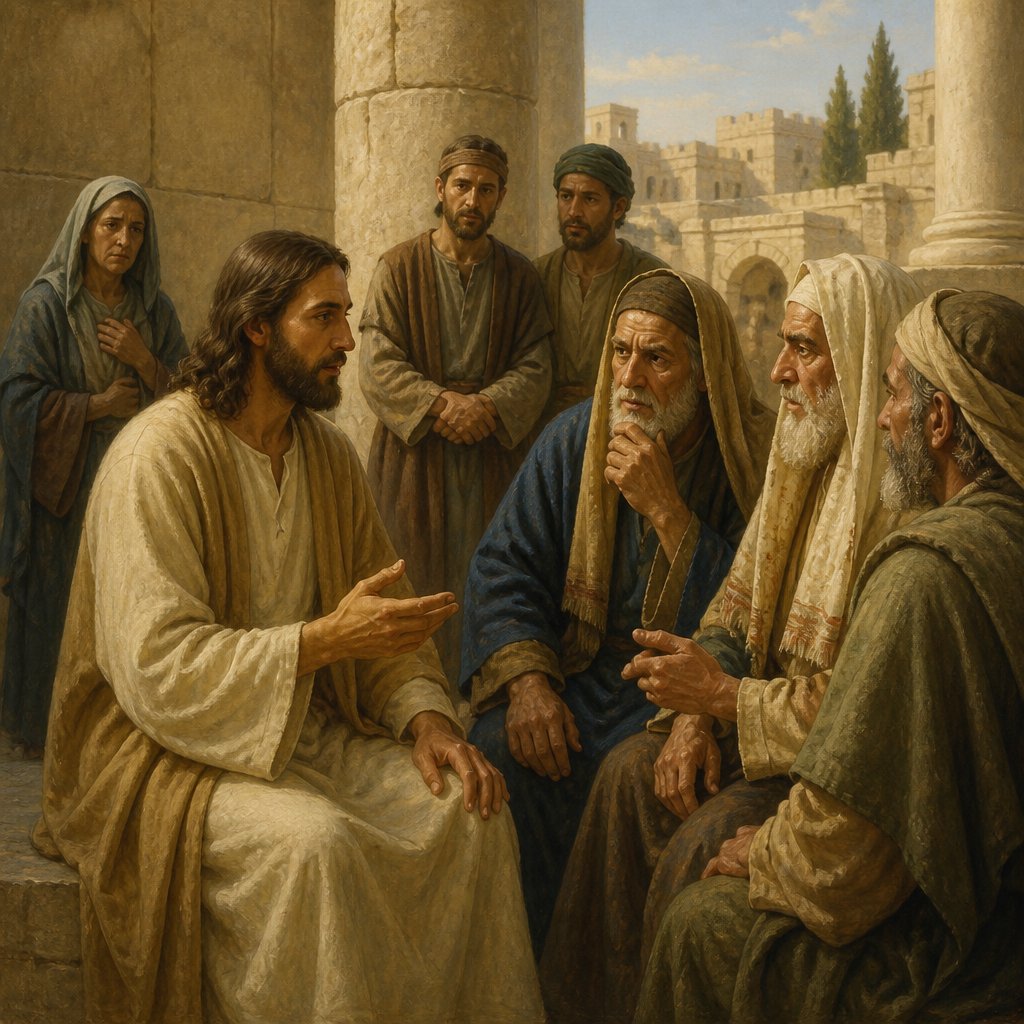
In the Gospel of Luke, we are presented with a glimpse into an intricate theological debate—one that not only unveils the understanding of God's law during Jesus' time but also challenges us to consider the depth of His love and the intent behind our duties as family members. The verse in question, Luke 20:28, states: "Saying, Master, Moses wrote unto us, If any man's brother die, having a wife, and he die without children, that his brother should take his wife, and raise up seed unto his brother." In this passage, the Sadducees, a sect of Jewish leaders who did not believe in the resurrection, sought to challenge Jesus by positing a scenario based on the Levirate law found in Deuteronomy 25:5-6. This law was intended to ensure the continuation of a family line and to protect the widow in a patriarchal society.
As we delve deeper into this scripture, it is essential to grasp the significance of that familial obligation. The practice described was not merely a legal requirement; it was a profound expression of love, duty, and commitment within the family structure. In ancient Israel, the family was the core of society, and one’s duty to family members reflected their piety and reverence for God’s covenant. The Levirate law spoke to a cultural understanding of how far families would go to honor the dead and support those left behind.
In our current societal context, the idea of family and its obligations might seem watered down or neglected, yet the essence of this passage remains relevant. Modern families often find themselves grappling with issues like estrangement, divorce, and the societal shift towards individualism, which can lead to the neglect of familial responsibilities. This verse calls us to reflect on how we honor our commitments, not only to our immediate families but also to the larger body of believers in Christ.
Furthermore, the Sadducees' challenge to Jesus emphasizes the misunderstanding of life after death, which was central to Jesus' mission. He came to reveal the fullness of God's plan—a plan that transcends earthly limitations, a plan rooted in the hope of resurrection and the promise of eternal life. By citing the need for a brother to marry his deceased brother's wife, the Sadducees were attempting to trap Jesus in a debate about the resurrection. But, as we know from the narrative that follows, Jesus would redirect the conversation to the truth of the resurrection, affirming that God is the God of the living, not the dead.
Herein lies a profound message for us today. The legacy we leave behind goes beyond family names or wealth; what we establish within our familial relationships—even when they are difficult—speaks volumes about how we understand love, sacrifice, and eternal life. Each act of kindness, every sacrifice we make for our loved ones, is an echo of Christ’s ultimate sacrifice. These acts often raise up more than just physical progeny; they create legacies of faith that can influence generations.
As we contemplate on Luke 20:28, let us assess our relationships with our family, our sense of duty, and our understanding of God's eternal love. Are we honoring our familial commitments in ways that reflect Christ's love? Do we engage with our family members not merely out of obligation but out of love and a desire to see them thrive and connect with God?
Let this verse remind us to carry the torch of love brightly within our families, fostering environments where faith can flourish, and where each individual feels valued and loved. In doing so, we not only fulfill the law of Moses in spirit but also embrace the heart of Jesus’s message of redemption and resurrection.
Get our apps


Artwork for Luke 20:28

Luke 20:28
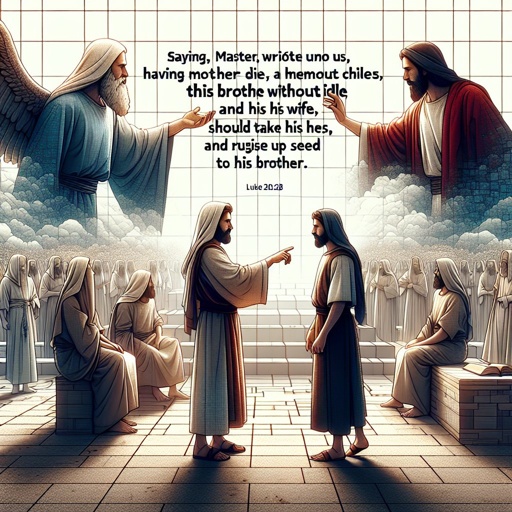
Luke 20:28 - "Saying, Master, Moses wrote unto us, If any man's brother die, having a wife, and he die without children, that his brother should take his wife, and raise up seed unto his brother."
"Saying, Master, Moses wrote unto us, If any man's brother die, having a wife, and he die without children, that his brother should take his wife, and raise up seed unto his brother." - Luke 20:28

Luke 19:28

Genesis 28-20

luke 13:28-37

Luke 13:28-27

Luke 13:28-27

Luke 9:28-45

Luke 13:28-27

luke 13:28-37

Luke 13:20-21

Luke 13:20-21

Matthew 28: 19-20

Matthew 28:19-20

2 Chronicles 20:28

Matthew 28:19-20

Matthew 28:19-20

Luke 13:20-21

Luke 13:20-21
Luke 13:20-21

1 Samuel 28:15-20

Luke 5:28 - "And he left all, rose up, and followed him."

Luke 22:28 - "Ye are they which have continued with me in my temptations."

Job 28:20 - "Whence then cometh wisdom? and where is the place of understanding?"

Luke 4:28 - "And all they in the synagogue, when they heard these things, were filled with wrath,"

Luke 2:1-20

Ezekiel 28:20 - "¶ Again the word of the LORD came unto me, saying,"

Luke 2:28 - "Then took he him up in his arms, and blessed God, and said,"

Luke 20:7 - "And they answered, that they could not tell whence it was."