The Vineyard Owner: Lessons from Luke 20:9
"Then began he to speak to the people this parable; A certain man planted a vineyard, and let it forth to husbandmen, and went into a far country for a long time." - Luke 20:9
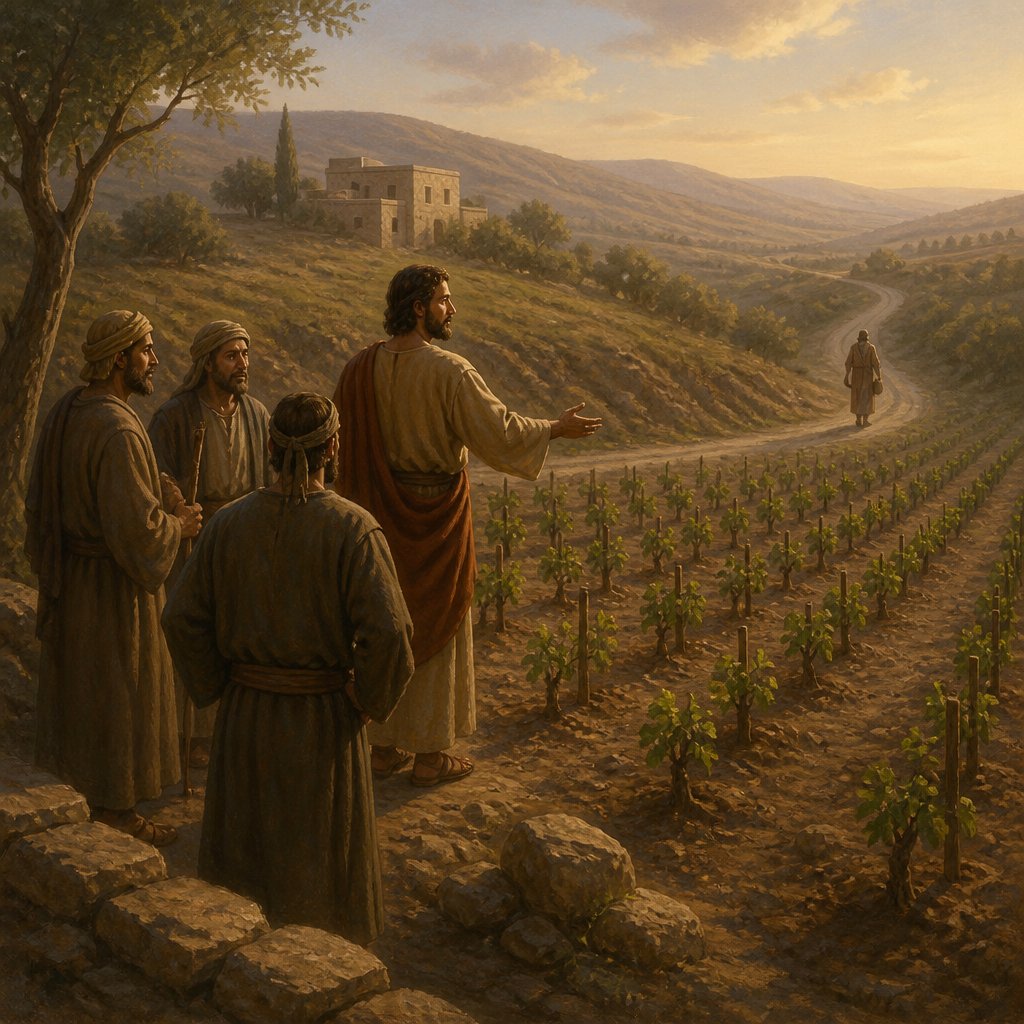
In the Gospel of Luke, chapter 20, verse 9, we encounter a profound parable that echoes through the corridors of time, shedding light on the dynamics of God’s Kingdom and the responsibilities bestowed upon us as His stewards. The verse reads: "Then began he to speak to the people this parable; A certain man planted a vineyard, and let it forth to husbandmen, and went into a far country for a long time."
At first glance, this passage might seem straightforward—a story about a vineyard and its caretakers. However, hidden within its layers are timeless truths about God’s expectations, the nature of our relationship with Him, and the consequences of our actions in His absence.
**The Vineyard: A Gift and a Responsibility**
The vineyard in this parable represents the work and blessings God has entrusted to each one of us. Just as the certain man planted a vineyard, God has invested in us, pouring out His grace, gifts, and resources into our lives. He entrusts us with roles in our families, communities, and workplaces. Each of us must consider what the vineyard symbolizes in our lives. Are we nurturing the relationships, talents, and opportunities God has given us? The vineyard must be cultivated, tended, and cared for; it does not thrive on its own.
When God entrusts us with responsibilities, He also expects us to be stewards of His creation. In Matthew 25:14-30, the Parable of the Talents reminds us that inactivity in the face of His gifts can lead to dire consequences. Being entrusted with a vineyard means we must engage with it, pour our hearts into it, and ultimately produce fruit that glorifies Him. What does your vineyard look like? Are your actions multiplying what God has placed in your hands, or are they leading to stagnation?
**The Absence of the Owner**
The verse continues with the man going "into a far country for a long time." This absence can be perceived as a testing period—a time when the husbandmen (or caretakers) are left to make decisions without the constant oversight of the landowner. In our spiritual journey, we often feel that God is distant, especially during trials and tribulations. During these seasons, we might question His presence, yet it’s in these very moments that our character and heart are significantly exposed.
The absence of the landowner also encapsulates the reality of living in a broken world where the influence of sin and rebellion can corrupt what has been entrusted to us. The husbandmen, in their freedom, might neglect the vineyard or engage in unrighteous behavior when they believe they are unobserved. Similarly, we may also be tempted to act apart from God’s guidance when we feel isolated in our struggles. Yet, it is crucial to understand that our actions during these times reflect our true devotion—trusting and honoring God even when we feel alone.
**The Accountability of the Husbandmen**
As we reflect on this parable, we come to understand that the husbandmen were held accountable for their stewardship of the vineyard. God will eventually return and demand what is rightfully His. This notion resonates with the ultimate accountability we have as believers; we will stand before Him and give an account of how we managed what He entrusted to us. This is a sobering reminder that our lives are not our own, and we are accountable for our stewardship—be it material possessions, relationships, our time, or spiritual gifts.
In conclusion, Luke 20:9 invites us into a deeper engagement with the reality of our lives as God’s tenants in this world. We are reminded that the vineyard—a gift from the owner—comes with the responsibility to cultivate and produce. It reassures us of God’s sovereign plan and the eventual return of our Sovereign God, who will ask: "What have you done with your vineyard?" May we diligently work to strengthen our faith, uphold our responsibilities, and bear good fruit while eagerly awaiting the return of the One who loves us beyond measure.
Want to reflect more on Luke 20:9?
Continue your spiritual journey with Bible Chat — an AI-powered tool for exploring God's Word through conversation. Ask questions, discover connections, and deepen your understanding.
Get Our Apps


Luke 20:9 Artwork

Luke 20:9 - "Then began he to speak to the people this parable; A certain man planted a vineyard, and let it forth to husbandmen, and went into a far country for a long time."

Create a scene of Luke 20:9 from the Christian Bible, inspired by the art of Richard Gunther and Lambsong.

Create a respectful and devotional art piece visualizing the sentiment of Luke 20:9 from the Christian Bible, inspired by the expressive and fluid style of pre-1912 watercolor paintings.
"Then began he to speak to the people this parable; A certain man planted a vineyard, and let it forth to husbandmen, and went into a far country for a long time." - Luke 20:9

Luke 20:9-18 - "Then He began to tell the people this parable: “A man planted a vineyard and rented it out to vine-growers, and went on a journey for a long time. At the harvest time he sent a slave to the vine-growers, so that they would give him some of the produce of the vineyard; but the vine-growers beat him and sent him away empty-handed. And he proceeded to send another slave; and they beat him also and treated him shamefully and sent him away empty-handed. And he proceeded to send a third; and this one also they wounded and cast out. The owner of the vineyard said, ‘What shall I do? I will send my beloved son; perhaps they will respect him.’ But when the vine-growers saw him, they reasoned with one another, saying, ‘This is the heir; let us kill him so that the inheritance will be ours.’ So they threw him out of the vineyard and killed him. What, therefore, will the owner of the vineyard do to them? He will come and destroy these vine-growers and will give the vineyard to others.” When they heard it, they said, “May it never be!” But Jesus looked at them and said, “What then is this that is written: ‘The stone which the builders rejected, This became the chief corner stone’? Everyone who falls on that stone will be broken to pieces; but on whomever it falls, it will scatter him like dust.”"
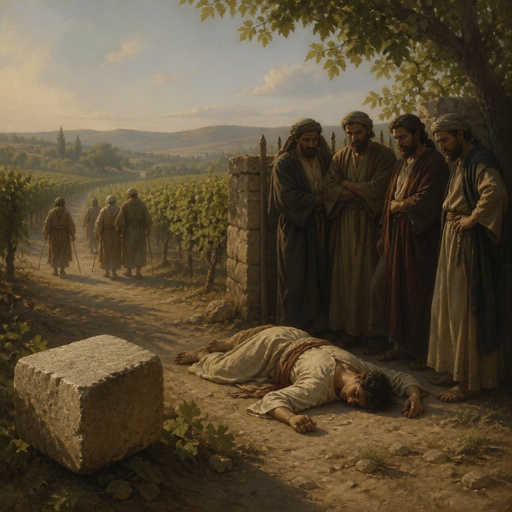
"Then He began to tell the people this parable: “A man planted a vineyard and rented it out to vine-growers, and went on a journey for a long time. At the harvest time he sent a slave to the vine-growers, so that they would give him some of the produce of the vineyard; but the vine-growers beat him and sent him away empty-handed. And he proceeded to send another slave; and they beat him also and treated him shamefully and sent him away empty-handed. And he proceeded to send a third; and this one also they wounded and cast out. The owner of the vineyard said, ‘What shall I do? I will send my beloved son; perhaps they will respect him.’ But when the vine-growers saw him, they reasoned with one another, saying, ‘This is the heir; let us kill him so that the inheritance will be ours.’ So they threw him out of the vineyard and killed him. What, therefore, will the owner of the vineyard do to them? He will come and destroy these vine-growers and will give the vineyard to others.” When they heard it, they said, “May it never be!” But Jesus looked at them and said, “What then is this that is written: ‘The stone which the builders rejected, This became the chief corner stone’? Everyone who falls on that stone will be broken to pieces; but on whomever it falls, it will scatter him like dust.”" - Luke 20:9-18

Luke 9:20 - "He said unto them, But whom say ye that I am? Peter answering said, The Christ of God."

Luke 9:20 He said to them, “But who do you say that I am?” Peter answered and said, “The Christ of God.”

Luke 13:20-21

Luke 13:20-21

Luke 13:20-21

Luke 13:20-21
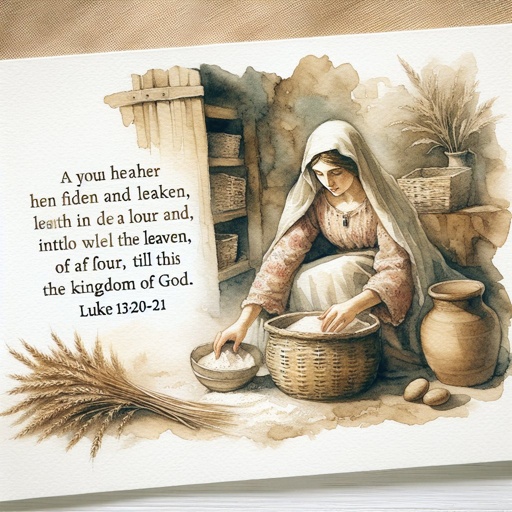
Luke 13:20-21

Luke 20:28
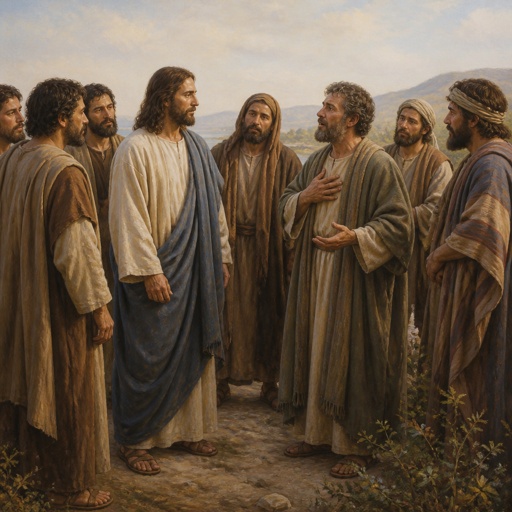
"He said unto them, But whom say ye that I am? Peter answering said, The Christ of God." - Luke 9:20

Luke 2:1-20

Luke 20:7 - "And they answered, that they could not tell whence it was."

Luke 20:4 - "The baptism of John, was it from heaven, or of men?"

Luke 20:32 - "Last of all the woman died also."
Luke 11:9

luke 9:30

luke 9:35

luke 9:35

Luke 9:51

Luke 11:9

Luke 20:22 - "Is it lawful for us to give tribute unto Caesar, or no?"
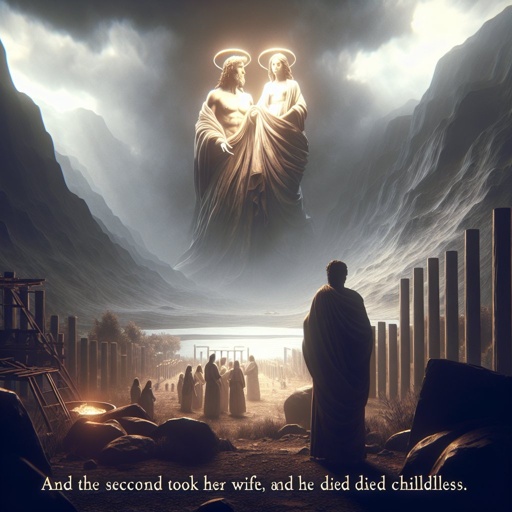
Luke 20:30 - "And the second took her to wife, and he died childless."

Luke 20:40 - "And after that they durst not ask him any question at all."

Luke 20:43 - "Till I make thine enemies thy footstool."

Genesis 20:9