The Enduring Glory of the Temple: A Reflection on Luke 21:5
“And as some spake of the temple, how it was adorned with goodly stones and gifts, he said,” — Luke 21:5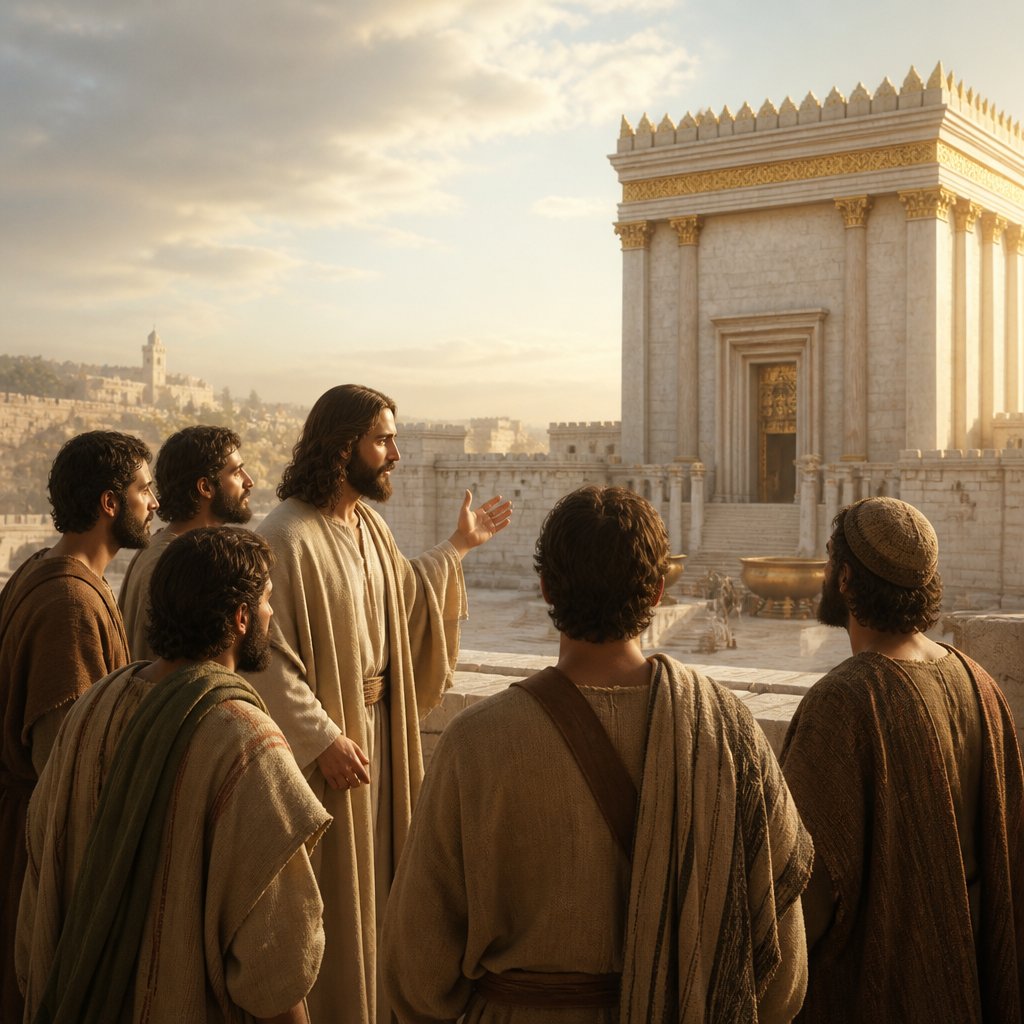
As we delve into Luke 21:5, which states, "And as some spake of the temple, how it was adorned with goodly stones and gifts, he said," we are drawn into a moment of profound significance. The temple in Jerusalem was not just a physical structure; it represented the very heart of Jewish life, a place where heaven and earth met, and where the presence of God dwelled among His people.
The beauty of the temple, adorned with magnificent and exquisite stones, captured the admiration of many. People would often gather to marvel at its splendor, discussing its majestic architecture and the precious gifts offered by worshippers. Each stone represented not only human labor but also the devotion of countless generations seeking to honor God. It was a symbol of national pride and spiritual fervor, a luminous beacon that brought hope and connection to the divine.
However, Jesus, aware of the hearts of men and the fleeting nature of earthly glory, brought forth a deeper understanding in the very next verse. He redirected their focus not on the temple's physical beauty, but on a coming moment that would change everything — the prophecy of its destruction. "And he said, 'As for these things which ye behold, the days will come, in the which there shall not be left one stone upon another, that shall not be thrown down'" (Luke 21:6). This stark prediction shook the foundations of their belief, much like the shifting sands that erode even the mightiest of structures over time.
In our own lives, we too are often drawn to the allure of what is tangible and external. We admire the goodly stones of achievement, reputation, and material success. Society teaches us to value these markers of status and accomplishment. However, Spiritual growth often requires a stripping away of these idols. Just as the physical temple was destined for destruction, so too are many of our earthly triumphs transient. They can crumble before our eyes and turn to dust, leaving us with a sense of loss and emptiness.
In light of this, how should we respond? The Christian life calls us to cultivate riches that endure beyond the material — a faith that is resilient and a relationship with God that is unshakeable. Jesus’ words remind us that our focus should not be on the external but on the internal — the conditions of our hearts and our spiritual state before God. The true temple, as Paul later elaborates, is not made of bricks and mortar, but of living stones: "Ye also, as lively stones, are built up a spiritual house, an holy priesthood, to offer up spiritual sacrifices, acceptable to God by Jesus Christ" (1 Peter 2:5).
So, as you reflect on this passage, consider your own life. What goodly stones have you adorned your life with? Are they good and noble pursuits, or are they distractions? Jesus calls us to examine our motivations and reminds us that the ultimate purpose of our lives should be to glorify God, not merely to stand in admiration of our accomplishments.
In this season of uncertainty, where things may be stripped away, let us hold fast to what cannot be shaken — our faith in the living God. Let us become goodly stones ourselves, radiant with His glory, forming a spiritual temple that stands resilient through time. May our lives reflect the craftsmanship of the Holy Spirit, adorned not with the transient gifts of this world, but with the eternal treasures of grace, love, and faith.
Let us pray for the wisdom to prioritize what truly matters and to build our lives as temples that honor God, resting not in our achievements, but in His everlasting promise.
Get our apps


Artwork for Luke 21:5

luke 21:5-19

Luke 21:5 - "¶ And as some spake of the temple, how it was adorned with goodly stones and gifts, he said,"

luke 21:5-19 with all people of color

luke 21:5-19 with all people of color

luke 21:5-19 with all people of color

luke 21:5-19 with all people of color
"¶ And as some spake of the temple, how it was adorned with goodly stones and gifts, he said," - Luke 21:5

Luke 5:21 - "And the scribes and the Pharisees began to reason, saying, Who is this which speaketh blasphemies? Who can forgive sins, but God alone?"

Luke 13:20-21

Luke 13:20-21
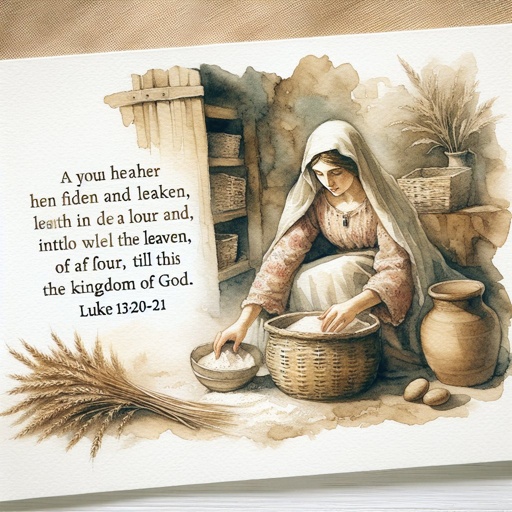
Luke 13:20-21

Luke 5:20-21 - "When Jesus saw their faith, he said, “Friend, your sins are forgiven.” The Pharisees and the teachers of the law began thinking to themselves, “Who is this fellow who speaks blasphemy? Who can forgive sins but God alone?”"

Luke 13:20-21

Luke 13:20-21

Luke 15:21

Luke 21:24

Luke 15:21

luke 5:5

Luke 6:21-26

Luke 6:21-26

Luke 21:15-19

Luke 2:16 - 21
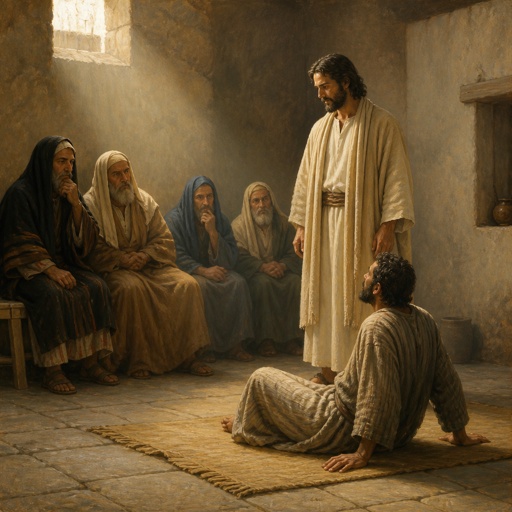
"And the scribes and the Pharisees began to reason, saying, Who is this which speaketh blasphemies? Who can forgive sins, but God alone?" - Luke 5:21

Luke 10:5

Luke 10:5

Luke 21:13 - "And it shall turn to you for a testimony."

Luke 10:5

Luke 21:18 - "But there shall not an hair of your head perish."

Luke 21:19 - "In your patience possess ye your souls."

Luke 23:21 - "But they cried, saying, Crucify him, crucify him."