The Significance of the Unleavened Bread: A Journey Through the Passover
“Then came the day of unleavened bread, when the passover must be killed.” — Luke 22:7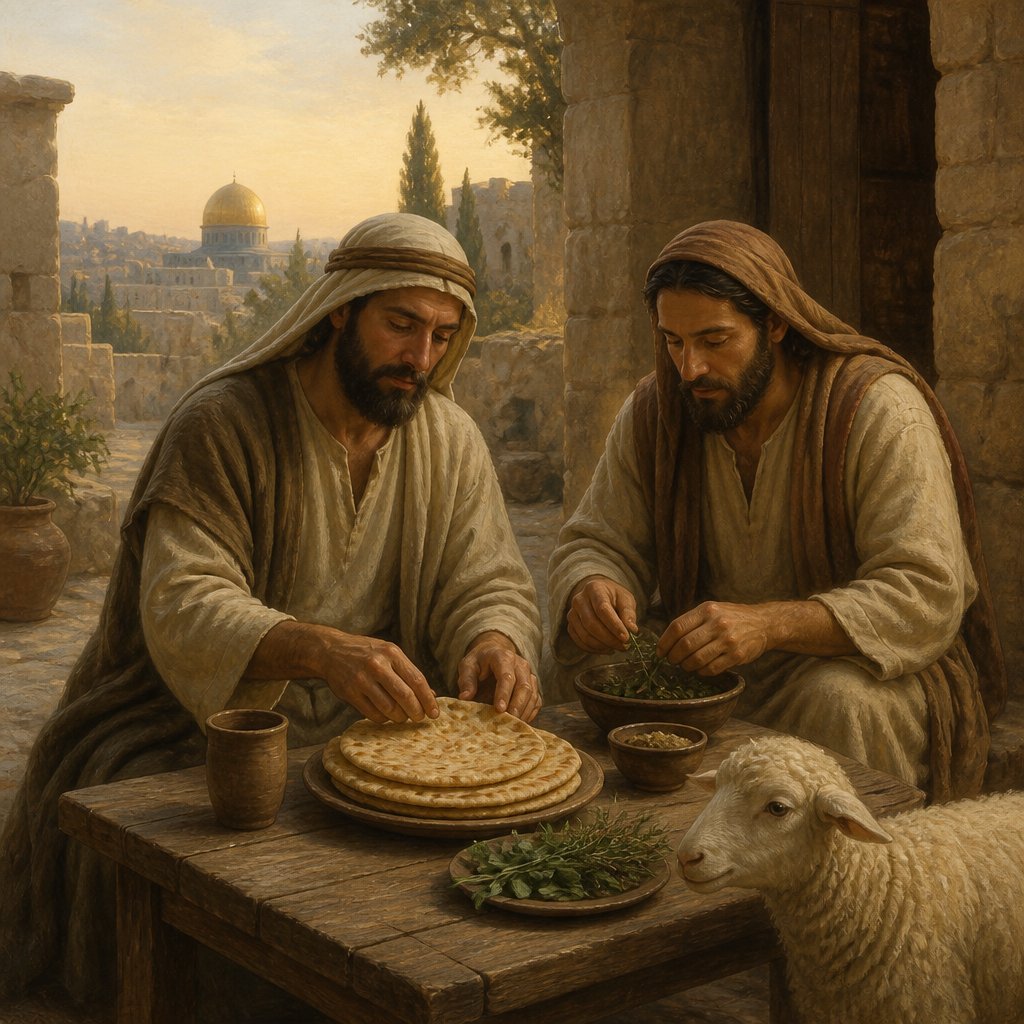
As we delve into Luke 22:7, ‘Then came the day of unleavened bread, when the passover must be killed,’ it is essential to appreciate the rich tapestry of history, faith, and foreshadowing that envelops this moment. This verse does not merely mark a date on the Jewish calendar; rather, it serves as a profound transition point in the sacred narrative leading to the culmination of God's redemptive plan through Jesus Christ.
The Feast of Unleavened Bread, closely associated with the Passover, was a vital observance in Jewish tradition. It commemorated the Israelites' exodus from Egypt, where God delivered them from the bondage of slavery. In Exodus 12, God instructed His people to sacrifice a lamb and mark their doorposts with its blood, an act which would cause the death angel to 'pass over' their homes. This event established a covenant of protection and deliverance, underscoring the principle of sacrificial atonement—an offering that would, later on, find its ultimate fulfillment in the sacrifice of Christ.
In the context of our passage, Jesus and His disciples prepared to celebrate the Passover. This moment was pregnant with significance because what was about to unfold would reshape the understanding of sacrifice and redemption forever. Let us contemplate three vital aspects of this significant date—the symbolism of unleavened bread, the sacrificial lamb, and the impending New Covenant.
Firstly, unleavened bread carries deep symbolic meaning. In Jewish tradition, leaven symbolizes sin and corruption. Thus, during the Feast of Unleavened Bread, the removal of leaven from the household served as a physical representation of purging sin from one’s life. In John 6:35, Jesus identifies Himself as the 'bread of life.' His body would be broken for us, and through His eventual sacrifice, He would remove the leaven—our sins—from our lives, granting us purity and righteousness. As believers, after accepting His sacrifice, we too are called to a life of holiness, to actively purge the leaven from our lives, symbolizing the removal of sin and striving for a life that honors God.
Secondly, the Passover lamb foreshadows Christ's fulfilling role as our ultimate sacrificial lamb. The instruction given to the Israelites was specific; they had to choose a lamb without blemish, to be sacrificed. Similarly, Christ was the only sinless One, fitting perfectly the description of the Paschal lamb. His blood, shed for us, provides salvation and a new identity—chosen and beloved children of God. As we engage with this reality, we are reminded of the weight of Christ’s sacrifice. The rejection and pain leading to Calvary highlight His profound love for humanity. When reflecting on this, may we cultivate a heart of gratitude, for it is not merely a historical event, but the foundation of our very faith. It tells us that salvation is not earned; it is a gift bought at a great price.
Lastly, the significance of this moment expands as we recognize it also heralds the establishment of a New Covenant. The Old Covenant, based on the law, was fulfilled in Christ, who offered Himself as the new and ultimate sacrifice, paving the way for a transformative relationship with God. The focal point of the Passover would shift from the lamb to the Lamb of God who takes away the sins of the world. As Jesus broke the bread at that Last Supper, He introduced a new meaning, saying, ‘This is my body which is given for you’ (Luke 22:19). In embracing this new covenant, we step into a relationship rooted in grace rather than obligation, inviting us to live in the freedom of forgiveness.
In conclusion, Luke 22:7 serves as a pivotal reminder of God's faithfulness and His profound design for redemption. As we meditate on the themes of sacrifice, purity, and covenant, may we gratefully embrace the significance of the Passover both in the context of our own spiritual journey and in our communal life. Let us recommit to living a life that reflects the love and sacrifice of Christ, sharing this Good News with a world in need of hope.
Get our apps


Artwork for Luke 22:7

Luke 22:7 - "¶ Then came the day of unleavened bread, when the passover must be killed."
"¶ Then came the day of unleavened bread, when the passover must be killed." - Luke 22:7

Luke 22:7-23 - "Then came the day of Unleavened Bread on which the Passover lamb had to be sacrificed. Jesus sent Peter and John, saying, “Go and make preparations for us to eat the Passover.” “Where do you want us to prepare for it?” they asked. He replied, “As you enter the city, a man carrying a jar of water will meet you. Follow him to the house that he enters, and say to the owner of the house, ‘The Teacher asks: Where is the guest room, where I may eat the Passover with my disciples?’ He will show you a large room upstairs, all furnished. Make preparations there.” They left and found things just as Jesus had told them. So they prepared the Passover. When the hour came, Jesus and his apostles reclined at the table. And he said to them, “I have eagerly desired to eat this Passover with you before I suffer. For I tell you, I will not eat it again until it finds fulfillment in the kingdom of God.” After taking the cup, he gave thanks and said, “Take this and divide it among you. For I tell you I will not drink again from the fruit of the vine until the kingdom of God comes.” And he took bread, gave thanks and broke it, and gave it to them, saying, “This is my body given for you; do this in remembrance of me.” In the same way, after the supper he took the cup, saying, “This cup is the new covenant in my blood, which is poured out for you. But the hand of him who is going to betray me is with mine on the table. The Son of Man will go as it has been decreed. But woe to that man who betrays him!” They began to question among themselves which of them it might be who would do this."
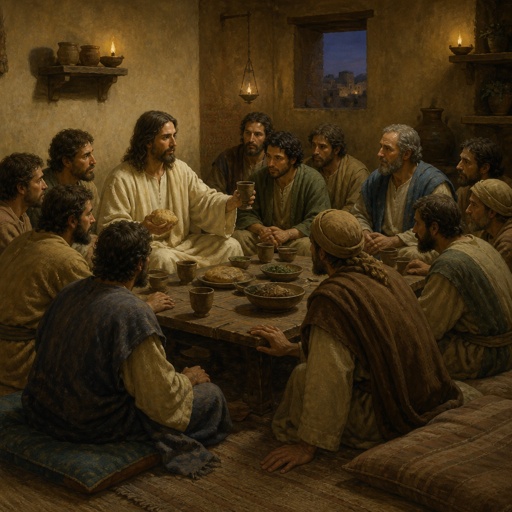
"Then came the day of Unleavened Bread on which the Passover lamb had to be sacrificed. Jesus sent Peter and John, saying, “Go and make preparations for us to eat the Passover.” “Where do you want us to prepare for it?” they asked. He replied, “As you enter the city, a man carrying a jar of water will meet you. Follow him to the house that he enters, and say to the owner of the house, ‘The Teacher asks: Where is the guest room, where I may eat the Passover with my disciples?’ He will show you a large room upstairs, all furnished. Make preparations there.” They left and found things just as Jesus had told them. So they prepared the Passover. When the hour came, Jesus and his apostles reclined at the table. And he said to them, “I have eagerly desired to eat this Passover with you before I suffer. For I tell you, I will not eat it again until it finds fulfillment in the kingdom of God.” After taking the cup, he gave thanks and said, “Take this and divide it among you. For I tell you I will not drink again from the fruit of the vine until the kingdom of God comes.” And he took bread, gave thanks and broke it, and gave it to them, saying, “This is my body given for you; do this in remembrance of me.” In the same way, after the supper he took the cup, saying, “This cup is the new covenant in my blood, which is poured out for you. But the hand of him who is going to betray me is with mine on the table. The Son of Man will go as it has been decreed. But woe to that man who betrays him!” They began to question among themselves which of them it might be who would do this." - Luke 22:7-23

luke 22:42

Luke 22:39

Luke 22:61,62

Luke 22:39

luke 22 44
luke 22:42

Luke 22:42

Luke 7:22 - "Then Jesus answering said unto them, Go your way, and tell John what things ye have seen and heard; how that the blind see, the lame walk, the lepers are cleansed, the deaf hear, the dead are raised, to the poor the gospel is preached."

Luke 16:22-26

Luke 22:62 - "And Peter went out, and wept bitterly."

Luke 20:22 - "Is it lawful for us to give tribute unto Caesar, or no?"

Luke 22:5 - "And they were glad, and covenanted to give him money."

Luke 22:28 - "Ye are they which have continued with me in my temptations."

Luke 22:63 - "¶ And the men that held Jesus mocked him, and smote him."

Luke 22:65 - "And many other things blasphemously spake they against him."

Luke 22:31-32 - "Luke 22:31-32: And the Lord said, Simon, Simon, behold, Satan hath desired to have you, that he may sift you as wheat: But I have prayed for thee, that thy faith fail not: and when thou art converted, strengthen thy brethren."

Luke 22:21 - "¶ But, behold, the hand of him that betrayeth me is with me on the table."

Luke 7:33

Luke 7:50

Luke 7:50

Luke 22:43 - "And there appeared an angel unto him from heaven, strengthening him."

Luke 22:3 - "¶ Then entered Satan into Judas surnamed Iscariot, being of the number of the twelve."

Luke 22:57 - "And he denied him, saying, Woman, I know him not."

Luke 21:22 - "For these be the days of vengeance, that all things which are written may be fulfilled."

Luke 22:9 - "And they said unto him, Where wilt thou that we prepare?"

Psalm 22:7