The Depths of Forgiveness: A Reflection on Luke 23:34
“Then said Jesus, Father, forgive them; for they know not what they do. And they parted his raiment, and cast lots.” — Luke 23:34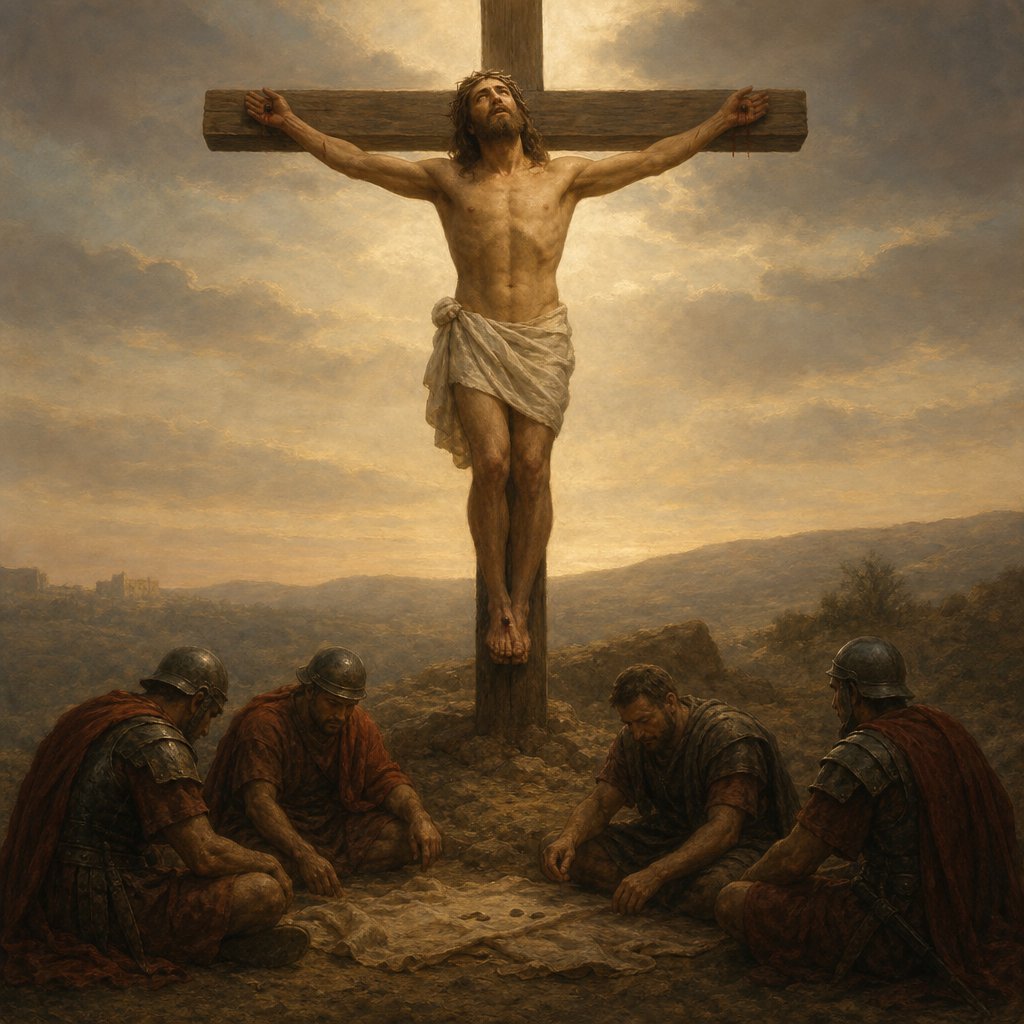
In the shadow of Golgotha, as the world watched the unfathomable cruelty inflicted upon the Son of God, a profound declaration emerged from the lips of Jesus: "Father, forgive them; for they know not what they do" (Luke 23:34 KJV). This moment, occurring on the precipice of death, encapsulates the essence of divine forgiveness and the heart of Jesus's mission.
Jesus spoke these words amidst unimaginable suffering. Nails driven through His hands and feet, a crown of thorns pressed upon His brow, and the jeering of a crowd that was both pitiful and hostile. How could He utter such a plea for forgiveness at a time when any human would naturally respond with anger, bitterness, or even a longing for vengeance?
This utterance provides us with a powerful lens through which we should view forgiveness. At that moment, Jesus modeled a level of forgiveness that transcends human understanding. His definitive example compels us to consider what it means to forgive those who wrong us. The reality is that Jesus did not merely forgive with words; His life and eventual sacrifice embodied forgiveness in action. His plea serves two primary purposes: it highlights the ignorance of His executioners and it reveals the nature of God’s grace.
The phrase "for they know not what they do" alludes to a profound spiritual principle. The executioners, the religious leaders, the common spectators – all were partaking in a cosmic tragedy. They were unaware not only of the depth of their actions but also of the significance of who they were crucifying. Humanity at its worst frequently operates out of ignorance, blinded by sin, envy, or rage. In a similar ignorance, we often lash out, act unkindly, or judge others. The reality is that each of us, at various points, has acted without full awareness of the consequences of our actions or the pain inflicted on others. Jesus’s words offer both understanding and compassion, reflecting that we are all susceptible to failure.
When Jesus forgives His perpetrators, He showcases the generous heart of the Father. We witness a stark contrast to human tendencies that often cling to grudges or harbor vendettas. God’s forgiveness is available to all who turn to Him, regardless of their past actions. When we internalize this truth, we must strive to reflect such grace in our own interactions. In a world saturated with division and animosity, we, as followers of Christ, are called to embody forgiveness, replicating the posture Jesus demonstrated on the cross.
Forgiveness, however, is a complex journey, often fraught with hurt and betrayal. Many of us have experienced deep wounds. How then can we genuinely embrace the call to forgive? First, we must understand that forgiveness does not condone wrongdoing or erase the past. Instead, it is the deliberate choice to release the burden of bitterness and resentment. When we forgive, we make room for healing; it is an act of liberation for ourselves as much as for the other person.
Second, our capacity to forgive is often rooted in our ability to recall the forgiveness we have received through Christ. Just as He extended grace in our weakest moments, we too must extend grace to others. Emphasizing gratitude for God’s forgiveness enlightens our understanding of what it means to forgive those who have wronged us.
Finally, we must recognize that forgiveness is a process. It may require time, prayer, and perhaps, revisiting our feelings repeatedly. We can lean into prayer, asking the Holy Spirit to soften our hearts and equip us to forgive as we have been forgiven. As we reflect on Jesus’s poignant words on the cross, let us ask ourselves: who do we need to forgive? Whose burden are we carrying that needs to be laid before the cross?
As believers, we must commit to a life marked by forgiveness, striving to echo the words of our Savior. In doing so, we draw nearer to His heart, shining His light into the darkness of a world so desperately in need of grace. Let us pray earnestly, seeking the strength to forgive, remembering the ultimate price that was paid for our own transgressions.
Get our apps


Artwork for Luke 23:34

Luke 23:34 - "¶ Then said Jesus, Father, forgive them; for they know not what they do. And they parted his raiment, and cast lots."
"¶ Then said Jesus, Father, forgive them; for they know not what they do. And they parted his raiment, and cast lots." - Luke 23:34

Matthew 2:3-4

Matthew 2:3-4

Matthew 2:3-4

Matthew 2:3-4

Luke 12:34

Matthew 18:23-34

Matthew 18:23-34

Matthew 18:23-34

Matthew 18:23-34

Luke 19:34 - "And they said, The Lord hath need of him."

Luke 12:34 - "For where your treasure is, there will your heart be also."

Luke 24:34 - "Saying, The Lord is risen indeed, and hath appeared to Simon."

Luke 14:34 - "¶ Salt is good: but if the salt have lost his savour, wherewith shall it be seasoned?"

Numbers 34:23 - "The prince of the children of Joseph, for the tribe of the children of Manasseh, Hanniel the son of Ephod."

Luke 23:53

Luke 19:23

luke 11:23

Luke 19:23

Luke 1:34 - "Then said Mary unto the angel, How shall this be, seeing I know not a man?"

Luke 20:34 - "And Jesus answering said unto them, The children of this world marry, and are given in marriage:"

luke 11:23
Luke 15:23

luke 11:23

luke 11:23

Luke 8:34 - "When they that fed them saw what was done, they fled, and went and told it in the city and in the country."

Luke 9:34 - "While he thus spake, there came a cloud, and overshadowed them: and they feared as they entered into the cloud."

2 Samuel 23:34 - "Eliphelet the son of Ahasbai, the son of the Maachathite, Eliam the son of Ahithophel the Gilonite,"

Proverbs 23:34 - "Yea, thou shalt be as he that lieth down in the midst of the sea, or as he that lieth upon the top of a mast."