The Sovereignty of God in Our Trials
“And as soon as he knew that he belonged unto Herod’s jurisdiction, he sent him to Herod, who himself also was at Jerusalem at that time.” — Luke 23:7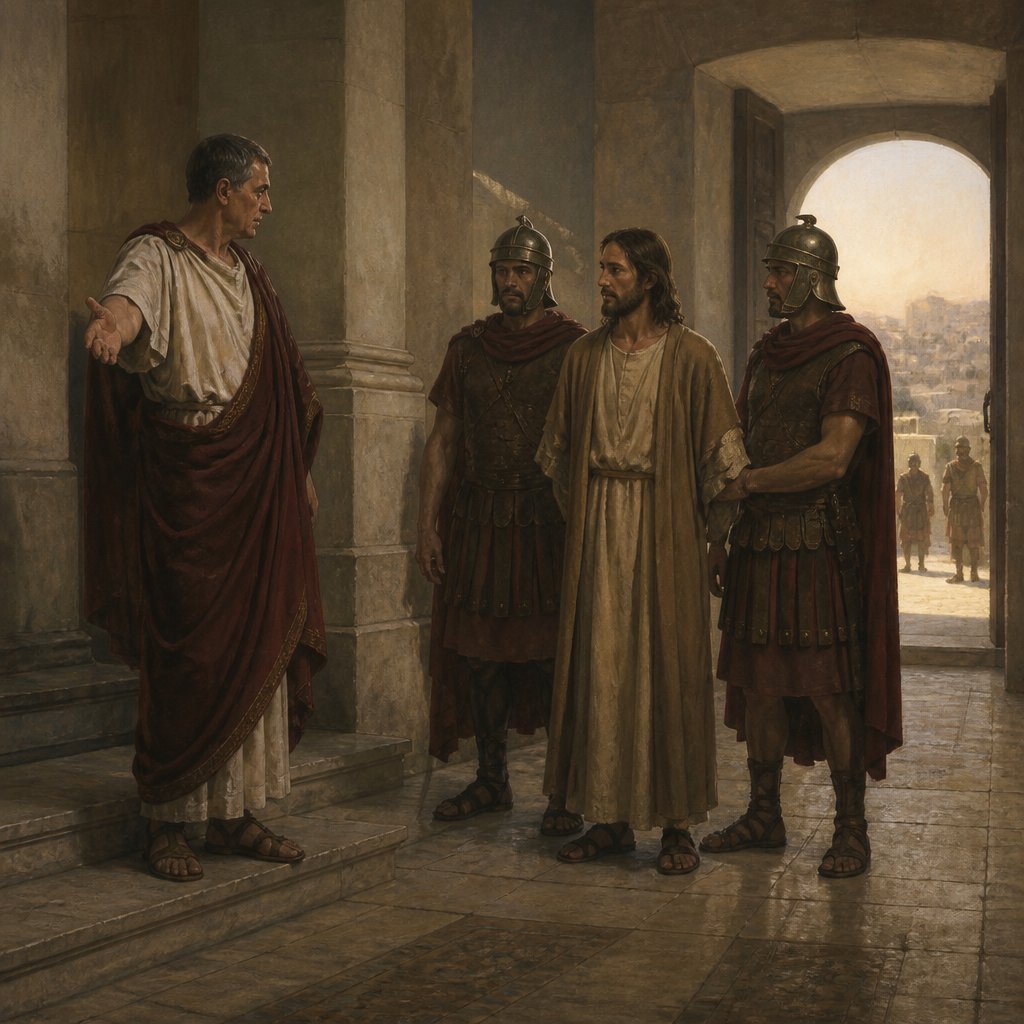
In Luke 23:7, we read, "And as soon as he knew that he belonged unto Herod's jurisdiction, he sent him to Herod, who himself also was at Jerusalem at that time." This brief yet profound verse reveals a pivotal moment in the unfolding drama of Jesus’ trials and ultimately His path to the cross. As we meditate on this passage, we can discern the sovereignty of God at work even in the most tumultuous and seemingly chaotic circumstances.
To fully grasp the weight of this verse, we must consider its context. Jesus, having been arrested in the Garden of Gethsemane, was placed in front of Pilate, the Roman governor. When Pilate learned that Jesus was a Galilean, he realized that Jesus fell under Herod's authority, for Herod was the ruler of Galilee. This transfer is not merely a matter of administrative jurisdiction; it reflects profound theological truths about authority, governance, and divine purpose.
The act of sending Jesus to Herod can be seen as emblematic of the world’s misunderstanding of Christ's identity and mission. To Pilate, Jesus was a political inconvenience; to Herod, He was a spectacle, a curiosity to be entertained. Yet unknown to them, every movement in this legal charade was ordained by God’s sovereign plan of redemption.
In our own lives, we often face trials that seem random or without purpose. We encounter situations where we feel like we’re being tossed from one authority to the next, subjected to systems and structures that do not seem to understand or value who we are or what we believe. Yet, just as Pilate’s jurisdiction shifted to Herod, we must trust that the hand of God is orchestrating our experiences, guiding us through the complexities of human authority and societal pressures.
As we reflect on this verse, it becomes clear that Jesus was at the center of God’s plan, even as He was passed around like an object of curiosity. This teaches us a vital lesson: no matter where we find ourselves, we are always under God's jurisdiction. Like Jesus, when we face trials that make us feel powerless, we must remember that God is still in control, working all things according to His will (Ephesians 1:11).
Furthermore, Jesus’ transfer to Herod symbolizes how He directed the intentions and actions of those in power to fulfill His ultimate purpose. Their mortal considerations contributed to eternal redemption. It reminds us that God can use even the most unjust situations for His glory and our good. When we find ourselves in the hands of unjust rulers or in circumstances that feel beyond our control, let us trust that our Lord is sovereign over all.
Let us also ponder Herod’s reaction when Jesus was brought before him. Historically, he sought to see a miracle performed by Jesus, craving entertainment over repentance. This reflects a heart that desires signs and wonders without understanding their significance. Similarly, we often seek signs from God to validate our faith during trials. Instead, we should strive for deeper faith that trusts in God’s goodness and timing, regardless of the evidence we can see.
In this transitional moment set upon by human politics, Jesus remains silent amidst the injustice. Our silence in the face of false accusations and trials can also reflect our deep trust in God's redemptive plan in our lives. We can take solace in the fact that, like Jesus, our trials will ultimately unfold for a higher purpose—one that may not be visible to us now, but is leading to greater glory.
In conclusion, as we meditate upon Luke 23:7, let us be encouraged to trust in God’s sovereignty over our lives. When faced with trials, let us proclaim our faith with confidence, knowing that God uses each experience to shape us into His image and fulfill His divine purposes. Where human authority appears to reign, let us stand assured that the King of Kings is sovereignly working out His plan in our lives.
Get our apps


Artwork for Luke 23:7

Luke 23:7 - "And as soon as he knew that he belonged unto Herod's jurisdiction, he sent him to Herod, who himself also was at Jerusalem at that time."
"And as soon as he knew that he belonged unto Herod's jurisdiction, he sent him to Herod, who himself also was at Jerusalem at that time." - Luke 23:7

Luke 7:23 - "And blessed is he, whosoever shall not be offended in me."

"And blessed is he, whosoever shall not be offended in me." - Luke 7:23

Luke 23:53

Luke 19:23

luke 11:23

Luke 19:23

luke 11:23

Luke 15:23

luke 11:23

luke 11:23

Luke 23:54 - "And that day was the preparation, and the sabbath drew on."

Luke 23:23 - "And they were instant with loud voices, requiring that he might be crucified. And the voices of them and of the chief priests prevailed."

Luke 23:24 - "And Pilate gave sentence that it should be as they required."

Luke 23:45 - "And the sun was darkened, and the veil of the temple was rent in the midst."

Luke 23:21 - "But they cried, saying, Crucify him, crucify him."

Luke 23:16 - "I will therefore chastise him, and release him."

Luke 23:37 - "And saying, If thou be the king of the Jews, save thyself."

Luke 23:10 - "And the chief priests and scribes stood and vehemently accused him."

Luke 23:52 - "This man went unto Pilate, and begged the body of Jesus."

Luke 11:23 - "He that is not with me is against me: and he that gathereth not with me scattereth."

Luke 23:1 - "And the whole multitude of them arose, and led him unto Pilate."

Luke 23:20 - "Pilate therefore, willing to release Jesus, spake again to them."

Luke 7:33

Luke 7:50

Luke 7:50

Luke 23:31 - "For if they do these things in a green tree, what shall be done in the dry?"

Luke 23:19 - "(Who for a certain sedition made in the city, and for murder, was cast into prison.)"

Luke 23:17 - "(For of necessity he must release one unto them at the feast.)"