Divine Timing in the Tapestry of History
“Now in the fifteenth year of the reign of Tiberius Cæsar, Pontius Pilate being governor of Judæa, and Herod being tetrarch of Galilee, and his brother Philip tetrarch of Ituraea and of the region of Trachonitis, and Lysanias the tetrarch of Abilene,” — Luke 3:1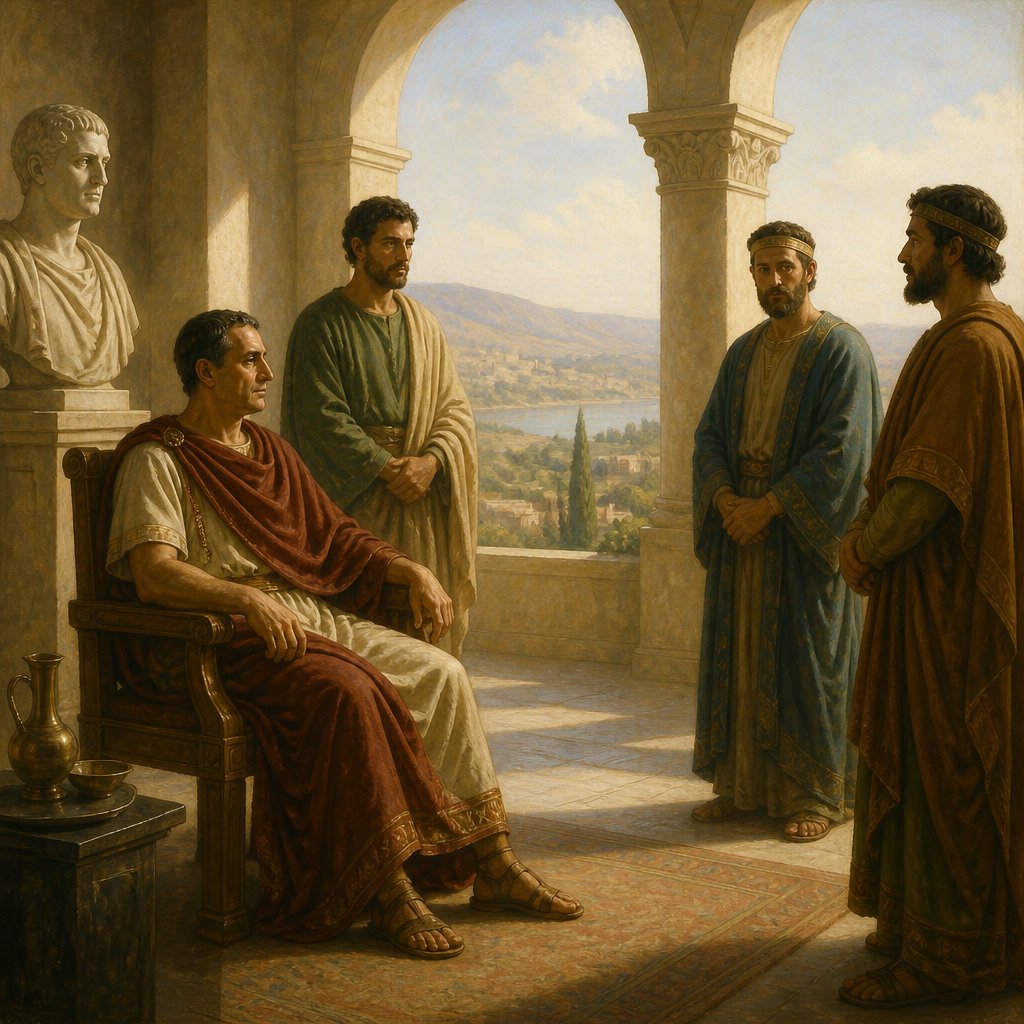
Introduction to the Scene
In the Gospel of Luke, we encounter a passage rich in historical detail, located in chapter 3, verse 1: "Now in the fifteenth year of the reign of Tiberius Caesar, Pontius Pilate being governor of Judaea, and Herod being tetrarch of Galilee, and his brother Philip tetrarch of Ituraea and of the region of Trachonitis, and Lysanias the tetrarch of Abilene." This verse may initially seem like a dry historical statement, yet it serves as a powerful denotation of the Divine’s intricate timing and purposes in human events.
Historical Context and Significance
Luke begins by anchoring the ministry of John the Baptist in a specific historical moment, illustrating that God’s work unfolds in the real world rather than in isolation from it. The mention of Tiberius Caesar, a potentate who ruled during a time of great political upheaval and moral decay, demonstrates that God’s plans are often set against the backdrop of worldly power dynamics.
Each figure mentioned—the relentless Tiberius, the politically cunning Pontius Pilate, the ambitious Herod, and his brother Philip—represents the blending of divine providence and human history. These leaders were significant players in a chapter of God's great narrative, embodying the prevailing values and struggles of their time. In doing so, Luke emphasizes that God’s people often exist in environments filled with political turmoil and ethical confusion, yet His purposes remain unchanged and resolute.
The Divine Call to Prepare the Way
In the verses that follow, we see the divine call for John the Baptist, the voice in the wilderness preparing the way for Jesus Christ, the Messiah. Here we learn that God sovereignly raises people and calls them to fulfill His will even amidst the tumult of earthly authorities. John’s role was to call the people to repentance and prepare their hearts for the coming Redeemer. God's plan to save humanity required divine timing, unique figures, and the willingness to step into uncomfortable situations.
Feeding Our Faith with Individual Responsibilities
As we reflect on this text, we too are called to recognize our place in the greater tapestry of God’s narrative. While we may not be in positions of geographic or political influence like Tiberius or Pilate, each of us is positioned uniquely within our social and spiritual landscapes. We must ask ourselves: What is our role in the advance of God’s kingdom today?
God’s plans often start with a whisper in our hearts—a moment of inspiration that compels us to act, to speak truth into our environments, or to reach out in love to others. Like John the Baptist, let us be willing instruments for His will, prepared to echo the call to repentance and to share the good news of Jesus Christ in a world filled with confusion and despair.
Trusting God’s Timing
Moreover, we must embrace the profound truth of God’s timing. Just as John’s appearance and mission were set against a historical backdrop that God had orchestrated, our lives are situated in His perfect timeline as well. We may find ourselves in seasons of waiting, uncertainty, or difficulty, but God's assurance remains: His purposes will prevail.
Let us strive to remain patient and faithful in the waiting, trusting that God is at work, even when we cannot see the outcome. Each of us can contribute to God’s work through prayer, outreach, acts of compassion, and living lives that reflect His love.
Conclusion
In summary, Luke 3:1 teaches us that God’s plans intersect with the fabric of history, even at times when human leaders seem to dominate the narrative. It admonishes us to be vigilant, recognizing our role within God’s unfolding plan, and invites us to prepare the way for Christ both in our lives and in the lives of those around us. May we respond with faith, ready to act in trust and obedience, as we embrace our divine calling in every moment of history.
Get our apps


Artwork for Luke 3:1

luke 3:1-6

Luke 3:1-6

Luke 3:1-6

Luke 3:1 - "Now in the fifteenth year of the reign of Tiberius Caesar, Pontius Pilate being governor of Judaea, and Herod being tetrarch of Galilee, and his brother Philip tetrarch of Ituraea and of the region of Trachonitis, and Lysanias the tetrarch of Abilene,"
"Now in the fifteenth year of the reign of Tiberius Caesar, Pontius Pilate being governor of Judaea, and Herod being tetrarch of Galilee, and his brother Philip tetrarch of Ituraea and of the region of Trachonitis, and Lysanias the tetrarch of Abilene," - Luke 3:1

Luke 1:3 - "It seemed good to me also, having had perfect understanding of all things from the very first, to write unto thee in order, most excellent Theophilus,"

Luke 3:3 - "And he came into all the country about Jordan, preaching the baptism of repentance for the remission of sins;"

Luke 24:3 - "And they entered in, and found not the body of the Lord Jesus."

Luke 24:1-3 - "On the first day of the week, very early in the morning, the women took the spices they had prepared and went to the tomb. They found the stone rolled away from the tomb, but when they entered, they did not find the body of the Lord Jesus."

Luke 3:6 - "And all flesh shall see the salvation of God."

Luke 15:3 - "¶ And he spake this parable unto them, saying,"
![Luke 2:3 NIV
[3] And everyone went to their own town to register.](https://media.bible.art/624b3d4a-2c40-4bf2-bc2f-1d6418c32a14-thumbnail.jpg)
Luke 2:3 NIV [3] And everyone went to their own town to register.

Luke 11:3 - "Give us day by day our daily bread."

Luke 1:1

Luke 3:10 - "And the people asked him, saying, What shall we do then?"

Luke 2:3 - "And all went to be taxed, every one into his own city."

Luke 22:3 - "¶ Then entered Satan into Judas surnamed Iscariot, being of the number of the twelve."

Luke 1:31

Luke 1:26

Luke 3:18 - "And many other things in his exhortation preached he unto the people."

Luke 3:20 - "Added yet this above all, that he shut up John in prison."

luke 1:26

Luke 1:13

luke 1:26

luke 1:27

luke 1:29

Luke:1

Luke 3:13 - "And he said unto them, Exact no more than that which is appointed you."

Luke 2.12

Luke 18:3 - "And there was a widow in that city; and she came unto him, saying, Avenge me of mine adversary."