The Touch of Compassion: A Study on Luke 5:13
"And he put forth his hand, and touched him, saying, I will: be thou clean. And immediately the leprosy departed from him." - Luke 5:13

In the book of Luke, we encounter a profound and touching moment in chapter 5, verse 13, which states, "And he put forth his hand, and touched him, saying, I will: be thou clean. And immediately the leprosy departed from him." This single verse, while concise, carries a depth of meaning that invites us into a deeper understanding of Jesus's compassionate nature, his authority, and the transformative power of his touch.
During biblical times, leprosy was not merely a physical ailment; it was a social death sentence. Those afflicted were isolated from their communities, often forced to live in solitude or in leper colonies, as they were deemed unclean and contagious. Imagine the life of a leper: the loneliness, the despair, and the overwhelming desire for healing—not just physically, but emotionally and spiritually. The implication of being leprous extended beyond the body; it was a state that ostracized individuals from family, friends, and society.
In this context, we find the leper approaching Jesus, begging for healing. His plea is raw and desperate, a reflection of years of suffering and shame. "Lord, if thou wilt, thou canst make me clean" (Luke 5:12, KJV). The leper recognizes Jesus's authority and willingness to heal, highlighting an essential aspect of faith—believing that Jesus can indeed intervene in our circumstances.
What makes verse 13 remarkable is not just the declaration of cleanliness but the action that precedes it: "And he put forth his hand, and touched him." In a world where lepers were avoided at all costs, this act of touching was revolutionary. Jesus's choice to reach out and physically touch the leper speaks volumes about his character. It affirms that he is willing to engage with our pain, to enter into our brokenness, and ultimately to restore us.
This gesture wasn't just an act of healing; it was a statement that no one is beyond the reach of Christ’s compassion. The phrase "I will: be thou clean" reveals the very heart of Jesus. In a world that often prioritizes social boundaries, Jesus obliterates them through his love and willingness to touch. He does not stand aloof or distant; instead, he reaches out, showing that the sick, the marginalized, and the outcasts are worthy of his attention and mercy. This touch is transformative. The moment the leper feels the hand of Christ upon him, he experiences a rush of hope, healing, and acceptance.
Jesus’s declaration, "I will," also bears significance. In a cultural context where one had to mark their own distance from the unclean, Jesus challenges the social norms by expressing his will. His desire to heal is clear and emphatic. When he said, "I will: be thou clean," it is an invitation for all who feel unworthy, undeserving, or untouchable to step into the light of his grace. It demonstrates that healing is not just physical; it touches the very essence of who we are, restoring dignity and worth.
The immediate response of the leprosy departing from him emphasizes that when Jesus speaks, there is immediate action. The power of Jesus is instant and profound. This miraculous healing serves as a reminder that our Lord can break chains—physical, emotional, and spiritual. He can cleanse us from our sins, shame, and anything that distances us from God.
As we reflect on Luke 5:13, we are challenged to consider the areas in our lives where we feel like lepers—shunned, broken, and in need of healing. We must remember that Jesus is willing to reach out and touch us, breathe life into us, and say, "Be thou clean." May we approach him in faith, much like the leper, trusting in his compassion and the power of his touch to transform our lives.
Want to reflect more on Luke 5:13?
Continue your spiritual journey with Bible Chat — an AI-powered tool for exploring God's Word through conversation. Ask questions, discover connections, and deepen your understanding.
Get Our Apps


Luke 5:13 Artwork

Luke 5:13 - "And he put forth his hand, and touched him, saying, I will: be thou clean. And immediately the leprosy departed from him."

"And he put forth his hand, and touched him, saying, I will: be thou clean. And immediately the leprosy departed from him." - Luke 5:13

Luke 13:5 - "I tell you, Nay: but, except ye repent, ye shall all likewise perish."

luke 5:5

"I tell you, Nay: but, except ye repent, ye shall all likewise perish." - Luke 13:5

Luke 13:18-19

Luke 13:20-21

Luke 13:18-19

Luke 13:20-21
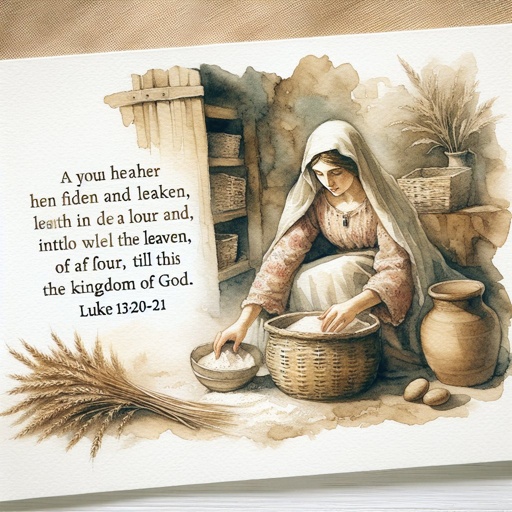
Luke 13:20-21

Luke 13:20-21

Luke 13:20-21

Luke 10:5

Luke 10:5

Luke 8:13

Luke 1:13

Luke 1:13

Luke 8:13

Luke 13:24

Luke 1:13

Luke 8:13

Luke 1:13

Luke 10:5

Luke 1:13

Luke 2:13

Luke 1:13

Luke 5:36

Luke 5:39

Luke 13:13 - "And he laid his hands on her: and immediately she was made straight, and glorified God."

Luke 13:6-9