Leaving It All Behind: The Call to Discipleship
“And he left all, rose up, and followed him.” — Luke 5:28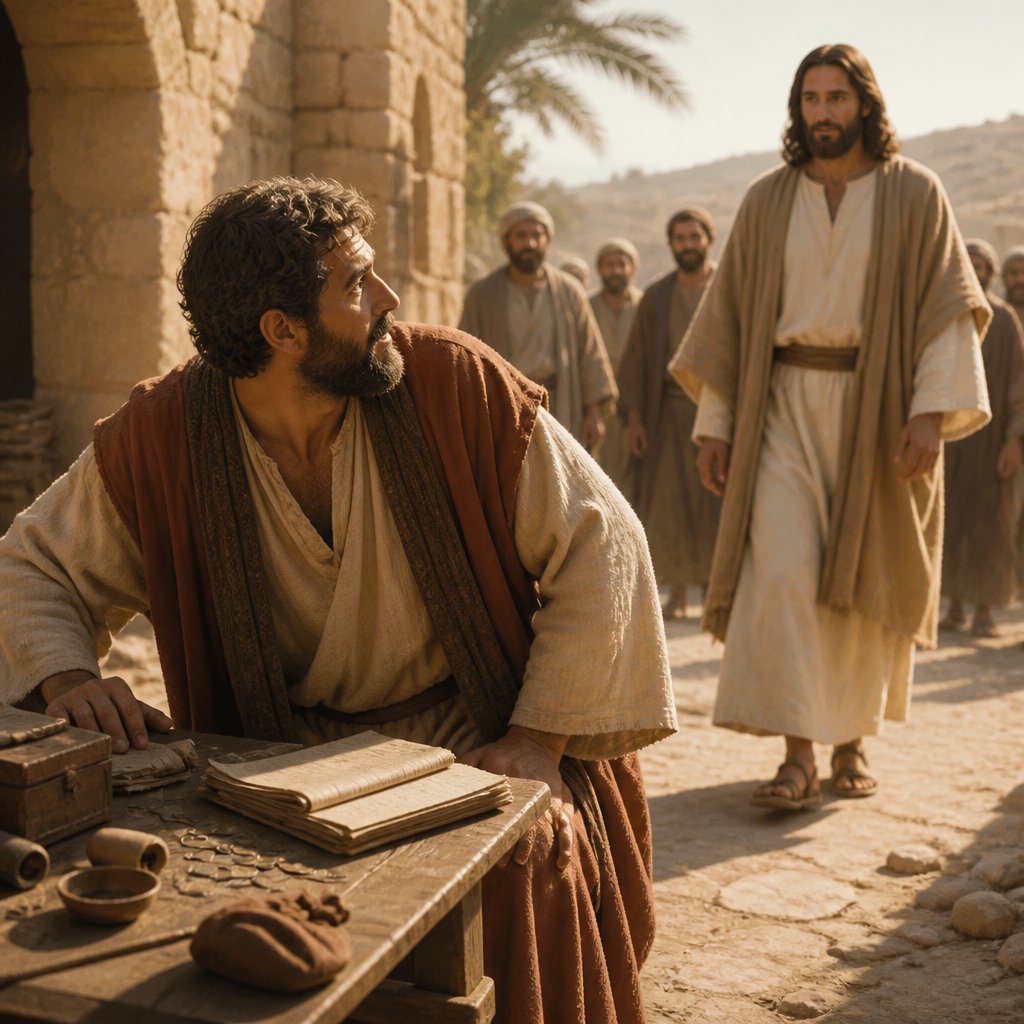
In the account of Luke 5:28, we find a significant moment in the life of Levi, also known as Matthew, a tax collector who encountered Jesus. The verse states, "And he left all, rose up, and followed him." This simplicity of the action belies the profound transformation that occurs in Levi’s life. It serves as a reminder of the radical nature of discipleship that Christ calls each of us to.
### The Weight of Leaving Behind
To truly understand the magnitude of Levi's decision, let us reflect on his profession. During the time of Jesus, tax collectors were not merely office clerks; they were often viewed as traitors and sinners. They collected taxes on behalf of the Roman Empire, which oppressed the Jewish people, and many tax collectors were notorious for extortion and greed. For Levi to leave his lifestyle meant abandoning a lucrative career, societal status, and security. It is important to note that Levi did not linger in hesitation; instead, he immediately left all to follow the Messiah.
What might we be called to leave behind in our own lives? It is vital to examine the 'things' that anchor us to our current lives—perhaps pride, resentment, past mistakes, or even harmful relationships. The call of Jesus compels us to rise up and abandon our comfort zones in pursuit of something far greater. Discipleship often requires a sacrifice, but that sacrifice leads to significant personal growth and divine purpose.
### The Call to Action
When the Scripture says, "he left all, rose up, and followed him," we see a sequence that reflects true discipleship. The act of leaving all is not just a physical abandonment; it also signifies a mental and spiritual shift. Rising up indicates action; it symbolizes readiness and willingness to follow Jesus wherever He leads. For Levi, it was not enough to merely agree with the notion of Jesus; he needed to take concrete action. The same applies to us today. Faith without works is dead; thus, our faith must propel us into action.
As we consider how Levi responded, we must ask ourselves, what does following Jesus look like for us? Are we merely fans of His teachings, or are we committed disciples who take up our cross daily? This call may require us to engage more deeply in our communities, advocate for justice, serve the marginalized, or evangelize to those who have never heard the message of His grace.
### The Reward of Following Jesus
Following Jesus is not without challenges. Levi’s decision did not initially present a life of ease or comfort; instead, it was a call into uncertainty. However, the promise of companionship with Jesus far outweighed any earthly comforts he was leaving behind. In the Gospels, Jesus often reminds His disciples that while the road may be narrow and filled with obstacles, the rewards of following Him—eternal life, peace in the storm, and a role in the advancing Kingdom of God—are immeasurable.
Levi's commitment also ushered in a beautiful legacy. He transitioned from a life entrenched in societal disdain to being one of the twelve apostles, the authors of the Gospel that bears his name. His life became a powerful testimony of grace, redemption, and the transformative power of Jesus. It reveals the truth that no one is too far gone that they cannot be called by Christ; in fact, He often chooses the unlikely to accomplish His purposes.
### Conclusion: The Ongoing Journey
Each of us faces pivotal moments where we must decide whether to follow Jesus wholeheartedly or cling to our pasts. Levi’s response challenges us to reevaluate what it means to be a true disciple. Are we willing to leave our comfort zones and rise up—no matter the cost—to follow Him? The journey begins with a single step of faith, and every moment we choose to place our trust in Jesus, we embark on the greatest adventure of our lives. In leaving all, we gain all; we find purpose, joy, and ultimately, Him.
Get our apps


Artwork for Luke 5:28

Luke 5:28 - "And he left all, rose up, and followed him."
"And he left all, rose up, and followed him." - Luke 5:28

Luke 20:28

Luke 19:28

luke 13:28-37

Luke 13:28-27

Luke 13:28-27

Luke 9:28-45

Luke 13:28-27

luke 13:28-37

luke 5:5

Luke 22:28 - "Ye are they which have continued with me in my temptations."

Luke 4:28 - "And all they in the synagogue, when they heard these things, were filled with wrath,"

John 5:28

John 5:28

John 5:28

Luke 2:28 - "Then took he him up in his arms, and blessed God, and said,"

Luke 10:5

Luke 10:5

Luke 18:28 - "Then Peter said, Lo, we have left all, and followed thee."

Luke 11:28 - "But he said, Yea rather, blessed are they that hear the word of God, and keep it."

Luke 10:5

Jjohn 5:28 Kevin

Luke 6:28 - "Bless them that curse you, and pray for them which despitefully use you."

Luke 17:28 - "Likewise also as it was in the days of Lot; they did eat, they drank, they bought, they sold, they planted, they builded;"

Luke 15:28 - "And he was angry, and would not go in: therefore came his father out, and intreated him."

Luke 19:28 - "¶ And when he had thus spoken, he went before, ascending up to Jerusalem."

Luke 5:36

Luke 5:39

Luke 10:28 - "And he said unto him, Thou hast answered right: this do, and thou shalt live."