Embracing the New: The Call to Renewal and Transformation
“And he spake also a parable unto them; No man putteth a piece of a new garment upon an old; if otherwise, then both the new maketh a rent, and the piece that was taken out of the new agreeth not with the old. And no man putteth new wine into old bottles; else the new wine will burst the bottles, and be spilled, and the bottles shall perish. But new wine must be put into new bottles; and both are preserved. No man also having drunk old wine straightway desireth new: for he saith, The old is better.” — Luke 5:36-39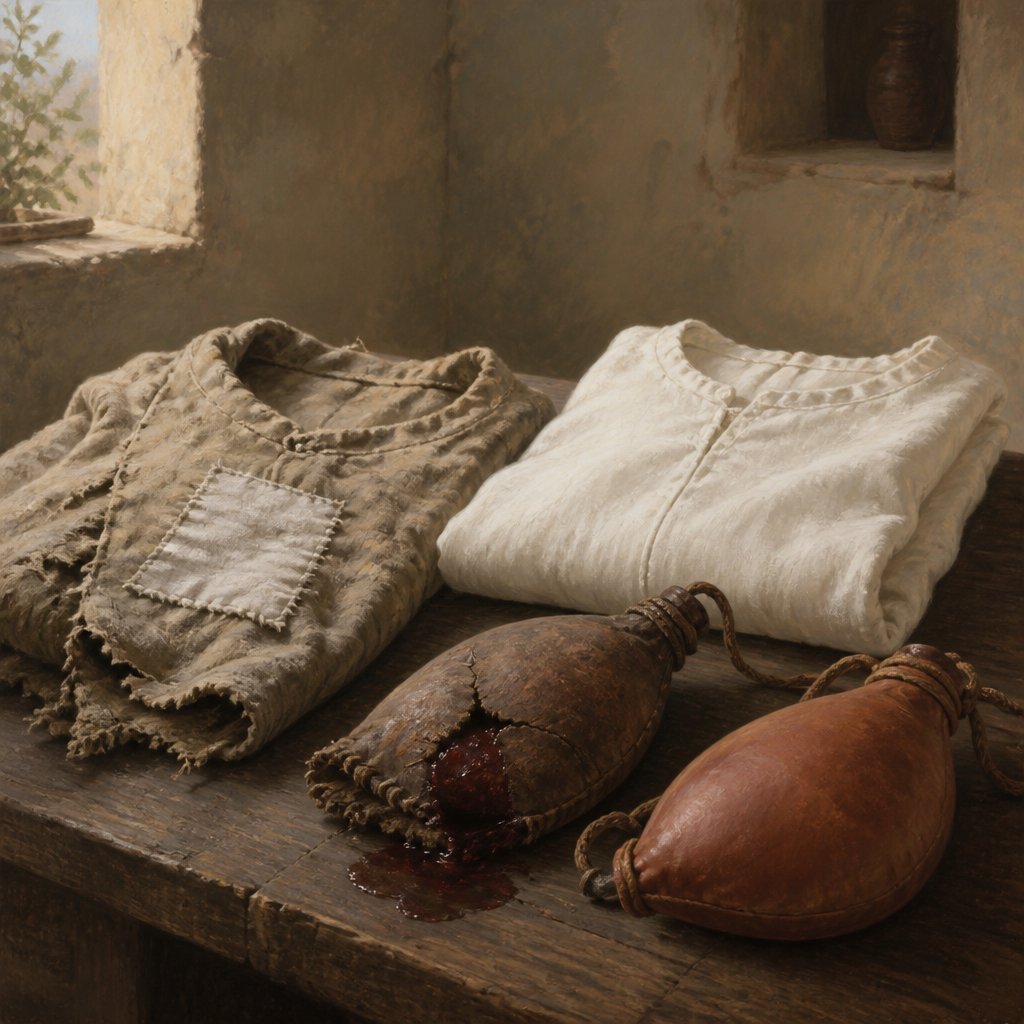
In the Gospel of Luke, Jesus uses two vivid parables to illustrate the profound truth about the relationship between the old and the new, particularly in the context of the Kingdom of God. Luke 5:36-39 (KJV) states, "He also told them a parable: No one tears a piece from a new garment and sews it on an old garment; otherwise the new will be torn, and the piece from the new will not match the old. And no one puts new wine into old wineskins; otherwise the new wine will burst the skins and will be spilled, and the skins will be destroyed. But new wine must be put into fresh wineskins. And no one after drinking old wine desires new wine, but says, The old is good."
These verses invite us to examine our hearts and lives in relation to the new work that God is doing within us and among us. Jesus’ words reveal a fundamental principle: the old and the new cannot merely coexist in a way that preserves both. They demand a deliberate choice—either to embrace what is fresh and transformative or to cling to what is familiar and comfortable.
The metaphor of the new garment and the old garment speaks to the reality of our spiritual lives. The new garment represents the transformative grace of God, the new life that we have in Christ. When we first come to know Jesus, we are enveloped in His righteousness and clothed anew. In contrast, the old garment symbolizes our past life, filled with sin, guilt, and the weariness of conformity to the world.
Imagine trying to patch a worn-out piece of cloth with a fresh, newly made fabric. Not only would the new piece not suit the old wear, but attempting to combine the two would only result in a greater tear. In many ways, this mirrors our battles with the remnants of our past lives. We might want to integrate the newness of Christ into our old ways of thinking, our old habits, or our outdated beliefs. Yet, spiritual renewal cannot coexist with former patterns; it requires a complete overhaul. This is the beauty of being a new creation in Christ—a call to let go, to discard the old, and to be fully engaged with the newness of life that Jesus offers us.
Then, Jesus transitions to the image of new wine and old wineskins. In biblical times, wine was stored in animal skins, which would naturally stretch as the wine fermented and matured. If one were to pour new wine into old wineskins, the skins would not be able to stretch, and as a result, the new wine would burst them, leading to a complete loss of both wine and skins. Here, the new wine symbolizes the freshness of the Holy Spirit's work in our lives, filled with potential and growth. The old wineskins represent the rigid structures of our old ways, which are unable to contain the expansive movement of the Spirit.
This analogy challenges us to consider how we approach our spiritual journeys. Are we willing to allow God to stretch us? Are we open to the new work He desires to do in us, or do we cling to our old comforts? The old ways of thinking and being are safe and familiar, and at times we may resist change, saying, “The old wine is good.” Yet, Jesus invites us into something remarkable—into a life where we experience His transformative power in new and profound ways.
In this season of our lives, we are given a choice: to remain in the old, or to embrace the new. We must examine what Jesus is trying to teach us through His parable. Are we ready to lay down the old, to let go of our past and embrace the new wine that He is pouring out? As we surrender ourselves to God’s work in us, may we find the courage to ask Him to transform our hearts and minds, creating in us vessels that are ready to hold the new things He longs to do.
Let us pray: "Lord, help me to release my grip on the old ways that no longer serve me. Fill me with the new wine of Your Spirit, making me a fresh vessel for Your glory. I long to see the new things You are doing, so guide me in this journey of transformation. Amen."
Get our apps


Artwork for Luke 5:36-39

Luke 5:36-39 - "He also told them a parable: “No one tears a piece from a new garment and sews it on an old garment; otherwise the new will be torn, and the piece from the new will not match the old. And no one puts new wine into old wineskins; otherwise the new wine will burst the skins and will be spilled, and the skins will be destroyed. But new wine must be put into fresh wineskins. And no one after drinking old wine desires new wine, but says, ‘The old is good.’”"
"He also told them a parable: “No one tears a piece from a new garment and sews it on an old garment; otherwise the new will be torn, and the piece from the new will not match the old. And no one puts new wine into old wineskins; otherwise the new wine will burst the skins and will be spilled, and the skins will be destroyed. But new wine must be put into fresh wineskins. And no one after drinking old wine desires new wine, but says, ‘The old is good.’”" - Luke 5:36-39

Luke 5:36

Luke 5:39

Luke 5:39 - "No man also having drunk old wine straightway desireth new: for he saith, The old is better."

Exodus 39:36 - "The table, and all the vessels thereof, and the shewbread,"

Luke 22:39

Luke 1:39

Luke 22:39

"The table, and all the vessels thereof, and the shewbread," - Exodus 39:36

Luke 5:36 - "¶ And he spake also a parable unto them; No man putteth a piece of a new garment upon an old; if otherwise, then both the new maketh a rent, and the piece that was taken out of the new agreeth not with the old."

Luke 1:39 - 45

Luke 11.33-36

"No man also having drunk old wine straightway desireth new: for he saith, The old is better." - Luke 5:39

Luke 7:36-50

Luke 7:36–50

Luke 19:36 - "And as he went, they spread their clothes in the way."

Luke 20:39 - "¶ Then certain of the scribes answering said, Master, thou hast well said."

Luke 1:39 - "And Mary arose in those days, and went into the hill country with haste, into a city of Juda;"

Luke 6:36 - "Be ye therefore merciful, as your Father also is merciful."

Luke 18:36 - "And hearing the multitude pass by, he asked what it meant."
Genesis 36:39 - "And Baal-hanan the son of Achbor died, and Hadar reigned in his stead: and the name of his city was Pau; and his wife's name was Mehetabel, the daughter of Matred, the daughter of Mezahab."

Luke 19:39 - "And some of the Pharisees from among the multitude said unto him, Master, rebuke thy disciples."

Luke 17:36 - "Two men shall be in the field; the one shall be taken, and the other left."

Luke 23:36 - "And the soldiers also mocked him, coming to him, and offering him vinegar,"

Luke 10:39 - "And she had a sister called Mary, which also sat at Jesus' feet, and heard his word."

Luke 23:39 - "¶ And one of the malefactors which were hanged railed on him, saying, If thou be Christ, save thyself and us."

Luke 6:39 - "And he spake a parable unto them, Can the blind lead the blind? shall they not both fall into the ditch?"

Luke 22:39 - "¶ And he came out, and went, as he was wont, to the mount of Olives; and his disciples also followed him."

Luke 2:39 - "And when they had performed all things according to the law of the Lord, they returned into Galilee, to their own city Nazareth."