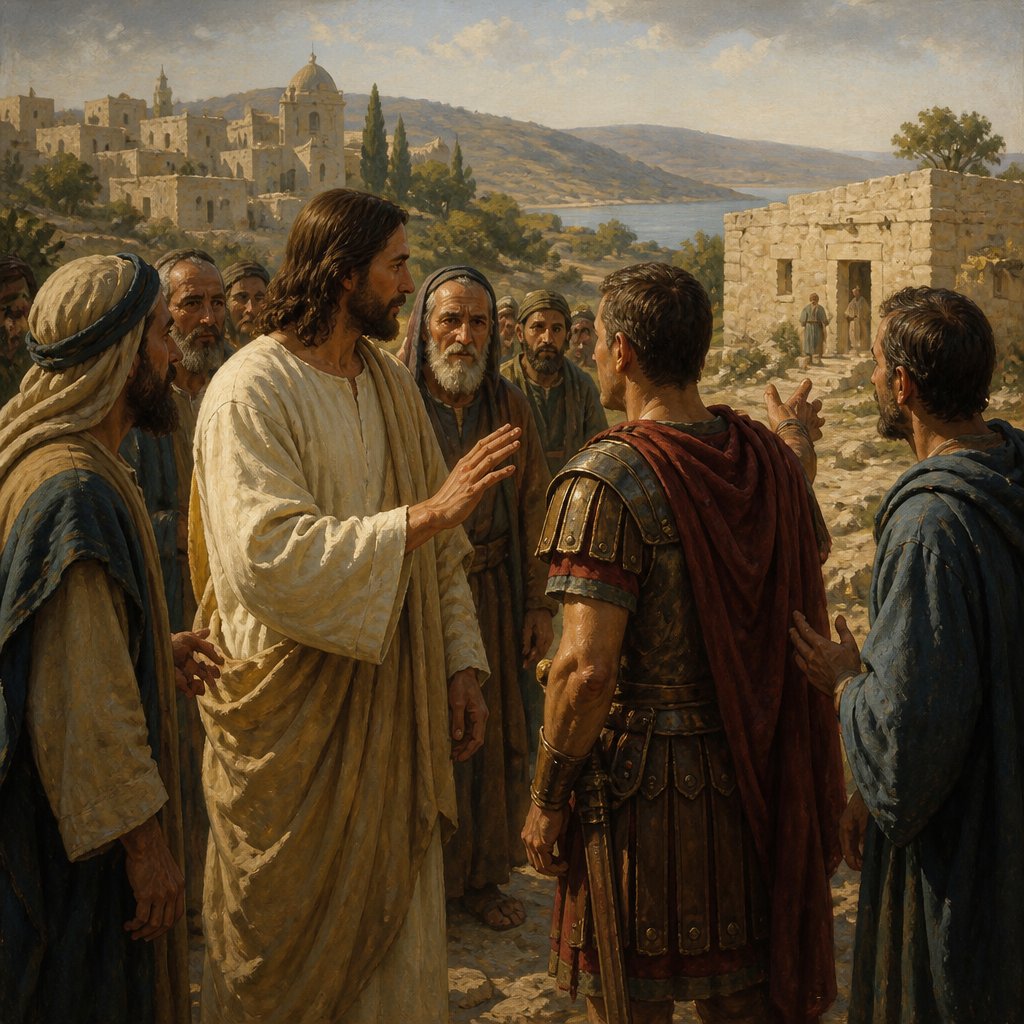
In Luke 7:1-10, we encounter a remarkable narrative that unfolds with layers of faith, humility, and the transformative power of Jesus' authority. The scene is set in Capernaum, where a centurion—a Roman officer—demonstrates an extraordinary understanding of authority and faith, encapsulating the essence of what it means to trust in the power of Christ.
The passage opens with Jesus speaking to the multitude, illustrating His authoritative teachings. After He concludes His discourse, He enters Capernaum, where a situation unfolds—a centurion's servant is gravely ill. Here, we find two key themes: the position of the centurion in society and his deep love for a servant. Even as a man of status, the centurion makes the humble choice to seek help from Jesus. This is significant as it demonstrates that regardless of one's social hierarchy, desperation and love can drive individuals to the truth.
The scripture tells us that upon hearing of Jesus, the centurion sends the elders of the Jews to beseech Jesus to come and heal his servant. His request is notable; he does not make demands but instead delegates authority to those who are esteemed in the Jewish community. The elders appeal to Jesus, stating that the centurion is worthy because he loves their nation and has even built them a synagogue. This sheds light on the reputation the centurion had among the Jews, which likely stemmed from genuine care and generosity, transcending cultural divides.
As Jesus approaches the centurion’s home, the gravity of the centurion’s humility becomes clearer. He sends friends to convey his unworthiness, stating, "Lord, trouble not thyself: for I am not worthy that thou shouldest enter under my roof" (Luke 7:6 KJV). Here lies a powerful statement about humility—the centurion recognizes the holiness of Christ and feels inadequate to have Him in his presence. This moment of self-reflection is an invitation for all believers to examine their own hearts. How often do we allow pride or self-righteousness to cloud our understanding of who God is in relation to us?
The centurion continues with profound faith, asserting that if Jesus merely speaks the word, his servant will be healed. This reflects a deeper understanding of authority: he acknowledges that he himself operates under authority and comprehends the power vested in words.
Jesus’ reaction to the centurion’s faith is striking—“He marvelled at him, and turned him about, and said unto the people that followed him, I say unto you, I have not found so great faith, no, not in Israel” (Luke 7:9 KJV). Here, we grasp that faith isn’t confined to the borders of religious knowledge or ritual but is often found in unexpected places, sometimes even outside the faith community. The centurion’s faith stands as a beacon of hope and a challenge to the complacent believers who may feel entitled to God’s grace.
Finally, the narrative concludes with the emphatic healing of the servant. The friends return to report that the servant was made whole, catalyzing a beautiful affirmation of belief and the results of faith. This miracle showcases that Jesus' authority is supreme, able to transcend distance and circumstance.
In our lives, we frequently find ourselves in positions similar to the centurion—facing challenges beyond our capacity to resolve but holding onto faith that God can act powerfully on our behalf. This scripture invites us to reflect on the nature of our faith: Do we come to God full of entitlement, or do we approach Him with open hands, aware of our unworthiness yet trusting in His power? Let us strive to live with the faith that elicited the amazement of Jesus, aligning our understanding of authority with the profound truth of who God is and what He can do. May we become vessels of faith that not only plea for our needs but also intercede for others with the same humility and grace. Amen.
Get our apps


Artwork for Luke 7:1-10

Luke 7:1-10 “When Jesus had finished saying all this to the people who were listening, he entered Capernaum. There a centurion’s servant, whom his master valued highly, was sick and about to die. The centurion heard of Jesus and sent some elders of the Jews to him, asking him to come and heal his servant. When they came to Jesus, they pleaded earnestly with him, “This man deserves to have you do this, because he loves our nation and has built our synagogue.” So Jesus went with them. He was not far from the house when the centurion sent friends to say to him: “Lord, don’t trouble yourself, for I do not deserve to have you come under my roof. That is why I did not even consider myself worthy to come to you. But say the word, and my servant will be healed. For I myself am a man under authority, with soldiers under me. I tell this one, ‘Go,’ and he goes; and that one, ‘Come,’ and he comes. I say to my servant, ‘Do this,’ and he does it.” When Jesus heard this, he was amazed at him, and turning to the crowd following him, he said, “I tell you, I have not found such great faith even in Israel.” Then the men who had been sent returned to the house and found the servant well.”
"When Jesus had finished saying all this to the people who were listening, he entered Capernaum. There a centurion’s servant, whom his master valued highly, was sick and about to die. The centurion heard of Jesus and sent some elders of the Jews to him, asking him to come and heal his servant. When they came to Jesus, they pleaded earnestly with him, “This man deserves to have you do this, because he loves our nation and has built our synagogue.” So Jesus went with them. He was not far from the house when the centurion sent friends to say to him: “Lord, don’t trouble yourself, for I do not deserve to have you come under my roof. That is why I did not even consider myself worthy to come to you. But say the word, and my servant will be healed. For I myself am a man under authority, with soldiers under me. I tell this one, ‘Go,’ and he goes; and that one, ‘Come,’ and he comes. I say to my servant, ‘Do this,’ and he does it.” When Jesus heard this, he was amazed at him, and turning to the crowd following him, he said, “I tell you, I have not found such great faith even in Israel.” Then the men who had been sent returned to the house and found the servant well." - Luke 7:1-10

Luke 7:1-10 - "When Jesus had finished saying all this to the people who were listening, he entered Capernaum. There a centurion’s servant, whom his master valued highly, was sick and about to die. The centurion heard of Jesus and sent some elders of the Jews to him, asking him to come and heal his servant. When they came to Jesus, they pleaded earnestly with him, “This man deserves to have you do this, because he loves our nation and has built our synagogue.” So Jesus went with them. He was not far from the house when the centurion sent friends to say to him: “Lord, don’t trouble yourself, for I do not deserve to have you come under my roof. That is why I did not even consider myself worthy to come to you. But say the word, and my servant will be healed. For I myself am a man under authority, with soldiers under me. I tell this one, ‘Go,’ and he goes; and that one, ‘Come,’ and he comes. I say to my servant, ‘Do this,’ and he does it.” When Jesus heard this, he was amazed at him, and turning to the crowd following him, he said, “I tell you, I have not found such great faith even in Israel.” Then the men who had been sent returned to the house and found the servant well."

Luke 7:1 - "Now when he had ended all his sayings in the audience of the people, he entered into Capernaum."

Luke 19:1-10

Luke 19:1-10

Luke 7:10 - "And they that were sent, returning to the house, found the servant whole that had been sick."

Luke 7:50

Luke 7:50

Luke 15: 4-7

Luke 10:7 - "And in the same house remain, eating and drinking such things as they give: for the labourer is worthy of his hire. Go not from house to house."

"Now when he had ended all his sayings in the audience of the people, he entered into Capernaum." - Luke 7:1

Luke 1:10 - "And the whole multitude of the people were praying without at the time of incense."

Exodus 7:10

Daniel 7: 9-10

Daniel 7:9-10

Daniel 7:9-10

Daniel 7:9-10

Luke 1:7 - "And they had no child, because that Elisabeth was barren, and they both were now well stricken in years."

"And they that were sent, returning to the house, found the servant whole that had been sick." - Luke 7:10

Luke 8:7 - "And some fell among thorns; and the thorns sprang up with it, and choked it.

Exodus 7:10 Aaron’s staff eating pharaoh’s serpents

Luke 10:5

Luke 10:5

Luke 10:5

"And the whole multitude of the people were praying without at the time of incense." - Luke 1:10

Luke 10:18-19

Luke 10:18-19

Luke 10:18-19

Luke 10:17-19