Resurrection Hope: Life From the Dead
“And he that was dead sat up, and began to speak. And he delivered him to his mother.” — Luke 7:15
In the Gospel of Luke, chapter 7, we encounter one of the most poignant miracles performed by Jesus during His earthly ministry. The scripture states, "And he that was dead sat up, and began to speak. And he delivered him to his mother" (Luke 7:15 KJV). This profound moment unfolds as Jesus approaches the city of Nain, where a widow’s only son has just died, and the accompanying procession starkly illustrates the despair of loss.
This passage speaks volumes about not just the miracle itself, but also the compassionate heart of our Savior. The widow was not merely grieving the loss of her son; she was facing a future without her sole provider and protector. In the cultural context of that time, a widow was often left in a precarious position once she lost her husband and sons. The death of her son meant profound grief and uncertainty, a double tragedy that no mother should have to face.
As Jesus approaches the sorrowful scene, His first act is one of deep compassion. The scripture tells us that He saw her and was moved with compassion, saying, "Weep not." This statement, though simple, is filled with profound implications. Jesus did not come to criticize her grief; He understood it deeply. He acknowledged that loss could overwhelm the human spirit, yet in the face of despair, He offered comfort. This genius of Jesus—His ability to enter into our grief and affirm our pain—is crucial for us to grasp. In our times of sorrow, when we feel as if we are left alone to face our despair, we must remember that Christ is not indifferent to our pain. He weeps with us, and He assures us in His presence that our deepest cries do not go unheard.
Then we witness the most astonishing part of this narrative: the restoration of life. There is something supremely powerful about resurrection. It speaks of hope where hope seems lost, light where darkness prevails, and life where death reigns. When Jesus commands the boy to arise, He is not just performing a miracle; He is unveiling the very nature of God—He is life, and He has the authority over death. In this moment, we see that no dead situation is beyond His redemptive power.
The response of the crowd surrounding the mournful widow is telling: "And fear came upon all: and they glorified God, saying, That a great prophet is risen up among us; and, That God hath visited his people" (Luke 7:16 KJV). Fear, awe, and reverence arise as they witness divine intervention. It is essential that we, too, recognize the awe-inspiring nature of God’s work. When Jesus intervenes in our lives, it calls us to glorify Him, to recognize His authority and compassion, and to respond with gratitude.
Moreover, the symbolism here runs deeper than physical resurrection. It invites us to consider the areas of our lives that may feel 'dead'—dreams that have faltered, relationships that have become strained, or our spiritual fervor that may feel extinguished. Jesus came to set these parts of us aright. The phrase "sat up, and began to speak" suggests that revival brings not only back to life but also back to purpose. Something that was once silent now has a voice.
As we sit with this passage, let us reflect: Are there areas of our lives where we need resurrection? Do we believe that Jesus can invoke life in what feels dormant? There is a promise in this narrative that resonates within the hearts of believers—to those who hope and trust in God, He can bring vitality where there was once despair.
Today, let us approach Jesus with our mourning and our dead hopes, trusting that He can resurrect them. May we, like the widow’s son, rise to proclaim His goodness, carrying our renewed lives for others to see. And with every breath we take, let us be reminded of His power to restore, redeem, and revitalize us, delivering us into new beginnings.
Get our apps


Artwork for Luke 7:15

Luke 7:15 - "And he that was dead sat up, and began to speak. And he delivered him to his mother."

"And he that was dead sat up, and began to speak. And he delivered him to his mother." - Luke 7:15

Luke 15: 4-7

Luke 15:7 - "I say unto you, that likewise joy shall be in heaven over one sinner that repenteth, more than over ninety and nine just persons, which need no repentance."
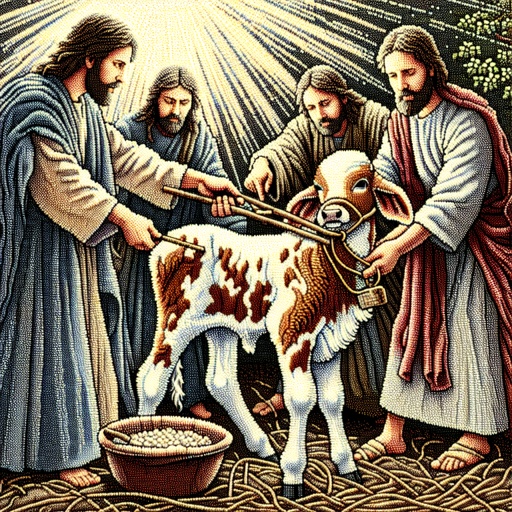
Luke 15:23

Luke 15:10

Luke 15:21

Luke 15:21

Luke 11:14-15

Luke 21:15-19

Luke 15:11-32

Luke 7:33

Luke 7:50

Luke 7:50

Luke 15:15 - "And he went and joined himself to a citizen of that country; and he sent him into his fields to feed swine."

John 15:7

Luke 4:15 - "And he taught in their synagogues, being glorified of all."

Luke 15:3 - "¶ And he spake this parable unto them, saying,"

Luke 7:36-50

John 15:7

Luke 7:41-47

Luke 7:36–50

Luke 15:11 - "¶ And he said, A certain man had two sons:"

Luke 9:15 - "And they did so, and made them all sit down."

Luke 20:7 - "And they answered, that they could not tell whence it was."

Luke 6:15 - "Matthew and Thomas, James the son of Alphaeus, and Simon called Zelotes,"

Luke 15:26 - "And he called one of the servants, and asked what these things meant."

Luke 7:35 - "But wisdom is justified of all her children."

Luke 15:2 - "And the Pharisees and scribes murmured, saying, This man receiveth sinners, and eateth with them."

Luke 15:23 - "And bring hither the fatted calf, and kill it; and let us eat, and be merry:"