One Father, One Covenant: Understanding Our Divine Heritage
“Have we not all one father? hath not one God created us? why do we deal treacherously every man against his brother, by profaning the covenant of our fathers?” — Malachi 2:10
The book of Malachi is a profound reflection on the relationship between God and His people, addressing issues of worship, fidelity, and community integrity. In Malachi 2:10, we encounter a poignant question: "Have we not all one father? hath not one God created us? why do we deal treacherously every man against his brother, by profaning the covenant of our fathers?" This verse serves as a powerful reminder of our shared origins and responsibilities toward one another.
At the heart of Malachi’s inquiry is the notion of a shared spiritual lineage. The phrase "one father" suggests not only our biological ties but also reflects the familial connection we have under the fatherhood of God. When we recognize that we all come from the same source, the implications for how we treat one another are profound. We are brothers and sisters in faith, called to extend love, grace, and mercy toward those who share this divine heritage with us.
Moreover, Malachi highlights that it's one God who has created us. This acknowledgment invokes the love and intention of God in crafting humanity. In Genesis, we see the creation narrative where God formed man from the dust and breathed life into him. This act of creation signifies the unique, precious nature of life bestowed upon us; thus, when we interact with each other, we engage with God’s handiwork. When we mistreat or act treacherously toward one another, we tarnish that sacred image inherent in every individual.
The verse further challenges the behavior of the people: "why do we deal treacherously every man against his brother?" It exposes a heartbreaking reality—despite our shared fatherhood and divine creation, there is a tendency to act treacherously against one another. The term "treacherously" indicates betrayal, infidelity, and a grievous breach of trust. It raises the question of integrity in relationships, especially in a covenantal context. To profane the covenant of our fathers is to disregard the sacred promises and commitments made amongst us, not only to God but also to each other.
Covenant, in the biblical sense, is a binding agreement of mutual commitment and fidelity. In the context of Israel, this covenant included not only the agreement with God but also the collective responsibility among the community. In modern terms, it translates into our responsibility to uphold truth, kindness, and justice in our interpersonal relationships. Each time we fall into gossip, bitterness, or hatred towards a brother or sister, we stray further from the covenant of love that encapsulates our spiritual heritage.
As we reflect upon this text, it beckons a serious examination of our behavior towards others. Are we operating with a mindset of unity, or are we participating in treachery? The reality is that the divisions we see in our world today—be they racial, social, or economic—often stem from forgetting that we have one Father who loves us all. God desires for us to walk in harmony with one another; to bridge divides with love, compassion, and understanding.
Maintaining a covenantal approach requires intentionality. It involves choosing forgiveness over grudges, reconciliation over resentment, and peace over conflict. How beautiful it would be if every follower of Christ embraced their identity as a child of the same Father and championed unity over division, understanding that our relational choices directly reflect our relationship with God.
In conclusion, Malachi 2:10 challenges us to remember our divine parentage and to act accordingly. Let us strive to break down the barriers that lead to divisiveness and instead emulate the love of our Heavenly Father by treating each other with dignity and respect—as brothers and sisters united under the one God who created us all.
Get our apps


Artwork for Malachi 2:10

Malachi 2:10 - "Have we not all one father? hath not one God created us? why do we deal treacherously every man against his brother, by profaning the covenant of our fathers?"

"Have we not all one father? hath not one God created us? why do we deal treacherously every man against his brother, by profaning the covenant of our fathers?" - Malachi 2:10

Malachi 2:1 - "And now, O ye priests, this commandment is for you."

"Bring ye all the tithes into the storehouse, that there may be meat in mine house, and prove me now herewith, saith the LORD of hosts, if I will not open you the windows of heaven, and pour you out a blessing, that there shall not be room enough to receive it." - Malachi 3:10
!["Bring ye all the tithes into the storehouse, that there may be meat in mine house, and prove me now herewith, saith the LORD of hosts, if I will not open you the windows of heaven, and pour you out a blessing, that [there shall] not [be room] enough [to receive it]." - Malachi 3:10](https://media.bible.art/1e27a872-9f2f-4554-aa9f-4e2ef3765c6c-thumbnail.jpg)
"Bring ye all the tithes into the storehouse, that there may be meat in mine house, and prove me now herewith, saith the LORD of hosts, if I will not open you the windows of heaven, and pour you out a blessing, that [there shall] not [be room] enough [to receive it]." - Malachi 3:10

"And now, O ye priests, this commandment is for you." - Malachi 2:1

Malachi 2:7 - "For the priest's lips should keep knowledge, and they should seek the law at his mouth: for he is the messenger of the LORD of hosts."

Malachi 2:4 - "And ye shall know that I have sent this commandment unto you, that my covenant might be with Levi, saith the LORD of hosts."

Malachi 2:12 - "The LORD will cut off the man that doeth this, the master and the scholar, out of the tabernacles of Jacob, and him that offereth an offering unto the LORD of hosts."

Malachi 2:5 - "My covenant was with him of life and peace; and I gave them to him for the fear wherewith he feared me, and was afraid before my name."

Malachi 2:6 - "The law of truth was in his mouth, and iniquity was not found in his lips: he walked with me in peace and equity, and did turn many away from iniquity."

Malachi 3:2 - "But who may abide the day of his coming? and who shall stand when he appeareth? for he is like a refiner's fire, and like fullers' sope:"

Malachi 2:8 - "But ye are departed out of the way; ye have caused many to stumble at the law; ye have corrupted the covenant of Levi, saith the LORD of hosts."

Malachi 4:2 - "¶ But unto you that fear my name shall the Sun of righteousness arise with healing in his wings; and ye shall go forth, and grow up as calves of the stall."

Malachi 2:3 - "Behold, I will corrupt your seed, and spread dung upon your faces, even the dung of your solemn feasts; and one shall take you away with it."

Malachi 3:10 - "Bring ye all the tithes into the storehouse, that there may be meat in mine house, and prove me now herewith, saith the LORD of hosts, if I will not open you the windows of heaven, and pour you out a blessing, that there shall not be room enough to receive it."
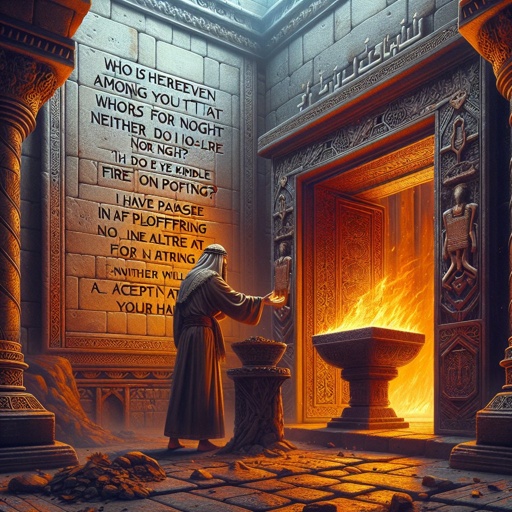
Malachi 1:10 - "Who is there even among you that would shut the doors for nought? neither do ye kindle fire on mine altar for nought. I have no pleasure in you, saith the LORD of hosts, neither will I accept an offering at your hand."

Malachi 2:13 - "And this have ye done again, covering the altar of the LORD with tears, with weeping, and with crying out, insomuch that he regardeth not the offering any more, or receiveth it with good will at your hand."

Malachi 2:9 - "Therefore have I also made you contemptible and base before all the people, according as ye have not kept my ways, but have been partial in the law."

Malachi 2:11 - "¶ Judah hath dealt treacherously, and an abomination is committed in Israel and in Jerusalem; for Judah hath profaned the holiness of the LORD which he loved, and hath married the daughter of a strange god."

Malachi 2: For Judah has profaned The Lord’s holy institution which He loves: He has married the daughter of a foreign god.

Malachi 2:16 - "For the LORD, the God of Israel, saith that he hateth putting away: for one covereth violence with his garment, saith the LORD of hosts: therefore take heed to your spirit, that ye deal not treacherously."

Malachi 1:2 - "I have loved you, saith the LORD. Yet ye say, Wherein hast thou loved us? Was not Esau Jacob's brother? saith the LORD: yet I loved Jacob,"

Malachi 2:14 - "¶ Yet ye say, Wherefore? Because the LORD hath been witness between thee and the wife of thy youth, against whom thou hast dealt treacherously: yet is she thy companion, and the wife of thy covenant."

Malachi 2:2 - "If ye will not hear, and if ye will not lay it to heart, to give glory unto my name, saith the LORD of hosts, I will even send a curse upon you, and I will curse your blessings: yea, I have cursed them already, because ye do not lay it to heart."

Malachi 2:15 - "And did not he make one? Yet had he the residue of the spirit. And wherefore one? That he might seek a godly seed. Therefore take heed to your spirit, and let none deal treacherously against the wife of his youth."

Malachi 2: 2 If you will not hear, And if you will not take it to heart, To give glory to My name,” Says the Lord of hosts, “I will send a curse upon you, And I will curse your blessings. Yes, I have cursed them already, Because you do not take it to heart.

Malachi 2:17 - "¶ Ye have wearied the LORD with your words. Yet ye say, Wherein have we wearied him? When ye say, Every one that doeth evil is good in the sight of the LORD, and he delighteth in them; or, Where is the God of judgment?"

Malachi 2: 13 And this is the second thing you do: You cover the altar of the Lord with tears, With weeping and crying; So He does not regard the offering anymore, Nor receive it with goodwill from your hands.
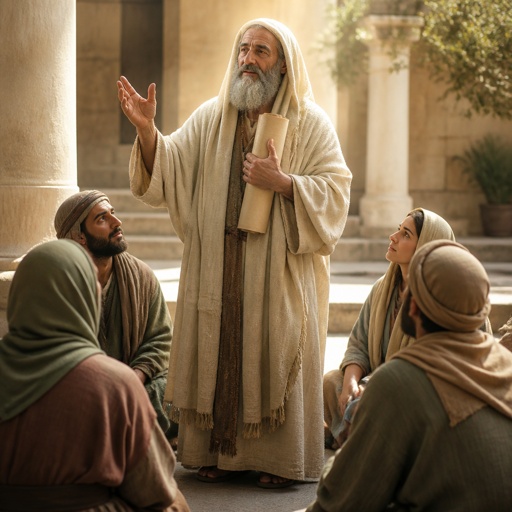
"For the priest's lips should keep knowledge, and they should seek the law at his mouth: for he is the messenger of the LORD of hosts." - Malachi 2:7