Tears at the Altar: Understanding True Repentance
“And this have ye done again, covering the altar of the LORD with tears, with weeping, and with crying out, insomuch that he regardeth not the offering any more, or receiveth it with good will at your hand.” — Malachi 2:13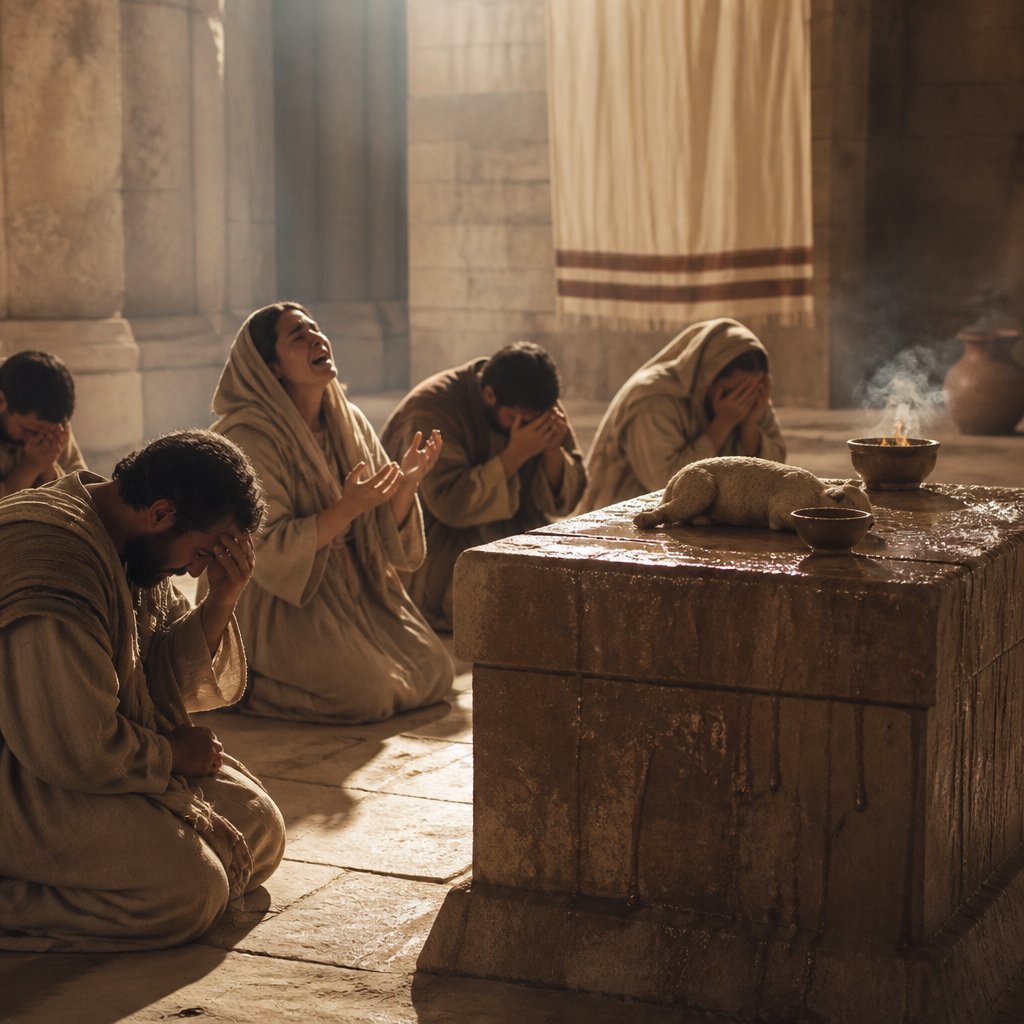
In the book of Malachi, chapter 2, verse 13, we read, "And this have ye done again, covering the altar of the LORD with tears, with weeping, and with crying out, insomuch that he regardeth not the offering any more, or receiveth it with good will at your hand" (KJV). This poignant verse reveals a significant spiritual condition among the people of Israel at the time of Malachi’s prophecy. As we explore the depths of this scripture, we can glean profound lessons on the nature of sincere worship, the importance of true repentance, and the character of God.
Firstly, it’s crucial to understand the context of Malachi’s message. The prophet sought to address the spiritual apathy and corruption prevalent among the priests and the people of Israel. They were performing their religious duties but failing to do so with the right heart. Their offerings were tainted with insincerity, and their worship became a mere formality—a ritual devoid of genuine devotion and respect for God. In their attempts to connect with God, they resorted to outward displays of sorrow: tears, weeping, and cries at the altar. However, despite this outward appearance of emotional engagement, their hearts were far from Him.
This verse illustrates a profound truth: God desires authenticity over appearance. The people thought that by physically showing their sorrow—crying and weeping at the altar—they could manipulate God into accepting their offerings. Yet, God saw straight through their charade. He did not regard their offerings because their hearts were not aligned with His will. The phrase "he regardeth not the offering any more" captures the weight of this realization. It serves as a somber reminder that God does not merely look at our actions; He examines the heart behind those actions. As we present our worship, prayers, and offerings, we must seek to ensure that they are rooted in a sincere desire to honor God.
In applying this verse to our lives today, we are called to reflect on our own relationship with God. Are we engaged in a sincere communion with Him, or are we merely going through the motions? Perhaps you find yourself in a place where you go to church, participate in activities, and even pray daily, but lack a deep emotional and spiritual connection with your Creator. God is inviting us to examine our hearts. He wants us to approach Him with humility, honesty, and authenticity.
Moreover, Malachi's words remind us of the importance of true repentance. The act of crying out at the altar symbolizes a desire for reconciliation, yet, God desires more than just tears for a moment. He seeks a change of heart—a transformation that leads to righteous living. In the New Testament, this concept is echoed in 2 Corinthians 7:10, which states, "For godly sorrow worketh repentance to salvation not to be repented of: but the sorrow of the world worketh death." True repentance leads us to a change of direction and an honest return to God, recognizing our failures, confessing our sins, and genuinely desiring to turn away from them.
As we contemplate Malachi 2:13, let us engage in self-examination. Are we covering the altar of our lives with mere tears, or are we offering God true repentance? It is not enough to feel remorse; we must take actionable steps toward transformation. Let us pray for hearts that break for what breaks God's heart and for a deep desire to seek His face rather than His favor through outward appearances.
In conclusion, Malachi 2:13 beckons us to move past superficial expressions of distress and toward sincere repentance and relationship with God. May we strive to present not just our offerings but our hearts—fully exposed, vulnerable, and open for God to cultivate a deeper communion with Him. As we do so, we can trust that God will receive us with goodwill, for His love is ever ready to embrace those who come to Him with a contrite spirit.
Get our apps


Artwork for Malachi 2:13

Malachi 2:13 - "And this have ye done again, covering the altar of the LORD with tears, with weeping, and with crying out, insomuch that he regardeth not the offering any more, or receiveth it with good will at your hand."

Malachi 2: 13 And this is the second thing you do: You cover the altar of the Lord with tears, With weeping and crying; So He does not regard the offering anymore, Nor receive it with goodwill from your hands.
"And this have ye done again, covering the altar of the LORD with tears, with weeping, and with crying out, insomuch that he regardeth not the offering any more, or receiveth it with good will at your hand." - Malachi 2:13

Malachi 2:1 - "And now, O ye priests, this commandment is for you."

Malachi 3:13 - "¶ Your words have been stout against me, saith the LORD. Yet ye say, What have we spoken so much against thee?"

"And now, O ye priests, this commandment is for you." - Malachi 2:1

Malachi 2:7 - "For the priest's lips should keep knowledge, and they should seek the law at his mouth: for he is the messenger of the LORD of hosts."

Malachi 2:4 - "And ye shall know that I have sent this commandment unto you, that my covenant might be with Levi, saith the LORD of hosts."

Malachi 2:12 - "The LORD will cut off the man that doeth this, the master and the scholar, out of the tabernacles of Jacob, and him that offereth an offering unto the LORD of hosts."

Malachi 2:5 - "My covenant was with him of life and peace; and I gave them to him for the fear wherewith he feared me, and was afraid before my name."

Malachi 3:13 “Your words have been harsh against Me,” Says the LORD, “Yet you say, ‘What have we spoken against You?’

Malachi 2:6 - "The law of truth was in his mouth, and iniquity was not found in his lips: he walked with me in peace and equity, and did turn many away from iniquity."

Malachi 3:2 - "But who may abide the day of his coming? and who shall stand when he appeareth? for he is like a refiner's fire, and like fullers' sope:"

Malachi 2:8 - "But ye are departed out of the way; ye have caused many to stumble at the law; ye have corrupted the covenant of Levi, saith the LORD of hosts."

Malachi 4:2 - "¶ But unto you that fear my name shall the Sun of righteousness arise with healing in his wings; and ye shall go forth, and grow up as calves of the stall."

Malachi 2:3 - "Behold, I will corrupt your seed, and spread dung upon your faces, even the dung of your solemn feasts; and one shall take you away with it."

Malachi 1:13 - "Ye said also, Behold, what a weariness is it! and ye have snuffed at it, saith the LORD of hosts; and ye brought that which was torn, and the lame, and the sick; thus ye brought an offering: should I accept this of your hand? saith the LORD."

Malachi 2:9 - "Therefore have I also made you contemptible and base before all the people, according as ye have not kept my ways, but have been partial in the law."

Malachi 2:11 - "¶ Judah hath dealt treacherously, and an abomination is committed in Israel and in Jerusalem; for Judah hath profaned the holiness of the LORD which he loved, and hath married the daughter of a strange god."

Malachi 2: For Judah has profaned The Lord’s holy institution which He loves: He has married the daughter of a foreign god.

Malachi 2:10 - "Have we not all one father? hath not one God created us? why do we deal treacherously every man against his brother, by profaning the covenant of our fathers?"

Malachi 2:16 - "For the LORD, the God of Israel, saith that he hateth putting away: for one covereth violence with his garment, saith the LORD of hosts: therefore take heed to your spirit, that ye deal not treacherously."

Malachi 1:2 - "I have loved you, saith the LORD. Yet ye say, Wherein hast thou loved us? Was not Esau Jacob's brother? saith the LORD: yet I loved Jacob,"

Malachi 2:14 - "¶ Yet ye say, Wherefore? Because the LORD hath been witness between thee and the wife of thy youth, against whom thou hast dealt treacherously: yet is she thy companion, and the wife of thy covenant."

Malachi 2:2 - "If ye will not hear, and if ye will not lay it to heart, to give glory unto my name, saith the LORD of hosts, I will even send a curse upon you, and I will curse your blessings: yea, I have cursed them already, because ye do not lay it to heart."

Malachi 2:15 - "And did not he make one? Yet had he the residue of the spirit. And wherefore one? That he might seek a godly seed. Therefore take heed to your spirit, and let none deal treacherously against the wife of his youth."

Malachi 2: 2 If you will not hear, And if you will not take it to heart, To give glory to My name,” Says the Lord of hosts, “I will send a curse upon you, And I will curse your blessings. Yes, I have cursed them already, Because you do not take it to heart.

Malachi 2:17 - "¶ Ye have wearied the LORD with your words. Yet ye say, Wherein have we wearied him? When ye say, Every one that doeth evil is good in the sight of the LORD, and he delighteth in them; or, Where is the God of judgment?"

"For the priest's lips should keep knowledge, and they should seek the law at his mouth: for he is the messenger of the LORD of hosts." - Malachi 2:7

"¶ Your words have been stout against me, saith the LORD. Yet ye say, What have we spoken so much against thee?" - Malachi 3:13