Casting Aside Our Garments: A Call to Bold Faith
“And he, casting away his garment, rose, and came to Jesus.” — Mark 10:50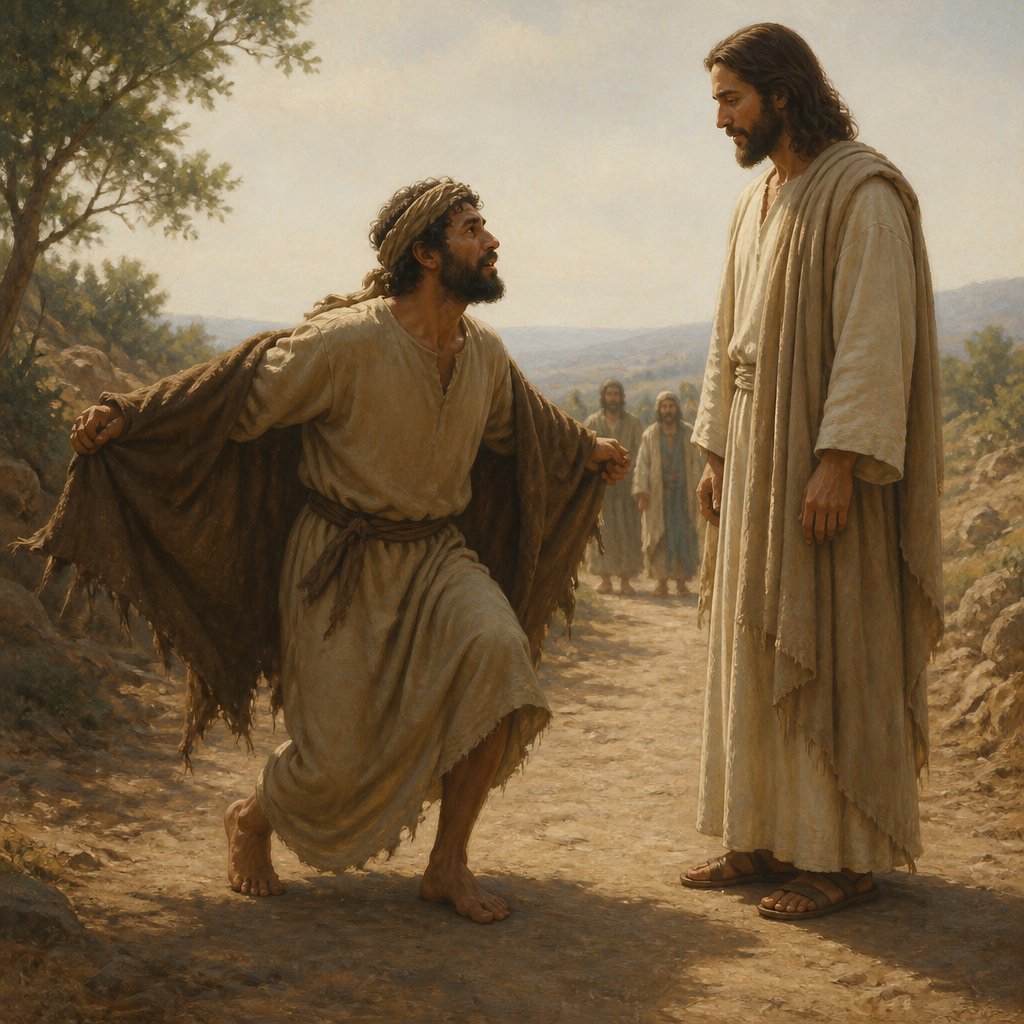
In Mark 10:50, we encounter a powerful moment in the narrative of Bartimaeus, the blind beggar. King James Version states, "And he, casting away his garment, rose, and came to Jesus." This brief statement carries profound implications for our lives today. As we delve into this verse, let us explore the significance of Bartimaeus’ actions and what it means for us to cast aside anything that hinders our pursuit of Jesus.
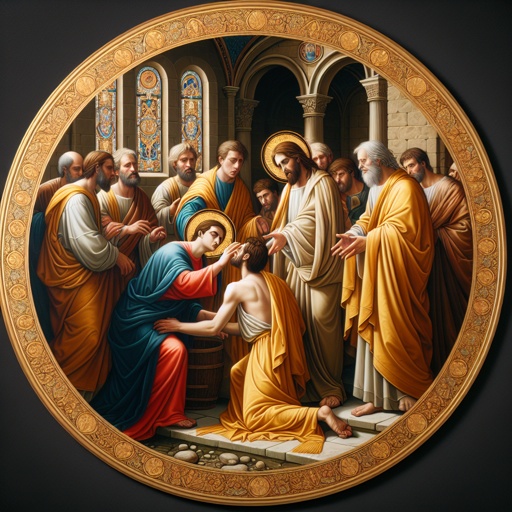
To understand the weight of this moment, we must recognize the cultural context of Bartimaeus' garment. In ancient Israel, a beggar’s cloak served multiple purposes. It was not only a means of warmth and protection but also a symbol of their status. This cloak represented Bartimaeus's identity and life circumstances; it was a visible sign of his blindness, poverty, and societal rejection. Yet when he hears that Jesus of Nazareth is passing by, something ignites within him. He cries out for mercy, and instead of clinging to his past and all that it represents, he takes the audacious step of casting aside his garment.
This act of casting aside his garment is packed with meaning. First, it symbolizes a break from his previous life—his identity as a blind beggar. Bartimaeus understands that to approach Jesus, he cannot carry the weight of his past. It is a radical act of faith; he chooses to leave behind his comfort zone and embrace the uncertain path that lies ahead of him. This is a profound lesson for all of us: in order to pursue Jesus fully, we must also be willing to cast aside the burdens, identities, and comforts that define us and hold us back.
In our own lives, what garments are we clinging to? What aspects of our past or present identity have we allowed to define us? We may hold onto titles, traumas, failures, or even relationships that do not reflect who we are in Christ. God calls us to rise up and cast aside these garments as Bartimaeus did. The act of discarding those ill-fitting garments serves as an act of faith, allowing us to leave behind our limitations. We embrace the newness of life that comes with following Jesus, who offers healing, redemption, and transformation.
Moreover, when Bartimaeus casts away his garment, it also indicates a profound sense of urgency and desperation. He rises without hesitation, motivated by his faith that Jesus can heal him. Imagine the scene! The crowd is moving, he’s hearing only echoes of hope, and he feels this is his moment. Bartimaeus does not allow fear or doubt to deter him. How often do we allow an uncertain future to hold us back from coming to Christ? The enemy often uses our insecurities to keep us from experiencing God’s fullness. But like Bartimaeus, we must rise above our hesitations, believing that Jesus is the answer to our deepest needs.
Finally, the verse culminates in Bartimaeus ' coming to Jesus.' This act of coming signifies not merely physical movement but also a spiritual awakening. He approaches Christ, not as a beggar, but as a man of faith seeking restoration. The call to come to Jesus is extended to us daily. He invites us into a relationship, a walk of faith that demands courage and boldness; we must be willing to rise and move toward Him, welcoming His transformative power.
Reflecting on Mark 10:50 leads us to consider the beauty of faith in action. Let us ask ourselves: are we willing to cast away our garments and rise? Are we ready to approach Jesus with all our needs, trusting in His ability to restore us fully? As we engage in this journey of faith, may we ever remember Bartimaeus, whose radical act of faith changed his life forever and serves as a timeless example of the transformative power of coming to Jesus.
Get our apps


Artwork for Mark 10:50

Mark 10:50 - "And he, casting away his garment, rose, and came to Jesus."
"And he, casting away his garment, rose, and came to Jesus." - Mark 10:50

Mark 14:50 - "And they all forsook him, and fled."

"And they all forsook him, and fled." - Mark 14:50

Mark 6:50 - "For they all saw him, and were troubled. And immediately he talked with them, and saith unto them, Be of good cheer: it is I; be not afraid."

Mark 9:50 - "Salt is good: but if the salt have lost his saltness, wherewith will ye season it? Have salt in yourselves, and have peace one with another."

Psalms 50:10 - "For every beast of the forest is mine, and the cattle upon a thousand hills."

Jeremiah 50:10 - "And Chaldea shall be a spoil: all that spoil her shall be satisfied, saith the LORD."

Mark 10
Mark 10
Mark 10
Mark 10

Mark 2:10
Mark 10:46

Mark 10:31

Mark 10:10 - "And in the house his disciples asked him again of the same matter."
Mark 10:46

Mark 10:46

"For every beast of the forest is mine, and the cattle upon a thousand hills." - Psalms 50:10

So, throwing off his cloak, Bartimaeus jumped up and went to Jesus. (Mk 10:50)

Mark 9:50 “Salt is good. But suppose it loses its saltiness. How can you make it salty again? Have salt among yourselves. And be at peace with each other.”

Mark 10:35-45

Mark 10:17-30

Mark 10:35-45

Mark 10:13–16

Mark 9:50 “Salt is good. But suppose it loses its saltiness. How can you make it salty again? Have salt among yourselves. And be at peace with each other.”

Mark 9:50 “Salt is good. But suppose it loses its saltiness. How can you make it salty again? Have salt among yourselves. And be at peace with each other.”

Mark 10:17-30

Mark 10:35-45

Mark 10:35-45