The Divine Balance: Render Unto God and Caesar
“And Jesus answering said unto them, Render to Cæsar the things that are Cæsar’s, and to God the things that are God’s. And they marvelled at him.” — Mark 12:17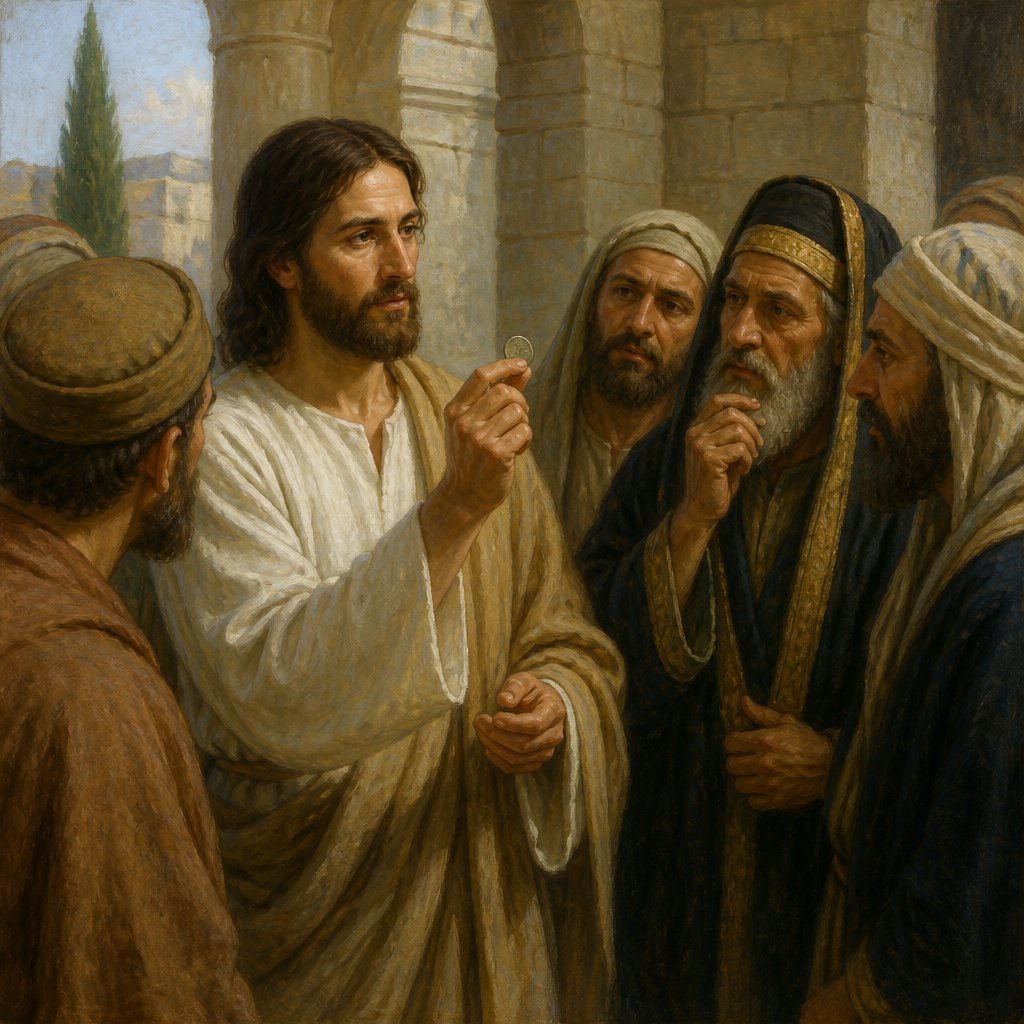
In the bustling streets of Jerusalem, in a time of political strife and religious tension, Jesus was approached by a group of Pharisees and Herodians. They sought to trap Him with a question that was designed to draw Him into a conflict with either the Roman authorities or the Jewish law. The question was deceptively simple, yet it bore the weight of a complex argument about authority, allegiance, and fidelity. They asked Him if it was lawful to give tribute to Caesar, or not? (Mark 12:14) This question was laden with the expectation of a divisive answer. Would He side with the Roman oppressors or the Jewish people longing for independence?
In response, Jesus stated, "Render to Caesar the things that are Caesar's, and to God the things that are God's" (Mark 12:17, KJV). This profound declaration cuts through the intricacies of both religious obligation and civil duty, revealing an important truth: our responsibilities in a secular world do not absolve us of our higher responsibilities to God.
To understand the depth of Jesus’ statement, we must first examine the context in which it was given. The Jewish people were under Roman occupation, grappling with the complexities of maintaining their religious identity while being subjected to foreign rule. Taxes to Caesar represented not just a financial obligation; they were symbols of oppression, causing the Jewish people to wrestle with the idea of loyalty to a government that denied their freedom and their relationship with God.
Here, Jesus introduces a divine principle of dual allegiance: While earthly authorities, such as Caesar, have rightful claims (indicated by the currency bearing his image) over the temporal matters of taxation and governance, God holds complete authority over our spiritual lives. The use of the term "render" indicates a deliberate and conscious act of giving back what is owed to each authority. Jesus recognized the legitimacy of worldly governance and its necessities while setting a priority for heavenly allegiances.
What does it mean to render unto God? This question invites believers to engage in an introspective evaluation of their lives. God does not only desire a portion of our lives on Sundays or during religious festivals; He asks for the totality of our being. Our worship, our time, our skills, our resources, our relationships—they all belong to Him. In Romans 12:1, Paul urges believers to present their bodies as living sacrifices, holy and acceptable unto God, which is our reasonable service.
To live out this dual allegiance requires wisdom and discernment. We are called to navigate through the waters of civic responsibility while remaining grounded in our faith. The balancing act of honoring the laws of the land without compromising our faith is fundamental to the Christian walk. It compels us to engage with our communities, vote, pay our taxes, and abide by the laws we have agreed to live under, yet it also requires us to stand firm in our faith, proclaiming truth, mercy, and justice in a world that often conflicts with our values.
In this declaration by Jesus, we find both a challenge and an encouragement. We are encouraged to exercise our roles as citizens of this world, being responsible, ethical, and engaged. Yet, we are challenged to not lose sight of our ultimate allegiance, which is to the Kingdom of God. The idea of marveling at Jesus’ response isn’t merely about astonishment; it’s about recognizing the profound wisdom in how He dismantled their trap while elevating the discussion to a higher level.
As believers today, we must ponder, how do we render unto God the things that are His? Are there areas in our lives where we have withheld God’s claims? This week, let us examine ourselves, ensuring that we live in balance: committed to our earthly duties as citizens but foremost dedicated to our heavenly calling as children of God. In doing so, we can marvel at the grace and wisdom that guides our dual allegiances, remembering that ultimately, all authority belongs to Him, and our greatest gift is to yield our hearts completely to His will.
Get our apps


Artwork for Mark 12:17

Mark 12:17 - "And Jesus answering said unto them, Render to Caesar the things that are Caesar's, and to God the things that are God's. And they marvelled at him."
"And Jesus answering said unto them, Render to Caesar the things that are Caesar's, and to God the things that are God's. And they marvelled at him." - Mark 12:17

Mark 10:17-30

Mark 14:17 - "And in the evening he cometh with the twelve."

Mark 10:17-30

Mark 12:8

Mark 12:8

Mark 15:12

mark 2:1-12

Mark 12:41 - 44
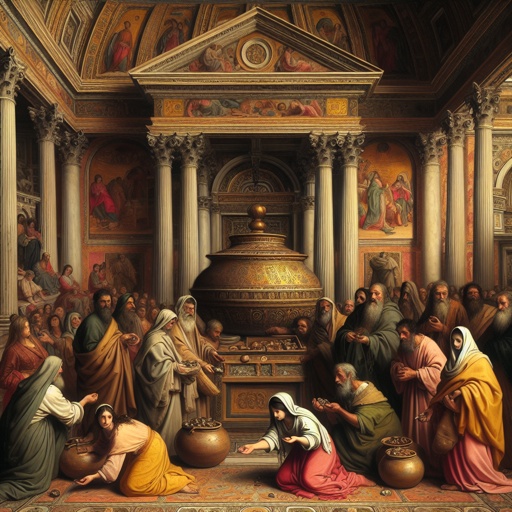
Mark 12:41 - 44

Mark 5:17 - "And they began to pray him to depart out of their coasts."

Mark 12:41 - 44

Mark 2:1-12

Mark 12:41 - 44

Mark 12:41 - 44

Mark 13:17 - "But woe to them that are with child, and to them that give suck in those days!"

Mark 12:11 - "This was the Lord's doing, and it is marvellous in our eyes?"

Mark 1:12 - "And immediately the Spirit driveth him into the wilderness."

"And in the evening he cometh with the twelve." - Mark 14:17

Mark 12:39 - "And the chief seats in the synagogues, and the uppermost rooms at feasts:"
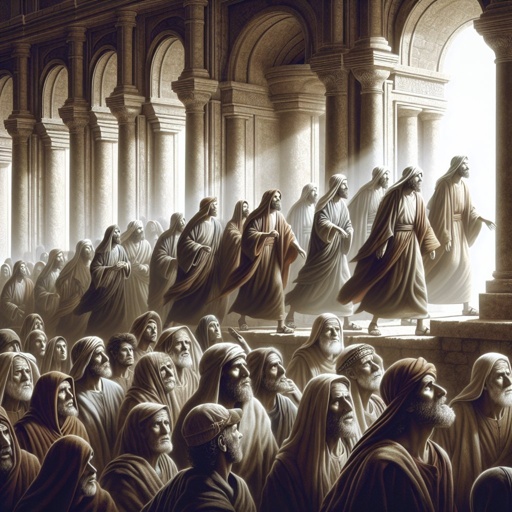
Mark 6:12 - "And they went out, and preached that men should repent."

Mark 15:17 - "And they clothed him with purple, and platted a crown of thorns, and put it about his head,"

Mark 3:12 - "And he straitly charged them that they should not make him known."

Mark 12:3 - "And they caught him, and beat him, and sent him away empty."

Acts 12:12 - "And when he had considered the thing, he came to the house of Mary the mother of John, whose surname was Mark; where many were gathered together praying."

Mark 7:17 - "And when he was entered into the house from the people, his disciples asked him concerning the parable."

Mark 12:12 - "And they sought to lay hold on him, but feared the people: for they knew that he had spoken the parable against them: and they left him, and went their way."

Mark 11:12 - "¶ And on the morrow, when they were come from Bethany, he was hungry:"

Mark 12:8 - "And they took him, and killed him, and cast him out of the vineyard."