The Crown of Thorns: A Reflection on Suffering and Sovereignty
“And they clothed him with purple, and platted a crown of thorns, and put it about his head,” — Mark 15:17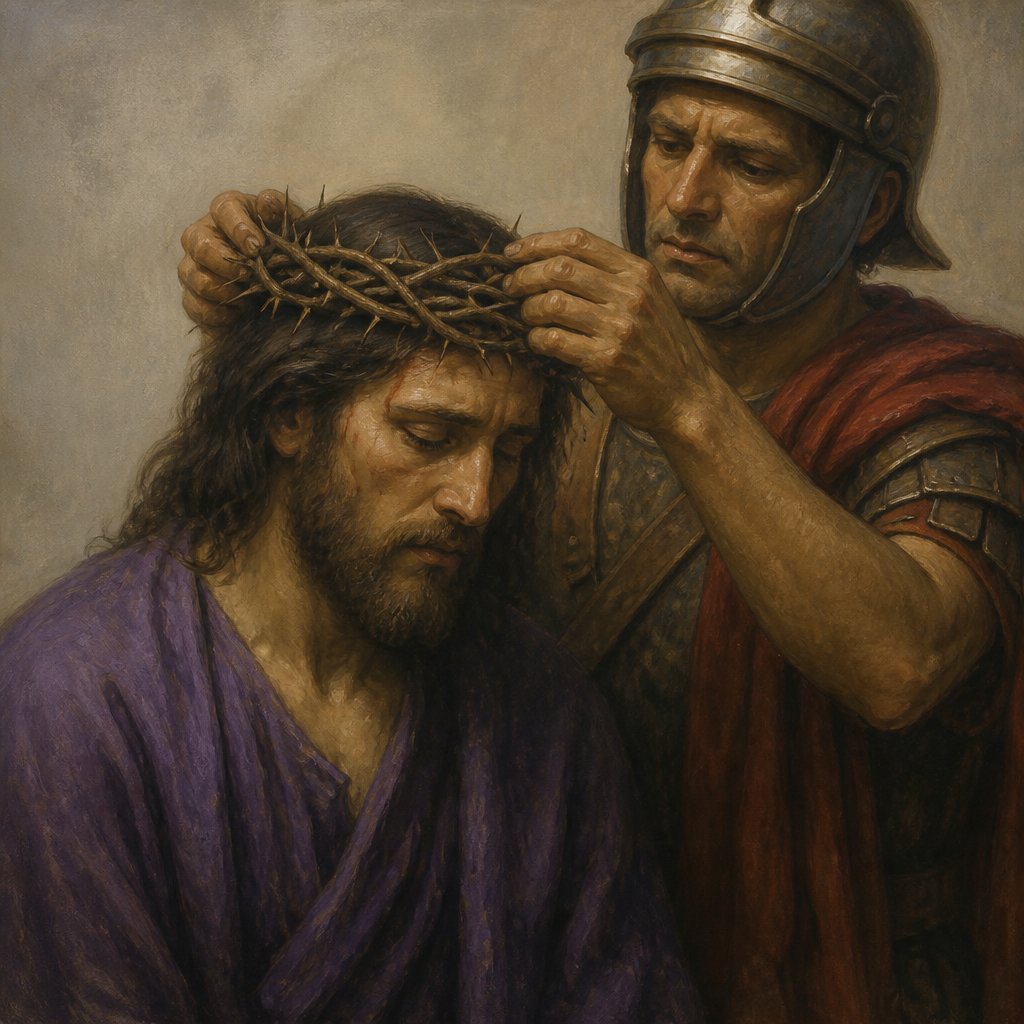
In the Gospel of Mark, chapter 15, verse 17, we read: "And they clothed him with purple, and platted a crown of thorns, and put it about his head." This verse, situated in one of the most harrowing moments of Christ’s earthly ministry, encapsulates an excruciating reality – the intersection of mockery and majesty, of pain and purpose.
To fully grasp the depth of this verse, we must envision the scene unfolding before us. Jesus had been arrested, tried unfairly, and was now subjected to humiliation and brutality. The Roman soldiers, blind to the divine nature of the man before them, chose to dress Him in purple – a color reserved for royalty – but their intention was not to honor Him. Instead, it was a cruel jest. By draping Jesus in royal purple, they mocked the very claim of kingship that He embodied. Jesus, the true King of Kings, was not coming to claim an earthly throne but rather to reveal a kingdom that transcends human understanding – a kingdom of grace, love, and redemption.
The act of plaiting a crown of thorns was equally significant. Thorns, often symbolic of the curse pronounced upon Adam in the Garden of Eden (Genesis 3:18), embody the fall of humanity and the pain that accompanied it. Here, the soldiers fashioned a painful crown, not understanding that in doing so, they were inadvertently proclaiming a profound theological truth. Jesus bore the weight of humanity’s sin and suffering; He was to become the antidote for the curse. In His suffering, He would provide a pathway to eternal life, breaking the chains of sin and death.
As we reflect on this moment, we must consider the dual realities of suffering and sovereignty. The crown of thorns represents the depth of pain and humiliation endured by Christ. It invites us to contemplate our own sufferings. Pain is an undeniable part of the human experience. In times of torment, we often question God’s faithfulness, wondering how a good God can allow such suffering. Yet, in Christ’s agony, we discover a remarkable truth: God, in His sovereignty, has not distanced Himself from our pain but has embraced it fully in order to bring about redemption.
This powerful image of Christ wearing the crown of thorns compels us to consider what it means to follow Him. As believers, we are called to take up our own cross (Matthew 16:24). What does this mean? It means embracing the path of humility and sacrifice, recognizing that the road to glory is often paved with suffering. The world measures strength by power and control, but in the Kingdom of God, true strength is revealed through vulnerability and love. Our Savior demonstrated this paradox remarkably; by accepting a crown of thorns, He embraced the reality of the world fractured by sin while simultaneously being the source of hope.
Moreover, as Christians, reflecting on Jesus’ experience urges us to confront the ways we respond to injustice, suffering, and mockery in our own lives. We are reminded to react not with bitterness but with grace, honoring our calling to reflect Christ’s character. If He could endure such indignity without a word of protest, how much more should we strive to embody His love and patience in our dealings with others?
Finally, as we meditate on the symbolism of the purple robe and the crown of thorns, let us cling to the hope that springs forth from despair. The very act of being clothed in mockery serves as a prelude to the ultimate victory of Christ over sin and death. It foreshadows the resurrection morning when He emerged gloriously from the tomb – the true King, unbound by the shackles of this world.
In contemplating Jesus’ suffering, let us be reminded that our trials are not in vain. They shape us, refine our faith, and draw us closer to the heart of God. Just as He bore His crown of thorns, we too can endure our sufferings with the assurance that we are cherished and ultimately victorious through Him.
Get our apps


Artwork for Mark 15:17

Mark 15:17 - "And they clothed him with purple, and platted a crown of thorns, and put it about his head,"
"And they clothed him with purple, and platted a crown of thorns, and put it about his head," - Mark 15:17

Mark 10:17-30

Mark 15:12

Mark 14:17 - "And in the evening he cometh with the twelve."

Mark 10:17-30

Mark 15:25 - "And it was the third hour, and they crucified him."

Mark 15:13 - "And they cried out again, Crucify him."

Mark 5:17 - "And they began to pray him to depart out of their coasts."
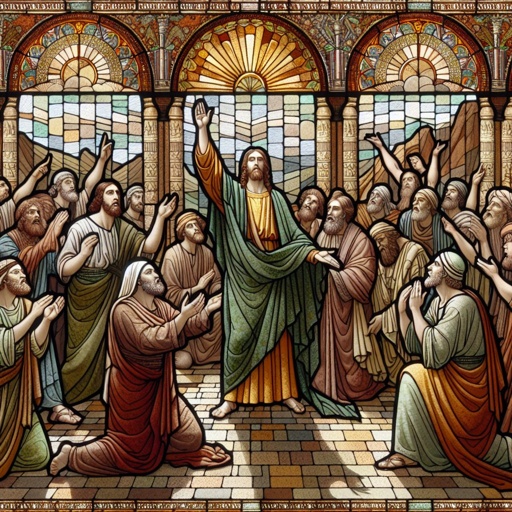
Mark 15:18 - "And began to salute him, Hail, King of the Jews!"

Mark 15:47 - "And Mary Magdalene and Mary the mother of Joses beheld where he was laid."

Mark 13:17 - "But woe to them that are with child, and to them that give suck in those days!"

Mark 15:30 - "Save thyself, and come down from the cross."

Mark 15:28 - "And the scripture was fulfilled, which saith, And he was numbered with the transgressors."

Mark 3:15 - "And to have power to heal sicknesses, and to cast out devils:"

Mark 15:5 - "But Jesus yet answered nothing; so that Pilate marvelled."

Mark 15:26 - "And the superscription of his accusation was written over, THE KING OF THE JEWS."

Mark 15:38 - "And the veil of the temple was rent in twain from the top to the bottom."

Mark 15:37 - "And Jesus cried with a loud voice, and gave up the ghost."

Mark 15:45 - "And when he knew it of the centurion, he gave the body to Joseph."

Mark 6:15 - "Others said, That it is Elias. And others said, That it is a prophet, or as one of the prophets."

"And in the evening he cometh with the twelve." - Mark 14:17

Mark 15:15 - "¶ And so Pilate, willing to content the people, released Barabbas unto them, and delivered Jesus, when he had scourged him, to be crucified."

Mark 15:23 - "And they gave him to drink wine mingled with myrrh: but he received it not."

Acts 15:37 - "And Barnabas determined to take with them John, whose surname was Mark."

Mark 15:10 - "For he knew that the chief priests had delivered him for envy."

Mark 15:3 - "And the chief priests accused him of many things: but he answered nothing."

Genesis 17-15

Provers 15:17

Acts 17:15