Barabbas: A Reflection on Choices and Redemption
“And there was one named Barabbas, which lay bound with them that had made insurrection with him, who had committed murder in the insurrection.” — Mark 15:7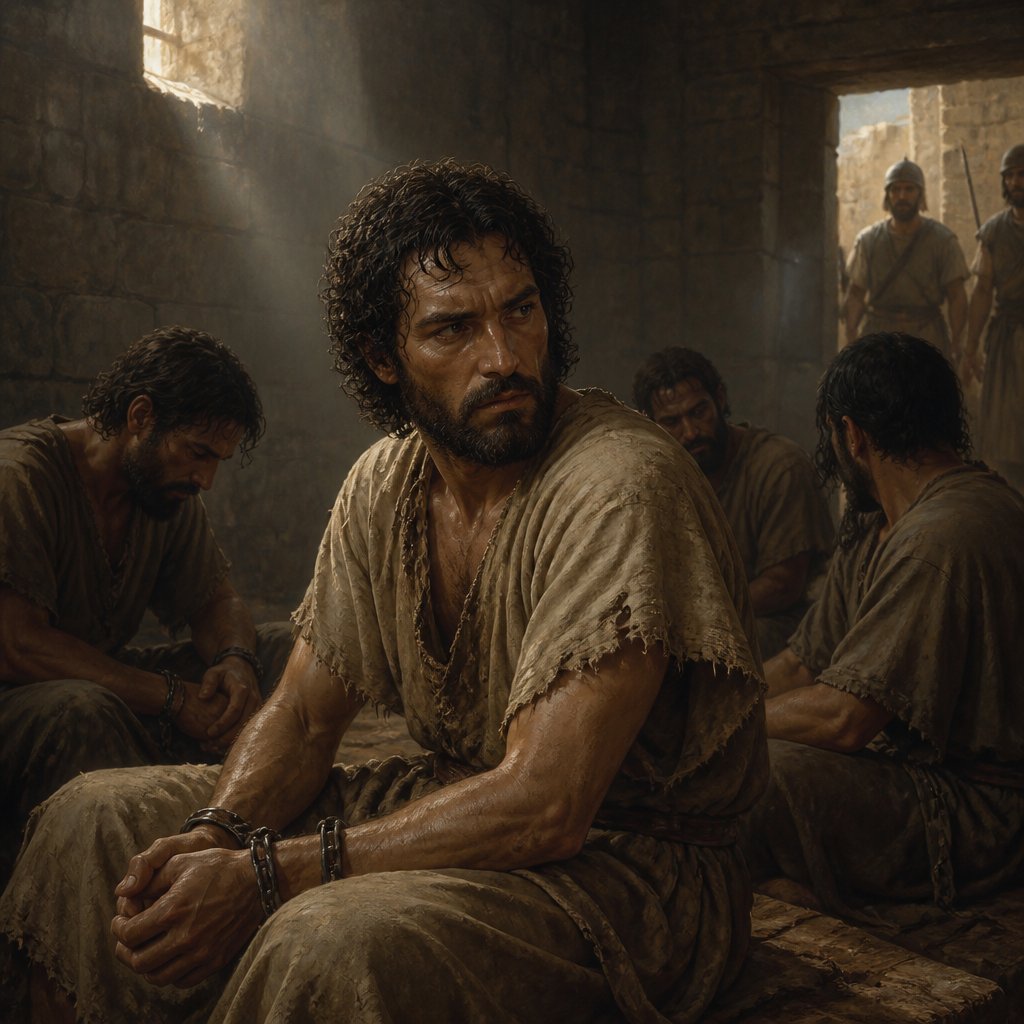
As we turn our hearts to Mark 15:7, we encounter a character shrouded in complexity and darkness: Barabbas. The King James Version presents it succinctly: "And there was one named Barabbas, which lay bound with them that had made insurrection with him, who had committed murder in the insurrection." This verse serves as a poignant portal into themes of guilt, freedom, and the profound nature of Christ’s sacrifice.
In the historical and social context of Jesus’ time, Barabbas represents a man who embodies rebellion and violence. He was not just a common criminal; he had committed murder during an uprising against the Roman authorities. The scripture paints a picture of a man entrenched in sin and lawlessness, held captive not only by chains of iron but also by the weight of his own actions. It is in this backdrop of a broken individual, shackled and perhaps resigned to his fate, that we can glean insight into the redemptive narrative woven throughout the Gospel.
Barabbas’ existence hinges on a pivotal moment of choice presented to the crowd by Pontius Pilate. Each year, it was customary for the governor to release one prisoner to the people during Passover. Pilate brings forward Barabbas, a man guilty of insurrection and murder, alongside Jesus, the innocent Lamb of God. The crowd is faced with a choice: whom will they release? The weight of this decision hangs heavy in the air, echoing through generations.
This moment aligns with a deeper reality for each of us. The name Barabbas, interestingly, translates to ‘son of the father’. In the context of our faith, we are all ‘sons and daughters of the Most High’, yet it is our choices that affect our standing with God. Barabbas’ story forces us to confront the nature of sin and the consequences of our rebellious hearts. He was imprisoned, not just physically, but spiritually—stripped of liberty, hope, and purpose.
When the crowd shouts for Barabbas to be released, they unknowingly set the stage for the ultimate act of grace. In choosing to free Barabbas, the crowd inadvertently affirms what Jesus came to do for all of humanity. The substitutionary aspect of this narrative is powerful. While Barabbas was freed from his earthly chains, Jesus bore the chains of sin and death. Christ willingly took upon himself the punishment that Barabbas, and by extension, all of us, rightfully deserved.
Barabbas fled from the prison that day; we could imagine him grappling with the chaos of his freedom—was he filled with gratitude or guilt? There’s a compelling question that arises in our own lives. Are we, like Barabbas, aware of the freedom granted to us at a great cost? Have we fully embraced the implications of the sacrifice of Christ? It is here, in this grace, that we recognize the heart of the Gospel: we were all once bound by our sin, yet through Christ’s offering, we are positioned to walk in newness of life.
Reflecting upon this passage stirs a response of humility within. Barabbas has become a stand-in for every sinner in need of a Savior. We may not be literal murderers or war rebels, but we all share in the burden of sin that separates us from God. As we meditate on Mark 15:7, let us recall that our release came at the price of Christ’s passion. Each one of us is presented with a choice: will we continue to live in our own insurrection against God or will we embrace the freedom offered through the sacrifice of Jesus?
As we navigate our lives, let us remember Barabbas; he invites us to reconsider how we respond to the amazing grace given freely to us. The choice before us is to accept the freedom and redemption offered by Christ or return to a life of bondage. Let us choose wisely, thanking God for the substitute who stood in our place, and may we live as ambassadors of that grace, promoting transformation in our lives and the lives of others.
Get our apps


Artwork for Mark 15:7

Mark 15:7 - "And there was one named Barabbas, which lay bound with them that had made insurrection with him, who had committed murder in the insurrection."
"And there was one named Barabbas, which lay bound with them that had made insurrection with him, who had committed murder in the insurrection." - Mark 15:7

Mark 7:15 - "There is nothing from without a man, that entering into him can defile him: but the things which come out of him, those are they that defile the man."

Mark 15:12

Mark 13:7

Mark 13:7

Mark 8:7

Mark 13:7

Mark 15:25 - "And it was the third hour, and they crucified him."

Mark 15:13 - "And they cried out again, Crucify him."

Mark 7:7 - "Howbeit in vain do they worship me, teaching for doctrines the commandments of men."
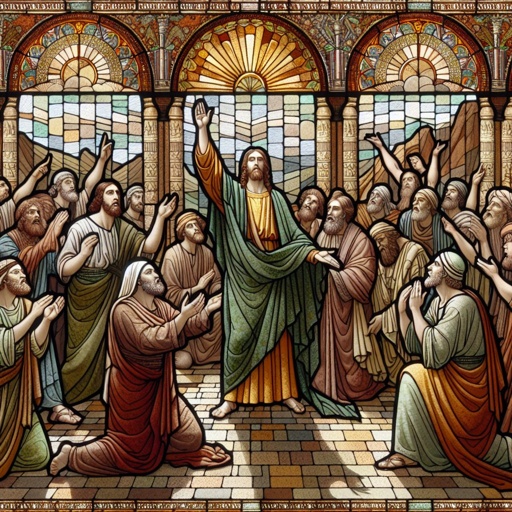
Mark 15:18 - "And began to salute him, Hail, King of the Jews!"

Mark 15:47 - "And Mary Magdalene and Mary the mother of Joses beheld where he was laid."

Mark 15:30 - "Save thyself, and come down from the cross."

Mark 7:31-37

Mark 7:31-37

Mark 15:28 - "And the scripture was fulfilled, which saith, And he was numbered with the transgressors."

Mark 3:15 - "And to have power to heal sicknesses, and to cast out devils:"

Mark 15:5 - "But Jesus yet answered nothing; so that Pilate marvelled."

Mark 15:26 - "And the superscription of his accusation was written over, THE KING OF THE JEWS."

Mark 15:38 - "And the veil of the temple was rent in twain from the top to the bottom."

Mark 15:37 - "And Jesus cried with a loud voice, and gave up the ghost."

Mark 15:45 - "And when he knew it of the centurion, he gave the body to Joseph."

Mark 6:15 - "Others said, That it is Elias. And others said, That it is a prophet, or as one of the prophets."

Mark 15:15 - "¶ And so Pilate, willing to content the people, released Barabbas unto them, and delivered Jesus, when he had scourged him, to be crucified."
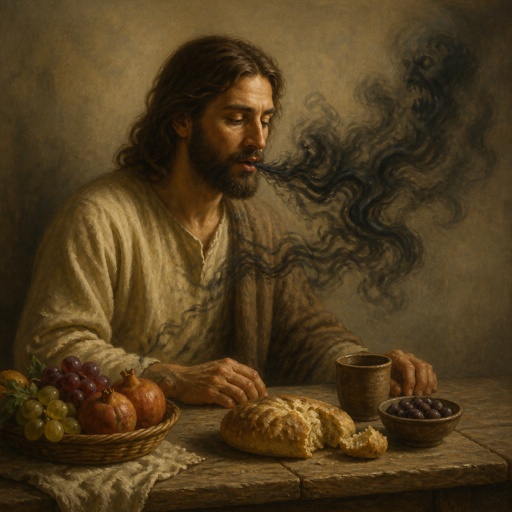
"There is nothing from without a man, that entering into him can defile him: but the things which come out of him, those are they that defile the man." - Mark 7:15

Mark 15:23 - "And they gave him to drink wine mingled with myrrh: but he received it not."

Acts 15:37 - "And Barnabas determined to take with them John, whose surname was Mark."

Mark 15:10 - "For he knew that the chief priests had delivered him for envy."

Mark 15:3 - "And the chief priests accused him of many things: but he answered nothing."